 85 citations
,
February 1989 in “Journal of The American Academy of Dermatology”
85 citations
,
February 1989 in “Journal of The American Academy of Dermatology” Children with loose anagen hair have easily pluckable hair due to root sheath problems, and it might improve without treatment.
 September 2003 in “Current Paediatrics”
 The document concludes that accurate diagnosis and understanding the type of hair disorder are crucial for treating hair loss in children.
2 citations
,
July 2019 in “Indian dermatology online journal” A 17-year-old girl and her brothers have a rare hair condition with long eyelashes, thick eyebrows, and easily pluckable hair.
A 14-year-old girl with a condition that makes her hair easy to pull out also has a hair-pulling disorder, and treatment helped but she relapsed after a year.
 61 citations
,
January 2013 in “Indian Journal of Dermatology, Venereology and Leprology”
61 citations
,
January 2013 in “Indian Journal of Dermatology, Venereology and Leprology” Hair usually grows back 1-3 months after treatment for anagen effluvium, and children with Loose Anagen Hair Syndrome often improve by adolescence.
38 citations
,
September 1997 in “The journal of investigative dermatology/Journal of investigative dermatology” A mutation in mice causes hair loss and skin issues due to a defect in a gene affecting cell adhesion.
 19 citations
,
April 1995 in “Clinical Genetics”
19 citations
,
April 1995 in “Clinical Genetics” Two siblings were the first reported cases of inheriting both eye coloboma and loose anagen syndrome together.
 40 citations
,
January 2010 in “International Journal of Trichology”
40 citations
,
January 2010 in “International Journal of Trichology” Loose Anagen Syndrome is a hair condition where hairs can be easily pulled out, mainly affecting young girls, and may improve on its own or with treatment.
 1 citations
,
May 2002 in “Therapeutische Umschau”
1 citations
,
May 2002 in “Therapeutische Umschau” Children's hair diseases include compulsive hair-pulling, easily plucked hair, scalp fungal infections, and head lice, each requiring specific diagnosis and treatment.
 25 citations
,
October 1996 in “Dermatologic Clinics”
25 citations
,
October 1996 in “Dermatologic Clinics” Loose Anagen Syndrome causes easy-to-pull, thin hair, mainly in young girls, and improves with age.
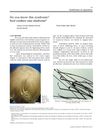
The document concludes that Loose Anagen Hair Syndrome is a benign condition where hair is thin and easily pulled out, often improving with age.
 55 citations
,
October 1992 in “Archives of Dermatology”
55 citations
,
October 1992 in “Archives of Dermatology” Loose Anagen Hair Syndrome is a hereditary condition causing hair loss in children due to abnormal hair follicles.
 1 citations
,
January 2020 in “Skin appendage disorders”
1 citations
,
January 2020 in “Skin appendage disorders” A family was found with both Trichorhinophalangeal syndrome and Loose Anagen Syndrome, suggesting a genetic connection.
 12 citations
,
June 2009 in “Journal of Cosmetic Dermatology”
12 citations
,
June 2009 in “Journal of Cosmetic Dermatology” Loose Anagen Hair syndrome occurs in dark-skinned children and often improves on its own.
 1 citations
,
July 2019 in “Case reports in dermatology”
1 citations
,
July 2019 in “Case reports in dermatology” A Thai boy was diagnosed with a rare hair disorder causing hair thinning and shedding.
 31 citations
,
December 2010 in “Journal of the American Academy of Dermatology”
31 citations
,
December 2010 in “Journal of the American Academy of Dermatology” Loose anagen hair syndrome is caused by structural abnormalities in the hair follicle's inner root sheath.
 8 citations
,
August 2013 in “Pediatric Dermatology”
8 citations
,
August 2013 in “Pediatric Dermatology” Loose Anagen Hair Syndrome is found in black-haired Indian children and is often missed, especially in boys.
 May 2023 in “International journal of science and research”
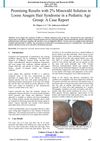
 2% minoxidil solution improved hair density and quality in children with Loose Anagen Hair Syndrome.
 46 citations
,
October 2009 in “Archives of Dermatology”
46 citations
,
October 2009 in “Archives of Dermatology” Loose anagen hair syndrome, often affecting young girls, can be diagnosed with a hair-pull test and usually gets better on its own, but severe cases may need treatment.
 24 citations
,
January 2015 in “Current problems in dermatology”
24 citations
,
January 2015 in “Current problems in dermatology” The document concludes that accurate diagnosis of hair loss in children is crucial due to limited treatment options and the condition's psychological impact.
 January 2026 in “International Journal of Dermatology Research”
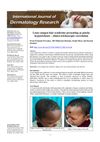
 Early recognition of loose anagen hair syndrome is important to prevent misdiagnosis and unnecessary treatments.
 21 citations
,
May 1996 in “Current problems in dermatology”
21 citations
,
May 1996 in “Current problems in dermatology” Detailed patient history and physical exams are crucial for diagnosing hair loss.
 November 2019 in “Harper's Textbook of Pediatric Dermatology”
 Understanding normal hair growth and loss in children is key to diagnosing and treating hair disorders.
Malnourished people have weaker hair that is easier to pluck.
 January 2010 in “Elsevier eBooks”
 The document concludes that different types of hair loss have specific treatments, and early diagnosis is crucial for preventing permanent hair loss.
 59 citations
,
June 2008 in “Journal of The American Academy of Dermatology”
59 citations
,
June 2008 in “Journal of The American Academy of Dermatology” The article explains the genetic causes and symptoms of various hair disorders and highlights the need for more research to find treatments.
 January 2022 in “Acta dermatovenerologica Alpina, Pannonica et Adriatica (Tiskana izd.)”
 Uncombable hair syndrome causes frizzy hair and can affect the nervous system, eyes, and ears, often co-occurring with other hair, skin, nail, and teeth conditions, and is linked to three specific gene mutations.
 1 citations
,
June 2018 in “International Journal of Contemporary Pediatrics”
1 citations
,
June 2018 in “International Journal of Contemporary Pediatrics” Poor nutrition in young children causes skin and hair issues, highlighting the need for better nutrition education.
 22 citations
,
June 2002 in “Seminars in cutaneous medicine and surgery”
22 citations
,
June 2002 in “Seminars in cutaneous medicine and surgery” Laser hair removal works well for people with dark hair and light skin, but it's less effective for light hair or dark skin; improvements are expected.
 1 citations
,
June 2019 in “Current developments in nutrition”
1 citations
,
June 2019 in “Current developments in nutrition” A patient with Ehlers-Danlos Syndrome improved after treatment for fat malabsorption and essential fatty acid deficiency.