
CaBP1 and CaBP2 are necessary for proper hearing and neurotransmission in the ear's inner hair cells.
 4 citations
,
May 2021 in “The journal of investigative dermatology/Journal of investigative dermatology”
4 citations
,
May 2021 in “The journal of investigative dermatology/Journal of investigative dermatology” ELL is crucial for gene transcription related to skin cell growth.
2 citations
,
January 2009 in “Human cell culture” January 1998 in “Differentiation” Basonuclin is crucial for hair follicle development and cycling in mice.
13 citations
,
December 2005 in “Traffic” Syntaxin 9 helps in transporting and signaling of the EGF receptor in skin and stomach cells.
6 citations
,
December 2024 in “F1000Research” Fibroblast and immune cell interactions affect tissue repair and fibrosis.
 July 2022 in “Journal of Investigative Dermatology”
 Lef1 is essential for normal skin, hair growth, and healing wounds in mice.
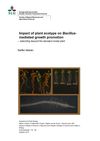 September 2018 in “Epsilon Archive for Student Projects (University of Southampton)”
 Bacillus amyloliquefaciens can boost root hair growth in some Arabidopsis plants, potentially improving agriculture.
25 citations
,
November 2020 in “Proceedings of the National Academy of Sciences” HoxC genes are crucial for normal hair and nail development.
27 citations
,
October 1998 in “Differentiation” Basonuclin helps identify and track hair follicle development and cycling in mice.
 2 citations
,
March 2022 in “Portuguese Journal of Nephrology & Hypertension”
2 citations
,
March 2022 in “Portuguese Journal of Nephrology & Hypertension” A rare EGFR mutation in newborns leads to severe health issues and early death.
TNFα and interleukin-1 blockers reduce skin inflammation from EGFR antibody therapy.
60 citations
,
March 2006 in “Journal of Medical Genetics” A mutation in the KRTHB5 gene causes hair and nail issues.
April 2012 in “Cancer Research” EGFR deficiency in skin causes hair follicle issues and inflammation.
9 citations
,
March 2008 in “British Journal of Dermatology” Efalizumab can cause unexpected excessive hair growth.
November 2022 in “Journal of Investigative Dermatology” EGFR is crucial for preventing hair follicle inflammation and hair loss.
November 2025 in “Clinical and Translational Medicine” DNAJB9 cfRNA could help diagnose and treat female hair loss.
January 1994 in “Skin research” EGF and TGF-α help maintain hair cell cultures, but TGF-β1 stops their growth.
12 citations
,
January 1991 in “Acta Dermato Venereologica” Basal cell epithelioma-like changes are most similar to normal basal cells.
2 citations
,
July 2011 in “International Journal of Dermatology” EPF can occur without visible pustules.
 46 citations
,
December 2001 in “Journal of Endocrinology/Journal of endocrinology”
46 citations
,
December 2001 in “Journal of Endocrinology/Journal of endocrinology” FLRG and follistatin have different roles in wound healing.
14 citations
,
February 1991 in “FEBS Letters” Introducing the rat OTC gene partially corrected OTC deficiency in mice.
28 citations
,
January 2015 in “Journal of Cell Science” PINCH-1 is crucial for skin cell adhesion and movement, working with EPLIN and ILK.
252 citations
,
November 1995 in “The EMBO Journal” Blocking EGFR in mice causes hair loss and skin changes.
 April 2023 in “The journal of investigative dermatology/Journal of investigative dermatology”
 The protein p21 is more abundant in normal skin cells than in melanoma cells and may help protect against melanoma, with UVB light affecting its levels.
11 citations
,
June 2010 in “Dermatologic surgery” The dual-wavelength laser system effectively reduces EFFC symptoms with minimal side effects.
December 2021 in “Figshare” BBS7 is essential for healthy gums by supporting cell function and blood flow.
 September 2025 in “Digital Commons - RU (Rockefeller University)”
 FOXC1 is essential for keeping hair follicle stem cells inactive and maintaining their environment for healthy hair growth.
33 citations
,
October 2014 in “Veterinary Dermatology” Epidermolysis bullosa is a genetic disease causing fragile skin and blisters in both animals and humans.