 8 citations
,
September 2016 in “The American Journal of Dermatopathology”
8 citations
,
September 2016 in “The American Journal of Dermatopathology” Enlarged sweat gland ducts may indicate scarring hair loss.
6 citations
,
January 2015 in “Indian Dermatology Online Journal” PEODDN is a rare skin disorder with limited treatment options, best treated with laser therapy.
 17 citations
,
September 2010 in “Pediatric dermatology”
17 citations
,
September 2010 in “Pediatric dermatology” A 15-year-old with KID syndrome developed a rare skin condition called PEHFN.
4 citations
,
January 2019 in “Indian Dermatology Online Journal” The term "Porokeratotic Adnexal Ostial Nevus" is suggested as a more appropriate name.
 3 citations
,
November 2019 in “The American Journal of Dermatopathology”
3 citations
,
November 2019 in “The American Journal of Dermatopathology” Widened sweat ducts are a very specific sign of scarring hair loss.
7 citations
,
January 2020 in “Dermatology online journal” An adult with a rare skin condition improved with tazarotene treatment.
1 citations
,
April 2025 in “Clinical Cosmetic and Investigational Dermatology” A rare skin lesion in a 64-year-old woman was successfully treated with a laser, showing minimal redness and no return after one month.
3 citations
,
July 2017 in “Journal of Investigative Dermatology” SSEA-4 can distinguish between eccrine and apocrine sweat gland ducts.
28 citations
,
January 2009 in “Journal of Investigative Dermatology” Stem cells in eccrine glands could be used for regenerative medicine.
37 citations
,
August 2000 in “Journal of Cutaneous Pathology” Poromas are related to sweat duct cells, and CK patterns help distinguish apocrine poromas from other neoplasms.
6 citations
,
November 1984 in “Acta Dermato Venereologica” Hair follicles and sweat glands show different keratin staining patterns.
 5 citations
,
January 2017 in “Anais brasileiros de dermatologia/Anais Brasileiros de Dermatologia”
5 citations
,
January 2017 in “Anais brasileiros de dermatologia/Anais Brasileiros de Dermatologia” Porokeratotic eccrine and hair follicle nevus is a very rare skin disorder possibly caused by a GJB2 gene mutation.
119 citations
,
January 2000 in “British Journal of Dermatology” Different parts of the nail express different keratins, showing unique patterns of differentiation.
68 citations
,
December 1983 in “British Journal of Dermatology” Major histocompatibility antigens are found in specific skin cells and structures, but not in sweat glands.
 32 citations
,
February 2016 in “The American journal of dermatopathology/American journal of dermatopathology”
32 citations
,
February 2016 in “The American journal of dermatopathology/American journal of dermatopathology” Extramammary Paget disease can spread deeply into tissues, reaching up to 3.6 mm.
 24 citations
,
September 1985 in “Journal of The American Academy of Dermatology”
24 citations
,
September 1985 in “Journal of The American Academy of Dermatology” The report suggests a possible link between hair loss and hidden scalp tumors but states more evidence is needed to confirm this.
June 2025 in “Histopathology” Epithelial elements in superficial angiomyxomas are non-neoplastic growths mimicking embryogenesis.
July 2026 in “Anais Brasileiros de Dermatologia” AGA and SD share similar features, making diagnosis challenging.
September 2012 in “대한피부과학회지” Desmocollin 1 helps maintain skin structure during fetal development.
 January 2021 in “International journal of dermatology, venereology and leprosy sciences”
 Most adult women experiencing hair loss are aged 21-40, with the most common type being female pattern hair loss. Trichoscopy is a useful tool for diagnosing different types of hair loss.
18 citations
,
December 1992 in “Journal of Cutaneous Pathology” Skin tumors and normal skin structures have different lectin-binding patterns.
 60 citations
,
September 2010 in “Journal of the American Academy of Dermatology”
60 citations
,
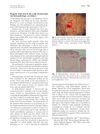
September 2010 in “Journal of the American Academy of Dermatology” Small white dots on the scalp seen with a dermoscope correspond to sweat ducts and vary with different hair disorders.
January 2020 in “프로그램북(구 초록집)” The skin has two main layers, the epidermis and dermis, which work together and are essential for diagnosing skin conditions.
4 citations
,
December 1994 in “PubMed” A woman’s skin bumps healed almost completely with tretinoin cream after a leg infection.
56 citations
,
October 2010 in “Pediatric Clinics of North America” Epidermal nevi are skin cell clusters linked to various syndromes.
 29 citations
,
November 2011 in “Veterinary pathology”
29 citations
,
November 2011 in “Veterinary pathology” The study found that mouse sweat glands develop before birth, mature after birth, and have specific keratin patterns.
32 citations
,
January 2020 in “Journal of Molecular Histology” K31 can identify clear secretory cells in human sweat glands.
 36 citations
,
January 2007 in “Archives of Histology and Cytology”
36 citations
,
January 2007 in “Archives of Histology and Cytology” Type IV collagen chains vary in different parts of human skin, with specific patterns linked to melanocytes.
38 citations
,
November 1991 in “Archiv für Pathologische Anatomie und Physiologie und für Klinische Medicin” Keratins 8 and 14 can help identify and diagnose benign skin tumors.
December 2025 in “Skin Appendage Disorders” Scalp apocrine glands may help remove waste and balance electrolytes, but their role is not fully understood.