September 2025 in “Pharmaceutics” Combining plant extracts with nanotechnology may improve hair loss treatments.
 August 2025 in “Journal of Cosmetic Dermatology”
 Interest in new and personalized treatments for hair loss is growing.
 August 2025 in “Aesthetic Plastic Surgery”
 Collaboration and innovation are key to developing effective, safe hair loss treatments.
August 2024 in “Cosmetics” Personalized treatments for hair loss are becoming more effective by using genetic information.
 November 2023 in “Materials Today Bio”
 Light therapy might help treat hereditary hair loss by improving hair follicle growth in lab cultures.
 September 2023 in “Nature Communications”
 Rare genetic variants in five specific genes are linked to male-pattern hair loss but only account for a small part of the risk.
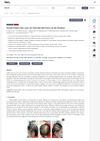
Different genes cause Female Pattern Hair Loss compared to male hair loss, and treatments vary, but more research is needed to understand it fully.
 January 2023 in “Annals of Dermatology”
 Men with a family history of hair loss on their mother's side are more likely to have female pattern hair loss.
 January 2023 in “Türkiye klinikleri adli tıp ve adli bilimler dergisi”
 DNA markers can help predict male pattern baldness, useful in criminal and missing person cases.
 December 2022 in “IntechOpen eBooks”
 Forensic DNA Phenotyping accurately predicts physical traits and is used in investigations, but needs more diverse population data for confirmation.

Androgenetic alopecia, or hair loss, is caused by a mix of genetics, hormones, and environment, where testosterone affects hair growth and causes hair to become smaller and grow for a shorter time.
December 2018 in “Zenodo (CERN European Organization for Nuclear Research)” Low-level laser therapy may help hair growth, but more research is needed.
44 citations
,
February 2023 in “Cell” Fingerprints form uniquely before birth due to specific genetic pathways and local signals.
23 citations
,
June 2023 in “Cell Reports” Early hair follicle development involves distinct cell populations and Wnt signaling influences cell identity.
22 citations
,
July 2016 in “Cellular and Molecular Life Sciences” Genetic changes in mice help understand skin and hair disorders, aiding treatment development for acne and hair loss.
12 citations
,
November 2024 in “Burns & Trauma” Neuroregulation is crucial for skin wound healing and can be targeted to improve recovery.
 12 citations
,
October 2021 in “Cells”
12 citations
,
October 2021 in “Cells” Targeting a protein that blocks hair growth with microRNAs could lead to new hair loss treatments, but more research is needed.
8 citations
,
August 2022 in “BMC Veterinary Research” C57BL/6 mice and SD rats have different sweat gland and hair follicle patterns, useful for skin research.
 5 citations
,
October 2022 in “BMC genomics”
5 citations
,
October 2022 in “BMC genomics” Certain microRNAs are important for sheep hair follicle development and could help improve wool quality.
4 citations
,
June 2023 in “Journal of developmental biology” The skin systems of jawed vertebrates evolved diverse appendages like hair and scales from a common structure over 420 million years ago.
 April 2026 in “International Journal of Molecular Sciences”
 Wnt signaling is crucial for skin, hair, and nail health and regeneration.
September 2025 in “Genes” Certain gene variations in Jiangnan cashmere goats are linked to important traits like birth weight and fiber quality, useful for breeding.
October 2025 in “Animals” miR-200a reduces goose fibroblast growth by targeting PITX2 in the Wnt pathway.
10 citations
,
August 2021 in “Frontiers in cell and developmental biology” Scientists made structures that look like human hair follicles using stem cells, which could help grow hair without using actual human tissue.
 4 citations
,
January 2022 in “Life”
4 citations
,
January 2022 in “Life” Tissue engineering could be a future solution for hair loss, but it's currently expensive, complex, and hard to apply in real-world treatments.
1036 citations
,
August 2019 in “Cells” Mesenchymal stem cells can help repair body tissues with low risk of rejection.
 10 citations
,
September 2022 in “Advanced Healthcare Materials”
10 citations
,
September 2022 in “Advanced Healthcare Materials” Current methods can't fully recreate skin and its features, and more research is needed for clinical use.
9 citations
,
March 2022 in “Military Medical Research” Small molecules can help turn skin cells into sweat gland-like cells for potential skin repair.
117 citations
,
April 2008 in “Developmental biology” Ectodysplasin inhibits Wnt signaling to help form hair follicles.
 98 citations
,
June 2008 in “Human mutation”
98 citations
,
June 2008 in “Human mutation” A genetic change in the EDAR gene causes the unique hair traits found in East Asians.