 April 2018 in “Journal of Investigative Dermatology”
 Cutaneous lupus patients have higher levels of certain immune cells in their blood and skin.
 1 citations
,
April 2024 in “Veterinary Science and Medicine Journal”
1 citations
,
April 2024 in “Veterinary Science and Medicine Journal” The dog's skin condition improved with treatment, and prevention includes keeping it dry, clean, and away from stray dogs.
 January 2024 in “Ankara City Hospital Medical Journal”
 Rhupus is a complex syndrome that is hard to diagnose due to unclear clinical criteria.
13 citations
,
June 2011 in “PubMed” The patient improved significantly after treatment, with only one small scar remaining.
January 2026 in “Forum Dermatologicum” A doughnut-shaped wart can form after cryotherapy in people with alopecia areata due to immune system issues.
 3 citations
,
January 2019 in “Journal of Dermatology”
3 citations
,
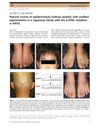
January 2019 in “Journal of Dermatology” The p.P25L mutation in the KRT5 gene causes a rare skin condition that worsens over time and may lead to hair loss starting in young adulthood.
 July 2022 in “Dermatology practical & conceptual”
 Henna ointment may help reduce itching and improve wound healing in patients with epidermolysis bullosa.
 July 2022 in “The journal of investigative dermatology/Journal of investigative dermatology”
 A patient with a PLEC mutation has epidermolysis bullosa, muscular dystrophy, and myasthenia gravis, which improved with steroid treatment.
July 2026 in “Dermatology Practical & Conceptual” IL-17 and IL-23 inhibitors, used for treating moderate-to-severe psoriasis and other inflammatory diseases, can cause a range of cutaneous adverse reactions. These reactions include common psoriasiform and eczematous eruptions, as well as less frequent conditions like lupus-like syndromes and bullous pemphigoid. The mechanisms are thought to involve changes in immune signaling rather than direct drug toxicity. Management depends on the severity and type of reaction, with options ranging from topical treatments to discontinuation of the drug. Recognizing these reactions is crucial due to their similarity to primary dermatologic diseases, and further research is needed to better understand their incidence and management.
3 citations
,
January 2007 in “Korean Journal of Pediatrics” Zinc supplements can help skin issues even if blood zinc levels are normal.