 March 2026 in “Quality in Sport”
 Red light therapy can boost athletic performance and aid healing.

Experts created guidelines to better diagnose and treat uncommon fungal skin infections.
 January 2026 in “Indus journal of bioscience research.”
 Hibiscus extract is a safe, effective, and stable ingredient for moisturizing creams.
 January 2026 in “Frontiers in Medicine”
 A child has a rare hair and skin disorder due to specific gene variants, suggesting broader genetic testing is needed.
 December 2025 in “Open Repository of the University of Porto (University of Porto)”
 Pharmacists play a crucial role in improving patient outcomes through personalized care and staying updated with scientific advancements.
 December 2025 in “npj Breast Cancer”
 Capivasertib improves survival in certain breast cancer cases but requires careful management of side effects.
 September 2025 in “Universal library of medical and health sciences.”
 Permanent makeup can effectively restore lip shape and color after tissue loss, improving appearance and well-being.
 September 2025 in “OBM Genetics”
 Early diagnosis and comprehensive management improve life quality for Netherton syndrome patients.
 September 2025 in “International Journal of Advanced Academic Studies”
 Combining Anu Taila Nasya and Gokshura Lepa may help reduce hair loss and promote regrowth.
 July 2025 in “Scientific Reports”
 Pioglitazone, Trimipramine, and Dimetindene may be repurposed to treat psoriasis.
 July 2025 in “International Journal of Dermatology Venereology and Leprosy Sciences”
 Microneedling may improve melasma treatment by boosting topical therapy effectiveness.
A runner developed tangled armpit hairs from shirt friction, preventable by shaving or wearing smooth shirts.
 March 2025 in “GSC Biological and Pharmaceutical Sciences”
 Wood tar could be useful for skin care in dermatology and cosmetics.
 January 2025 in “Frontiers in Immunology”
 IVIG therapy significantly improved symptoms in a patient with APS-2 and SPS.
 January 2025 in “RSC Pharmaceutics”
 Smart microneedles using advanced tech could improve psoriasis treatment.
 March 2024 in “Tropical Journal of Natural Product Research”
 Many people in Fez-Meknes use potentially toxic plants for various health and cosmetic purposes, but more research is needed to ensure their safety.
 June 2023 in “International Journal of Clinical Research and Reports”
 Method B with propylene glycol is better for stable low-concentration DPCP solutions for alopecia areata.
 June 2023 in “International Journal for Research in Applied Science and Engineering Technology”
 Emulgel improves skin delivery of various drugs better than traditional methods.

More research is needed to confirm the potential of various treatments, including Helichrysum plicatum, vitamins, bromelain, personalized medications, hydrogels, and bacteriophage therapy.
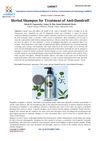 February 2023 in “International Journal of Advanced Research in Science, Communication and Technology”
 Herbal shampoos with Neem and Tulsi might be safer and more effective for controlling dandruff.
 October 2022 in “Gadua Journal of Pure and Allied Science”
 Terbinafine is the most effective treatment for tinea capitis, a scalp infection often confused with other conditions.
 November 2021 in “International Journal of Research in Medical Sciences & Technology”
 Skin surface chemistry and OCT can improve skin disease diagnosis.
 October 2021 in “Research Society and Development”
 Herbal medicines can reduce the effectiveness of birth control pills.

Researchers found a genetic link for hereditary hair loss but need more analysis to identify the exact gene.
 January 2021 in “Clinical dermatology open access journal”
 Dermatologists in Western Rajasthan often prescribe doxepin for elderly patients with skin and mental health issues.
 January 2020 in “Journal of Pharmacognosy and Phytochemistry”
 The VCO-based herbal hair tonic is effective, safe for hair loss treatment, and can be mass-produced.
 November 2019 in “Harper's Textbook of Pediatric Dermatology”
 The document is a detailed medical reference on skin and genetic disorders.
 April 2019 in “The journal of investigative dermatology/Journal of investigative dermatology”
 848 genes related to fat and metabolism are less active in people with Central Centrifugal Cicatricial Alopecia.
 July 2018 in “British Journal of Dermatology”
 Hair regrowth was seen in 83% of children with alopecia, immune system plays a role in the condition, and various treatments showed effectiveness for hair and nail disorders.

Glycyrrhizic acid and licorice extract can significantly reduce unwanted hair growth.