 33 citations
,
May 2013 in “Andrologia”
33 citations
,
May 2013 in “Andrologia” Some herbs show promise as antiandrogenic agents.
October 2021 in “Journal of Investigative Dermatology” Pink berry extract effectively treats scalp issues from frequent head covering.
 March 2024 in “Journal of animal science/Journal of animal science ... and ASAS reference compendium”
 Soy hull supplementation did not affect sheep gastrointestinal parasite infection compared to corn-based supplements.
1 citations
,
July 2025 in “Functional Foods in Health and Disease” CL22209, an Asparagus racemosus extract, safely reduces perimenopausal symptoms and balances hormones.
 August 2023 in “Skin Research and Technology”
 BLH308, with persimmon leaf, green tea, and sophora fruit extracts, safely increased hair density and thickness.
 March 2025 in “Journal of Environmental Science and Engineering B”
 Carrots grown organically have lower heavy metal levels, making them safer and better quality.
5 citations
,
August 2023 in “Preprints.org” Droplet-based microfluidics improves delivery of bioactive compounds in food using precise encapsulation and release.
 March 2026 in “Zenodo (CERN European Organization for Nuclear Research)”
 The N-K GM Series offers a new method to reduce aflatoxin poisoning and cancer, improving health and saving costs in affected regions.
December 2010 in “Journal of Oriental Medicine” Black bean, wheat, and rice bran extracts can improve hair growth and quality.
 4 citations
,
September 2018 in “Rendiconti lincei. Scienze fisiche e naturali”
4 citations
,
September 2018 in “Rendiconti lincei. Scienze fisiche e naturali” Researchers concluded that "spigo nardo" is the Himalayan plant Nardostachys jatamansi, used historically in medicine and cosmetics, now critically endangered.
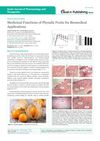 May 2021 in “Austin journal of pharmacology and therapeutics”
 Physalis fruits have medicinal properties that can help treat various diseases and have anti-inflammatory, antioxidant, antibacterial, and antitumor effects.

Dandelion-derived carbon dots effectively kill bacteria and speed up wound healing.
 4 citations
,
August 2017 in “Cosmetics”
4 citations
,
August 2017 in “Cosmetics” The extract reduced sebum production and promoted hair growth.
6 citations
,
August 2022 in “Journal of Herbal Medicine” Mangosteen extract may help with hair growth and prevent graying.
January 2013 in “วารสารเภสัชศาสตร์อีสาน (Isan Journal of Pharmaceutical Sciences, IJPS)” Mangosteen peel extract effectively inhibits acne-causing bacteria.
 1 citations
,
December 2022 in “BMC Plant Biology”
1 citations
,
December 2022 in “BMC Plant Biology” The black orchid Brasiliorchis schunkeana produces chemicals that attract certain insects and have potential antimicrobial properties.
5 citations
,
August 2013 in “Integrative Zoology” Feathers in diet increase gut bacteria diversity in Arctic foxes.
 3 citations
,
December 2021 in “Journal of medicinal plants”
3 citations
,
December 2021 in “Journal of medicinal plants” Halocnemum strobilaceum has potential health benefits and uses, including anticancer and antimicrobial properties.
 1 citations
,
November 2023 in “Indian Journal of Science and Technology”
1 citations
,
November 2023 in “Indian Journal of Science and Technology” Eclipta alba may improve memory and help treat Alzheimer's disease.
August 2025 in “OBM Integrative and Complementary Medicine” Many plants in Zimbabwe are used for skin conditions, but more research is needed to ensure their safety and effectiveness.
 March 2009 in “Journal of Biomedical Research”
 Herbal extract mixtures may speed up hair growth and could help treat baldness.
The hair lotion from Ganoderma lucidum extract effectively promotes hair growth and reduces hair loss.
 December 2025 in “Jurnal Farmasi Tinctura”
 Cocoa leaf extract is effective and safe for promoting hair growth.
April 2019 in “Journal of Investigative Dermatology” Maca root extract protects hair follicles and promotes hair growth.
February 2018 in “Zenodo (CERN European Organization for Nuclear Research)” Mulethi and Amla effectively kill E. coli bacteria.
 11 citations
,
August 2020 in “Dermatologic therapy”
11 citations
,
August 2020 in “Dermatologic therapy” The document concludes that mesotherapy can be effective for skin and hair treatments, but more research is needed to confirm its safety and effectiveness.
January 2005 in “Jukuri (Natural Resources Institute Finland (Luke))” A low-protein diet with methionine is cost-effective and supports normal growth and high-quality pelts in blue foxes.
 December 2024 in “International Journal of Newgen Research in Pharmacy & Healthcare”
 Eclipta alba phytosomes improve bioavailability and therapeutic effects.
 November 2023 in “Turkish journal of botany”
 Türkiye uses many local plants to treat skin problems.
 January 2022 in “Journal Of Biotechnology And Crop Science”
 Liquorice has medicinal benefits, including antioxidant, anti-inflammatory, antimicrobial, antiulcer, and antiviral effects.