 September 2025 in “Cureus”
 Plica neuropathica can occur with diffuse alopecia and should be considered in diagnosis.
 January 2023 in “Vìsnik problem bìologìï ì medicini”
 Androgenic alopecia causes hair follicle degradation and skin restructuring, but some hair elements remain.
 1 citations
,
October 2000 in “Pediatrics in Review”
1 citations
,
October 2000 in “Pediatrics in Review” The document says that hookworms are treated with mebendazole and stress-related hair loss usually gets better in 6 months, while other hair loss types have specific treatments.
 December 2025 in “Zenodo (CERN European Organization for Nuclear Research)”
 Hair loss is caused by nutritional deficiencies, hormonal imbalances, and stress, with treatments like minoxidil and hair transplants available.
6 citations
,
January 2004 in “Der Hautarzt” 63 citations
,
September 1995 in “Annals of internal medicine” Fluconazole can cause temporary hair loss, which stops after reducing or stopping the drug.
 86 citations
,
July 2002 in “Clinical and Experimental Dermatology”
86 citations
,
July 2002 in “Clinical and Experimental Dermatology” FPHL is a common, age-related, genetic hair loss with unclear causes and limited treatment options.
 April 2017 in “Journal of dermatology & cosmetology”
 The marine protein complex, Viviscal®, was found to effectively reduce hair loss and improve hair, skin, and nails quality in women.
 January 2023 in “Springer eBooks”
 Most older adults experience pattern hair loss due to shrinking hair follicles, with men and women showing different balding patterns.
 14 citations
,
December 2003 in “International Journal of Cosmetic Science”
14 citations
,
December 2003 in “International Journal of Cosmetic Science” Hair growth and shedding are linked and can be disrupted, causing a delay known as the hair eclipse phenomenon, which is common in certain hair conditions and could lead to new treatments.
 14 citations
,
February 2021 in “Journal of the European Academy of Dermatology and Venereology”
14 citations
,
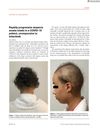
February 2021 in “Journal of the European Academy of Dermatology and Venereology” A COVID-19 patient with severe hair loss did not improve with hair loss medication after stopping and restarting it due to the infection.
 August 2017 in “Journal of evolution of medical and dental sciences”
 Trichoscopy is effective for diagnosing different types of non-scarring hair loss.
 January 2026 in “Bandung Conference Series Medical Science”
 Wearing a hijab does not cause hair loss.
 16 citations
,
October 2004 in “Acta dermato-venereologica”
16 citations
,
October 2004 in “Acta dermato-venereologica” Two people lost a lot of hair because of epilepsy drugs, but their hair grew back after changing medication.
 6 citations
,
June 2019 in “International Journal of Dermatology”
6 citations
,
June 2019 in “International Journal of Dermatology” Frontal fibrosing alopecia has occurred in two related male families.
4 citations
,
June 2017 in “Annales de dermatologie et de vénéréologie” The study found that a specific type of hair loss is increasingly common in premenopausal women and can be effectively diagnosed and treated with various medications.
May 2008 in “10th European Congress of Endocrinology”  March 2012 in “Journal of The American Academy of Dermatology”
 Dermoscopy helps diagnose different hair loss conditions, and characteristics vary among ethnicities and individual cases.
 April 2020 in “Arquivo Brasileiro De Medicina Veterinaria E Zootecnia”
 A horse in Brazil had seasonal hair loss possibly linked to light exposure and melatonin levels.
April 2022 in “Dermato Mag” Triphasic Progressive is more effective against hair loss.
 November 2025 in “American Journal of Tropical Medicine and Hygiene”
 Low platelet count and hematocrit may increase the risk of hair loss in dengue fever patients.
January 2009 in “La ley penal: revista de derecho penal, procesal y penitenciario” Androgenetic alopecia is the most common hair loss, more severe in men, and best treated with a combination of hair growth promoters and antiandrogens.
 3 citations
,
July 2013 in “Journal of Cutaneous Pathology”
3 citations
,
July 2013 in “Journal of Cutaneous Pathology” A woman's hair loss, resembling an autoimmune condition, improved after treatment, but requires ongoing checks due to potential serious associations.
 9 citations
,
January 2017 in “Journal of the Egyptian Women's Dermatologic Society (Print)”
9 citations
,
January 2017 in “Journal of the Egyptian Women's Dermatologic Society (Print)” Fungal infection was the main cause of hair loss in Egyptian children studied.
 5 citations
,
December 1981 in “PubMed”
5 citations
,
December 1981 in “PubMed” Metoprolol, a blood pressure medication, was linked to reversible hair loss.
PRP treatment helps reduce hair loss in post-COVID-19 patients.
 October 2025 in “International Journal of Cell and Biomedical Science”
 hUC-MSC secretome can help regrow hair in cases of hair loss.
April 2021 in “Aktuelle Dermatologie” Frontal Fibrosing Alopecia is a type of hair loss that mainly affects postmenopausal women, has unclear causes, and lacks evidence-based treatments.
 February 2026 in “Frontiers in Medicine”
 Fibrosing alopecia starts earlier in Latin American men and often looks like common male pattern baldness.