
The document's conclusion cannot be provided because the document is not available or cannot be read.
164 citations
,
December 1984 in “Proceedings of the National Academy of Sciences” TCDD reduces EGF receptor activity and causes various developmental changes in animals.
 April 2019 in “Journal of Investigative Dermatology”
 Non-coding RNA boosts retinoic acid production and signaling, aiding regeneration.
 April 2018 in “Journal of Investigative Dermatology”
 IL-17C is important in inflammatory skin diseases and could be a target for treatment.
224 citations
,
February 2013 in “The Journal of clinical investigation/The journal of clinical investigation” ERG increases SOX9, promoting prostate cancer growth and invasion.
147 citations
,
October 2021 in “Cancer Communications” RC48 shows promise for treating certain advanced cancers, but more research is needed.
49 citations
,
October 1989 in “Genomics” Type I keratin genes are closely linked to the rex locus on mouse chromosome 11, affecting hair development.
 April 2018 in “Journal of Investigative Dermatology”
 The document concludes that ERBB2 mutations are common in extramammary Paget disease and may respond to systemic treatments like cancer immunotherapy.
 July 2025 in “The Egyptian Journal of Hospital Medicine”
 Estrogen affects hair growth, and GPER-1 levels might help identify hair loss types.
 March 2010 in “Ejc Supplements”
 CK 5/6 expression in breast cancer is linked to negative hormone receptor status and higher tumor grade.
June 2007 in “Journal of Investigative Dermatology” July 2025 in “Journal of Investigative Dermatology” 64 citations
,
March 2004 in “The journal of investigative dermatology/Journal of investigative dermatology” GPRC5D is linked to the formation of hair, nails, and certain tongue areas.
 2 citations
,
February 2023 in “Transgenic Research”
2 citations
,
February 2023 in “Transgenic Research” The E2 protein affects gene activity in hair follicles of mice.
 36 citations
,
February 2017 in “BMC Complementary and Alternative Medicine”
36 citations
,
February 2017 in “BMC Complementary and Alternative Medicine” Geranium sibiricum extract helps hair grow and is more effective than minoxidil but can be toxic in high concentrations.
November 2025 in “OPAL (Open@LaTrobe) (La Trobe University)” DAB labeling effectively identifies collagen type III and PDGFR in horse skin, but may show false positives.
 January 2012 in “Journal of Investigative Dermatology”
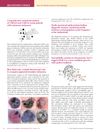
 Some Greek melanoma patients have gene mutations linked to increased cancer risk, a new color feature helps diagnose melanoma, the incidence of a skin condition in the Netherlands is rare, and a gene possibly affects male-pattern baldness.
76 citations
,
January 1998 in “Mammalian Genome”  April 2016 in “The journal of investigative dermatology/Journal of investigative dermatology”
 RPGRIP1L helps skin cells stick together by blocking PKCβII, which can prevent skin blistering like in pemphigus.
 August 2023 in “Journal of Investigative Dermatology”
 Different body areas have unique skin cell communication patterns, explaining why certain skin diseases occur in specific regions.
 August 2019 in “Journal of Investigative Dermatology”
 The study found that tight junctions reach the top layer of the skin's stratum granulosum, not just the second top layer as previously thought.
34 citations
,
September 2010 in “Clinical and Experimental Dermatology” A new gene mutation linked to KID syndrome was found, expanding genetic knowledge.
125 citations
,
August 2003 in “Development” Mice with human-like EGFR had growth issues, skin defects, heart problems, and unusual bone development.
 September 2020 in “Oxford University Press eBooks”
 Unable to provide a summary as the provided text does not contain enough information.
1 citations
,
May 2022 in “International journal of molecular sciences” Faulty LEF1 activation causes faster skin cell differentiation in premature aging syndrome.
 52 citations
,
April 2013 in “Developmental Cell”
52 citations
,
April 2013 in “Developmental Cell” Brg1 is crucial for hair growth and skin repair by maintaining stem cells and promoting regeneration.
 November 2025 in “Cancer Management and Research”
 Targeting Keratin 17 may help overcome cancer therapy resistance.
 June 2023 in “Journal of biological chemistry/The Journal of biological chemistry”
 Sdr16c5 and Sdr16c6 genes regulate a key point in lipid production that affects eye and skin gland function.
 April 2023 in “The journal of investigative dermatology/Journal of investigative dermatology”
 Prostaglandin E2 helps prevent hair loss from radiotherapy by protecting hair growth cells and aiding self-repair.
 2 citations
,
February 2014 in “Animal Biotechnology”
2 citations
,
February 2014 in “Animal Biotechnology” The PTGER2 gene is highly active in Cashmere goat skin and its activity changes with the hair growth cycle.