EGF and EGFR are essential for goat fetal skin development.
26 citations
,
April 1996 in “Journal of Investigative Dermatology” 39 citations
,
March 2009 in “Dermatology Online Journal” Understanding EGFR roles could lead to new hair loss treatments.
July 2026 in “Frontiers in Endocrinology” PRLR mutations affect cattle growth and hair weight in hot climates.
 2 citations
,
September 2022 in “Frontiers in veterinary science”
2 citations
,
September 2022 in “Frontiers in veterinary science” Certain long non-coding RNAs are important for the growth of hair follicles in Inner Mongolian cashmere goats.
125 citations
,
February 1971 in “Biochemistry” Specific cross-linkages help make hair proteins stable and strong.
 7 citations
,
August 2020 in “Animal biotechnology”
7 citations
,
August 2020 in “Animal biotechnology” A specific RNA in cashmere goats helps improve hair growth by interacting with certain molecules.
 52 citations
,
April 2013 in “Developmental Cell”
52 citations
,
April 2013 in “Developmental Cell” Brg1 is crucial for hair growth and skin repair by maintaining stem cells and promoting regeneration.
1 citations
,
January 2019 in “British Poultry Science” VEGF and VEGFR-2 genes influence feather maturity, and specific genetic markers can improve chicken breeding.
 2 citations
,
June 2024 in “Frontiers in Plant Science”
2 citations
,
June 2024 in “Frontiers in Plant Science” LLPS is crucial for RALF signaling, aiding plant growth and stress resilience.
January 2012 in “Journal of Northwest A & F University” The Eda gene helps regulate the hair cycle in goats.
15 citations
,
August 1991 in “Histochemistry and Cell Biology” Enhancing Factor is found in growing tissues like young mouse intestines and skin but not in adults.
67 citations
,
January 1992 in “Journal of Investigative Dermatology”  26 citations
,
September 2018 in “Journal of Molecular Cell Biology”
26 citations
,
September 2018 in “Journal of Molecular Cell Biology” Endoglin is crucial for proper hair growth cycles and stem cell activation in mice.
Meis2 is essential for touch sensation and proper nerve connection to touch receptors in certain skin areas of mice.
 59 citations
,
April 2016 in “Cell Reports”
59 citations
,
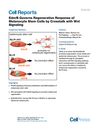
April 2016 in “Cell Reports” EdnrB signaling helps melanocyte stem cells regenerate and could be targeted to treat pigmentation issues.
 August 2025 in “BMC Pregnancy and Childbirth”
 A new EDA gene variant causes X-linked hypohidrotic ectodermal dysplasia in a Chinese family.
January 2016 in “Texas ScholarWorks (Texas Digital Library)” DORN1 receptor affects eATP-induced stomatal changes but not eADP in Arabidopsis thaliana.
28 citations
,
August 2005 in “Journal of Investigative Dermatology” TG5 helps maintain hair follicle health, while TG3 aids in hair shaft development.
 August 2023 in “Journal of Dermatological Science”
 A specific RNA molecule blocks hair growth by affecting a protein related to hair loss conditions.
1 citations
,
January 2010 in “Shenyang Nongye Daxue xuebao” IGF-1 and EGF together significantly boost hair follicle growth in cashmere goats.
32 citations
,
May 2018 in “The Plant Cell” ERULUS is crucial for root hair growth by controlling calcium levels.
 April 2024 in “bioRxiv (Cold Spring Harbor Laboratory)”
 A gene network led by RSL4 is crucial for early root hair growth in response to cold in Arabidopsis thaliana.
 February 2026 in “bonndoc (University of Bonn)”
 New gene variants were found for rare skin and hair disorders, improving understanding and treatment.
1 citations
,
September 2010 in “UEF eRepo (University of Eastern Finland)” Androgen receptors help prostate cancer cells grow and resist drugs.
4 citations
,
February 2023 in “iScience” Korean long-tailed chickens have unique genes valuable for ornamental breeding.
 64 citations
,
January 2010 in “The FASEB Journal”
64 citations
,
January 2010 in “The FASEB Journal” Prolactin affects the production of different keratins in human hair, which could lead to new treatments for skin and hair disorders.
 February 2022 in “Research Square (Research Square)”
 LGR5 is a marker found in hair follicle stem cells in various species and is important for hair growth and skin repair.
 3 citations
,
November 2022 in “Frontiers in molecular biosciences”
3 citations
,
November 2022 in “Frontiers in molecular biosciences” Plasmalogens activate a channel in cells that may stimulate hair growth.
 25 citations
,
November 2017 in “Molecular Medicine Reports”
25 citations
,
November 2017 in “Molecular Medicine Reports” PlncRNA-1 helps hair follicle stem cells grow and develop by controlling a specific cell signaling pathway.