27 citations
,
March 2011 in “JEADV. Journal of the European Academy of Dermatology and Venereology/Journal of the European Academy of Dermatology and Venereology” Fractional CO₂ laser treatments effectively tighten eyelid skin and elevate eyebrows safely.
6 citations
,
October 2023 in “Skin Research and Technology” Endolift laser treatment significantly tightens eyelids and raises eyebrows.
8 citations
,
January 2017 in “Indian dermatology online journal” Traumatic anserine folliculosis is a skin condition caused by friction, treatable with topical cream and avoiding trauma.
January 2024 in “Revista del Centro Dermatológico Pascua” Avoiding damage and using specific shampoo and supplements improved the hair condition.
56 citations
,
November 2003 in “Journal of Investigative Dermatology” MMP-19 may worsen skin diseases by affecting skin growth and inflammation.
21 citations
,
December 2017 in “bioRxiv (Cold Spring Harbor Laboratory)” Fibroblast behavior is key for skin structure and healing.
 3 citations
,
April 2012 in “Osteoporosis International”
3 citations
,
April 2012 in “Osteoporosis International” A woman experienced hair loss after taking strontium ranelate for osteoporosis.
 4 citations
,
September 2021 in “Dermatopathology”
4 citations
,
September 2021 in “Dermatopathology” The conclusion is that Erosive Pustular Dermatosis of the Scalp is a rare condition best treated with strong topical steroids and sometimes systemic treatment.
April 2026 in “Development” Hemidesmosomes and Notch signaling help skin cells mature by moving them to the outer layer.
180 citations
,
April 2002 in “Cell Death and Differentiation” February 2026 in “Macromolecular Bioscience” Keratin-based hydrogels with calcium are effective for delivering anti-fibrotic drugs.
2 citations
,
May 1979 in “PubMed” Monilethrix is not caused by a metabolic defect.
May 2025 in “Dermatology Online Journal” Erlotinib can cause excessive eyelash growth.
70 citations
,
December 1968 in “Journal of Investigative Dermatology”  January 2020 in “International Journal of PharmTech Research”
 A man with severe leprosy developed painless ulcers and numbness, treated successfully with multiple drugs and vitamins.
December 2019 in “Saintika Medika” A woman with lupus also developed a severe skin condition linked to a genetic factor.
 6 citations
,
January 1985 in “ACTA HISTOCHEMICA ET CYTOCHEMICA”
6 citations
,
January 1985 in “ACTA HISTOCHEMICA ET CYTOCHEMICA” Tumor cells in calcifying epithelioma of Malherbe resemble hair follicle cells.
 April 2023 in “Journal of Investigative Dermatology”
 Muscle around hair follicles controls hair loss by releasing a signal that causes cell death.
June 2023 in “Nephrology Dialysis Transplantation” Enteric hyperoxaluria can cause severe kidney failure after bowel surgery.
25 citations
,
October 1985 in “Archives of Ophthalmology” The pigment in black eyeliner can spread in the skin and may cause permanent eyelash loss.
January 2025 in “SAGE Open Medical Case Reports” Combination therapy may be more effective for difficult-to-treat scalp conditions.
January 2004 in “Indian Journal of Nephrology” 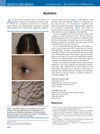 6 citations
,
August 2012 in “The Journal of Pediatrics”
6 citations
,
August 2012 in “The Journal of Pediatrics” A 12-year-old girl was diagnosed with monilethrix, a genetic condition causing fragile, beaded hair that breaks easily, with no effective treatment available.
10 citations
,
July 1984 in “British Journal of Dermatology” Epidermal cysts come from the skin, while pilar cysts come from hair follicles.
 July 2023 in “Media Dermato Venereologica Indonesiana”
 Early diagnosis, stopping the suspected drug, and supportive care are crucial for treating Stevens-Johnson Syndrome and Toxic Epidermal Necrolysis.
5 citations
,
January 2016 in “European Journal of Dermatology” Suplatast tosilate successfully treated a woman's systemic sclerosis symptoms.
March 2016 in “Experimental Dermatology” EGFR helps hair follicles transition properly by controlling Stathmin levels.
4 citations
,
March 2021 in “Journal of Histotechnology” Hidradenitis suppurativa lesions have less collagen and elastin but more new blood vessels.
 January 2019 in “Proceedings for Annual Meeting of The Japanese Pharmacological Society”
 Nε-(carboxymethyl) lysine delays hair growth by blocking a key protein.
7 citations
,
June 2009 in “Journal of the European Academy of Dermatology and Venereology” Basement membrane changes in lichen planopilaris cause scarring and permanent hair loss.