 February 2013 in “Journal of Visualized Experiments”
 The document's conclusion cannot be provided because the document is not available for analysis.
8 citations
,
July 2023 in “Inflammation and Regeneration” ALKBH5 helps wounds heal faster by stabilizing PELI2 mRNA.
3 citations
,
November 2020 in “PubMed” Stiffer hydrogels better promote stem cells turning into hair follicle cells.
 April 2026 in “Microsystems & Nanoengineering”
 HA-gel-dex hydrogels help heal wounds and regenerate tissue effectively.
23 citations
,
May 2023 in “Cell Proliferation” TGF-β and FGF pathways are crucial for skin development and regeneration.
 February 2025 in “International Journal of Bioprinting”
 3D-printed scaffolds help regenerate hair follicles in lab-grown skin.
April 2023 in “Journal of Investigative Dermatology” RNase L suppresses regeneration in mammals.
 28 citations
,
February 2014 in “PLoS ONE”
28 citations
,
February 2014 in “PLoS ONE” Epidermal stem cells on a special membrane helped mice regrow full skin with hair and functions.
 9 citations
,
July 2017 in “Dermatologic Therapy”
9 citations
,
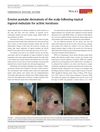
July 2017 in “Dermatologic Therapy” Two elderly men developed scalp inflammation after using a gel for skin lesions, which healed with treatment except for some permanent hair loss.
 59 citations
,
April 2016 in “Cell Reports”
59 citations
,
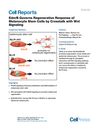
April 2016 in “Cell Reports” EdnrB signaling helps melanocyte stem cells regenerate and could be targeted to treat pigmentation issues.
98 citations
,
December 2015 in “The Journal of Cell Biology” Keratin is crucial for skin barrier formation and affects mitochondrial function.
22 citations
,
May 2007 in “Molecular Biotechnology” 1 citations
,
April 2022 in “Journal of cosmetic dermatology” Krox20 overexpression in fibroblasts may play a role in abnormal scar formation and could be a target for new treatments.
14 citations
,
July 1994 in “Journal of Dermatological Science” Keratin mutations may cause scarring alopecia by damaging hair structure.
 146 citations
,
May 2002 in “The American journal of pathology”
146 citations
,
May 2002 in “The American journal of pathology” Cathepsin L is essential for normal hair growth and development.
9 citations
,
July 2020 in “Cell Proliferation” Epiregulin can help hair grow and may be useful for treating hair loss.
1 citations
,
May 2022 in “International journal of molecular sciences” Faulty LEF1 activation causes faster skin cell differentiation in premature aging syndrome.
October 2009 in “The American Journal of Gastroenterology” Isolated amylase deficiency can cause failure to thrive and should be checked with specific tests.
193 citations
,
May 2008 in “Development” Activating β-catenin can turn skin cells into hair follicles.
 34 citations
,
May 2021 in “Journal of Nanobiotechnology”
34 citations
,
May 2021 in “Journal of Nanobiotechnology” The 3D electrospun fibrous sponge is promising for tissue repair and healing diabetic wounds.
 April 2016 in “Journal of Investigative Dermatology”
 Wnt ligands, produced by dermal papilla cells, are essential for adult hair growth and regeneration.
 1 citations
,
March 2023 in “bioRxiv (Cold Spring Harbor Laboratory)”
1 citations
,
March 2023 in “bioRxiv (Cold Spring Harbor Laboratory)” Skin cell types develop when specific genes are turned on by removing certain chemical tags from DNA.
10 citations
,
July 2001 in “PubMed” A new type of pachyonychia congenita may exist, caused by a different keratin mutation.
56 citations
,
December 1990 in “Differentiation” Growth factors can either promote or inhibit hair follicle cell growth and collagen breakdown.
September 2018 in “Digital Access to Scholarship at Harvard (DASH) (Harvard University)” FN nanofiber dressings improve wound healing and restore natural skin structure.
28 citations
,
November 2013 in “Cell and Tissue Research” October 2018 in “Deep Blue (University of Michigan)” Hair follicle development involves specific cells and genes, crucial for understanding severe skin diseases like harlequin ichthyosis.
 36 citations
,
July 2014 in “Experimental Dermatology”
36 citations
,
July 2014 in “Experimental Dermatology” Skin and hair can regenerate after injury due to changes in gene activity, with potential links to how cancer spreads. Future research should focus on how new hair follicles form and the processes that trigger their creation.
January 2020 in “eScholarship (California Digital Library)” Signaling factors and gene-driven cell adhesion are crucial for wound healing and embryo development.
January 2005 in “Journal of Cutaneous Pathology” The hair erector muscle is involved in various skin conditions and disorders.