 20 citations
,
February 2019 in “Genes”
20 citations
,
February 2019 in “Genes” The study concludes that mutations in the AEBP1 gene can cause a form of Ehlers-Danlos syndrome and should be considered in diagnosis.
 1 citations
,
April 2023 in “Frontiers in Genetics”
1 citations
,
April 2023 in “Frontiers in Genetics” The document concludes that individuals with a rare genetic disorder linked to the AEBP1 gene may experience a unique type of hair loss and should be monitored for heart issues.
9 citations
,
October 2015 in “Journal of Cutaneous Pathology” Erythematous papulopustular eruptions in cancer patients using EGFR inhibitors show specific skin changes that vary with severity and treatment type.
30 citations
,
August 1993 in “PubMed” IL-1 alpha stops hair follicle growth and hair production.
 August 2025 in “BMC Pregnancy and Childbirth”
 A new EDA gene variant causes X-linked hypohidrotic ectodermal dysplasia in a Chinese family.
 93 citations
,
May 2010 in “European Journal of Cancer”
93 citations
,
May 2010 in “European Journal of Cancer” BI 2536 had limited effectiveness against several advanced cancers and caused significant side effects.
 October 2015 in “Elsevier eBooks”
 Aldesleukin can treat certain cancers and increase HIV patient CD4+ counts but often causes severe side effects.
10 citations
,
December 2008 in “Molecular Carcinogenesis” The PML protein helps prevent skin cancer in mice.
2 citations
,
April 2022 in “Biomedicines” Low-frequency electromagnetic fields may help hair growth by affecting certain growth-related molecules.
May 2023 in “bioRxiv (Cold Spring Harbor Laboratory)” The research mapped diverse cell types in mouse lacrimal glands, aiding understanding of gland biology and diseases.
92 citations
,
April 2009 in “Journal of Investigative Dermatology” The Celsr1 gene is crucial for normal hair patterning in mice.
39 citations
,
March 2009 in “Dermatology Online Journal” Erlotinib can cause persistent excessive hair growth.
 59 citations
,
April 2016 in “Cell Reports”
59 citations
,
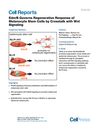
April 2016 in “Cell Reports” EdnrB signaling helps melanocyte stem cells regenerate and could be targeted to treat pigmentation issues.
September 2019 in “Journal of Investigative Dermatology” EGFR and MEK inhibitors reduce PD-L1 in hair follicles, possibly causing inflammation.
49 citations
,
March 2017 in “PubMed” Enhancers and super-enhancers are key in controlling specific gene activity and can play a role in cancer development.
November 2024 in “NeoReviews” An extremely low-birthweight infant had a rare genetic skin disease and died despite treatment.
4 citations
,
May 2022 in “International journal of molecular sciences” Heat-killed Enterococcus faecalis EF-2001 may promote hair growth and transition hair follicles to the growth phase.
January 2013 in “edoc (University of Basel)” TRF1 is crucial for creating and maintaining stem cells and marks both pluripotent and adult stem cells.
 37 citations
,
April 2010 in “FEBS Letters”
37 citations
,
April 2010 in “FEBS Letters” The study concludes that the EDA2R gene is activated by p53 during chemotherapy but is not necessary for chemotherapy-induced hair loss.
ETS2 is crucial in squamous cell carcinoma development and could be a therapeutic target.
January 2025 in “Analytical Methods” A new fluorescent material can detect dextran sulfate sodium, turning green when present, useful for forensic and environmental monitoring.
1 citations
,
April 2010 in “Digital WPI” CLK1 is needed for skin cells to become epidermal cells but not sebocytes.
March 2026 in “Experimental Dermatology” The new model helps understand and develop treatments for genetic skin disorders like AEC.
18 citations
,
June 2018 in “Journal of Dental Research” Msx2 is essential for proper enamel formation by preventing abnormal cell transformation.
 March 2026 in “Folia Histochemica et Cytobiologica”
 LTBP1 is a key regulator in diseases and a potential target for new treatments.
 June 2017 in “Journal of evolution of medical and dental sciences”
 Most lupus patients in coastal Kerala had skin-specific lesions that could help diagnose the disease, and non-specific skin issues were linked to more severe, systemic lupus.
 January 2017 in “Springer eBooks”
 The document concludes that Cutaneous Lupus Erythematosus has different forms, is influenced by genetic and environmental factors, and can be treated with various medications, but more targeted therapies are needed.
224 citations
,
February 2013 in “The Journal of clinical investigation/The journal of clinical investigation” ERG increases SOX9, promoting prostate cancer growth and invasion.
 April 2023 in “Journal of Investigative Dermatology”
 The study created special nanoparticles that effectively deliver an anti-inflammatory drug to treat skin inflammation in psoriasis.