October 2025 in “Clinical and Experimental Dermatology” Fibrosing alopecia can be stabilized or improved with anti-inflammatory treatments and hair growth agents.
June 2025 in “Annals of the Rheumatic Diseases” Brain fog in lupus is common, worrying, and often not treated properly.
Ritlecitinib is a new treatment for severe hair loss in people 12 and older.
 May 2025 in “LUMEN ET VIRTUS”
 Nursing care is crucial for safe and effective hair transplants.
 April 2025 in “Veterinary Dermatology”
 Dermoscopy is useful for identifying skin lesions in dogs, with specific features distinguishing infundibular keratinising acanthomas from follicular cysts.
 September 2023 in “Biomedicines”
 Squalene may be a marker for certain types of alopecia.
 May 2023 in “Photobiomodulation, photomedicine, and laser surgery”
 The 675 nm laser treatment significantly increased hair density and reduced symptoms of androgenetic alopecia in both men and women, with no side effects.
 January 2023 in “Research Square (Research Square)”
 Blacks and Hispanics have higher chances of alopecia areata than Whites.
Trichopigmentation is a non-invasive, reversible treatment for hair loss that offers natural-looking results for both men and women.
December 2021 in “Cosmetics”  October 2021 in “Journal of Investigative Dermatology”
 The study concludes that as skin matures from infancy to childhood, there are major changes in cell differentiation, stemness, and growth, leading to a stronger skin barrier in older children.
 September 2020 in “Journal of Investigative Medicine”
 Omics techniques are needed to understand the scalp microbiome's role in alopecia areata for new treatments.
 August 2020 in “Current psychopharmacology”
 Pregnancy and nursing increase certain brain activities in rats, but these changes disappear when the babies are taken away.
September 2019 in “The journal of investigative dermatology/Journal of investigative dermatology” New RIPK4 gene mutations were found to cause a type of skin and limb birth defect.
September 2019 in “The journal of investigative dermatology/Journal of investigative dermatology” A new mutation in the STING protein causes a disease with lupus-like symptoms and responds well to a specific inhibitor treatment.
July 2019 in “Dermatology practical & conceptual” The study found that alopecia areata is strongly linked to autoimmune diseases and may indicate a genetic predisposition to such conditions.
January 2019 in “Archives of dermatology and skin care” Biomimetic peptides were found to promote hair growth and prolong the growth phase in human hair follicles.
 August 2016 in “Journal of Investigative Dermatology”
 Dutasteride improved hair density and thickness in men not helped by finasteride, with minimal side effects.
 April 2016 in “The journal of investigative dermatology/Journal of investigative dermatology”
 The back of the scalp has more nerve fibers than the front, which may explain why some people feel more sensitivity there.
April 2016 in “The journal of investigative dermatology/Journal of investigative dermatology” Topical gabapentin was safe and effective for treating scalp symptoms and promoting hair regrowth in cicatricial alopecias.
January 2014 in “Italian journal of anatomy and embryology” Platelet Rich Plasma can help human hair grow in a lab setting.
Alkylating agents can kill cancer cells but may cause skin and allergic reactions.
 April 2012 in “The Journal of Urology”
 PSA screening's effectiveness in reducing prostate cancer deaths can vary based on trial design and participant compliance.
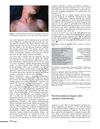
A boy on a ketogenic diet and anti-epileptic drugs developed skin issues due to stopping vitamin supplements, which improved with proper supplementation.
 June 1995 in “International Journal of Gynecology & Obstetrics”
 Women with hair loss have higher androgen levels, while men with early balding have altered androgen ratios.
January 2020 in “Journal of translational science”  737 citations
,
August 2020 in “Journal of Infection”
737 citations
,
August 2020 in “Journal of Infection” Many COVID-19 survivors experience long-term symptoms but still report satisfactory quality of life and return to work.
665 citations
,
April 2016 in “Nature communications” Blocking specific proteins can help remove aging cells and might treat age-related diseases and promote hair growth.
 581 citations
,
October 1998 in “Journal of The American Academy of Dermatology”
581 citations
,
October 1998 in “Journal of The American Academy of Dermatology” Finasteride safely and effectively treats male pattern hair loss, but may cause reversible sexual issues and harm male fetuses.