
Grateloupia elliptica seaweed extract may promote hair growth by activating Wnt/β-catenin signaling and cell proliferation.
65 citations
,
March 2017 in “Experimental Dermatology” Curly hair is influenced by specific genetic variations.
 13 citations
,
November 2012 in “International Journal of Dermatology”
13 citations
,
November 2012 in “International Journal of Dermatology” Curly hair breaks more easily, especially with chemical treatments, but simpler grooming reduces breakage.
13 citations
,
January 2001 in “Pediatric dermatology” A dark-haired Chinese girl had hair that looked banded under certain light but was normal under a microscope.
February 2018 in “bioRxiv (Cold Spring Harbor Laboratory)” Rodent spiny hair traits are due to genetic factors other than the Edar gene.
10 citations
,
June 2019 in “Cosmetics” Mixed-race individuals have hair with varied shapes and more root damage.
 8 citations
,
November 2022 in “International Journal of Cosmetic Science”
8 citations
,
November 2022 in “International Journal of Cosmetic Science” Human hair varies widely and should be classified by curl type rather than race.
 3 citations
,
October 2010 in “Placenta”
3 citations
,
October 2010 in “Placenta” The shape and size of the placenta may help predict future health risks for both mother and child.
1 citations
,
January 2021 in “Clinical case reports” The Hotz-Celsus surgery successfully fixed inward-turning eyelids in cattle.

Caucasian and Mediterranean hair is denser and varies in color and texture compared to African and Asian hair.
 15 citations
,
September 2014 in “JAMA Dermatology”
15 citations
,
September 2014 in “JAMA Dermatology”  June 2003 in “Obstetrical & Gynecological Survey”
 Examining more lymph nodes can improve survival rates in breast cancer patients without lymph node involvement.
 37 citations
,
January 1989 in “British Journal of Plastic Surgery”
37 citations
,
January 1989 in “British Journal of Plastic Surgery” Leaving non-absorbable sutures in for 6 months reduces scar stretching and width.
 34 citations
,
October 2004 in “Plastic and Reconstructive Surgery”
34 citations
,
October 2004 in “Plastic and Reconstructive Surgery” Nasolabial skin-fat grafts are good for nasal reconstruction with minimal scarring and no need for bolsters, but smoking may affect graft survival.
 11 citations
,
January 2013 in “Indian Dermatology Online Journal”
11 citations
,
January 2013 in “Indian Dermatology Online Journal” CCCA is a common, progressive hair loss condition that may not always be linked to hair care practices and requires a biopsy for diagnosis.
 5 citations
,
March 1985 in “Head & Neck Surgery”
5 citations
,
March 1985 in “Head & Neck Surgery” Combining scalp reduction and hair transplants improves coverage and appearance for male baldness.
 78 citations
,
May 1989 in “The Journal of Clinical Endocrinology & Metabolism”
78 citations
,
May 1989 in “The Journal of Clinical Endocrinology & Metabolism” Spironolactone effectively reduces hair growth in women with hirsutism and is generally well-tolerated.
 73 citations
,
June 2003 in “Journal of the American Academy of Dermatology”
73 citations
,
June 2003 in “Journal of the American Academy of Dermatology” Dermatologists need to understand African American hair-care practices to better treat their hair and scalp disorders.
 32 citations
,
September 1997 in “Dermatologic Surgery”
32 citations
,
September 1997 in “Dermatologic Surgery” Mini-micrografting in hair transplants can give similar density to older methods with fewer sessions.
 30 citations
,
May 2014 in “American Journal of Clinical Dermatology”
30 citations
,
May 2014 in “American Journal of Clinical Dermatology” The conclusion is that better understanding and more research are needed to effectively manage follicular and scarring disorders in skin of color, with an emphasis on patient education and cultural awareness.
 29 citations
,
January 2010 in “PubMed”
29 citations
,
January 2010 in “PubMed” FUE hair transplants offer minimal scarring and are good for short hairstyles but are time-consuming and can be costly.
 16 citations
,
April 2009 in “Dermatologic Surgery”
16 citations
,
April 2009 in “Dermatologic Surgery” The place where hair is transplanted can change its growth rate and length but not its thickness.
 14 citations
,
September 2001 in “Dermatologic Surgery”
14 citations
,
September 2001 in “Dermatologic Surgery” The document concludes that following specific surgical guidelines can improve scalp surgery results and reduce complications.
 12 citations
,
October 2017 in “Journal of Cosmetic Dermatology”
12 citations
,
October 2017 in “Journal of Cosmetic Dermatology” Combining plasma rich in growth factors with hair transplant surgery may lead to faster recovery and better outcomes for hair loss treatment.
 9 citations
,
March 2020 in “Dermatologic Surgery”
9 citations
,
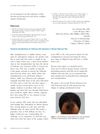
March 2020 in “Dermatologic Surgery” Both Follicular Unit Transplantation (FUT) and Follicular Unit Excision (FUE) are effective hair transplant methods; the best choice depends on the patient's needs and the surgeon's preference.
 6 citations
,
May 2013 in “Dermatologic Surgery”
6 citations
,
May 2013 in “Dermatologic Surgery” FUE can be successfully done on African-American hair by using larger punch tools and careful techniques to reduce hair damage.
 6 citations
,
July 2007 in “Plastic and Reconstructive Surgery”
6 citations
,
July 2007 in “Plastic and Reconstructive Surgery” Single-hair transplantation with a Choi hair transplanter effectively hides cleft lip scars in men.
 4 citations
,
December 2007 in “Dermatologic Surgery”
4 citations
,
December 2007 in “Dermatologic Surgery” 3% hydrogen peroxide does not harm hair graft survival compared to saline.
 3 citations
,
April 2021 in “Journal of Cosmetic Dermatology”
3 citations
,
April 2021 in “Journal of Cosmetic Dermatology” The micrometer caliper is a reliable tool for measuring hair diameter for FUE surgery.
 2 citations
,
August 2011 in “Dermatologic Surgery”
2 citations
,
August 2011 in “Dermatologic Surgery” Small micropunches for hair transplants can increase density but may cause more bleeding and longer healing.