 December 2025 in “EMBO Reports”
 Cells communicate with neighbors to coordinate their development.
 July 2025 in “International Journal of Dermatology Venereology and Leprosy Sciences”
 The human amniotic membrane is a promising material for skin treatments and hair growth.
 July 2024 in “Journal Of Stem Cell Research”
 Mesenchymal stem cells improve skin appearance and structure in dermatology and aesthetic medicine.
 May 2024 in “Scientific reports”
 Twist2 is essential for scarless skin healing and hair growth in mouse fetuses.
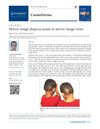
Mirror-image twins can have alopecia areata on opposite sides of their heads.
 April 2024 in “bioRxiv (Cold Spring Harbor Laboratory)”
 Removing Sprouty genes in mice causes various hormone-related issues but does not increase cancer risk by one year of age.
 March 2024 in “Research Square (Research Square)”
 Twist2 is essential for proper skin healing and hair growth in developing mice.
 January 2024 in “International Journal of Pharmacognosy and Pharmaceutical Research”
 Plant molecules like caffeine and ginsenosides can boost hair growth naturally.
 November 2023 in “Frontiers in veterinary science”
 The study provides insights into hair growth mechanisms in yaks.
 April 2023 in “Tikrit Journal of Pharmaceutical Sciences”
 Deferasirox effectively reduces iron overload in ß-thalassemia patients but may cause some manageable side effects.
 January 2022 in “International Research Journal of Ayurveda & Yoga”
 PCOS can be treated with Ayurvedic methods focusing on balancing body energies and improving digestion.
 September 2021 in “Research Square (Research Square)”
 Not having enough or having too much of the protein Grainyhead-like 3 leads to various developmental problems.
 June 2020 in “Nihon Ika Daigaku Igakkai Zasshi”
 aPKCλ is essential for hair follicle stem cell maintenance and wound healing.
 May 2020 in “Research Square (Research Square)”
 Hair follicle stem cells may help treat strokes.
 August 2019 in “Journal of Investigative Dermatology”
 Skin may help in getting rid of excess iron through the process of skin cell renewal.
 January 2019 in “Advances in stem cells and their niches”
 Skin health and repair depend on the signals between skin stem cells and their surrounding cells.
 September 2018 in “Journal of Investigative Dermatology”
 Non-white organ transplant patients have worse skin cancer outcomes due to later diagnosis and treatment.
 August 2018 in “Journal of Investigative Dermatology”
 Centrosomes are essential for healthy skin and hair growth, and their role is different from that of cilia.
 August 2018 in “Journal of Investigative Dermatology”
 A woman with dermatomyositis improved after treatment for neck panniculitis, suggesting similar treatment for related conditions.
 August 2018 in “Journal of Investigative Dermatology”
 Polyunsaturated fatty acids, like arachidonic acid and eicosapentaenoic acid, can promote hair growth and may help treat hair loss.
 August 2018 in “Journal of Investigative Dermatology”
 The conclusion is that using light-sheet fluorescence microscopy with a special solution can effectively create detailed 3D images of human skin for dermatological research.
 January 2018 in “Stem cells in clinical applications”
 Exosomes show promise for tissue repair and regeneration with advantages over traditional cell therapies.
 May 2017 in “InTech eBooks”
 Early treatment of children's hair loss, which can be caused by various factors, is important due to its emotional impact.
 July 2016 in “Indian journal of science and technology”
 Neonate scalp hair is thinner, lacks a medulla, and has smaller follicles compared to adult hair.
 April 2015 in “Andrology”
 HNG may help prevent the negative effects of chemotherapy on sperm production and white blood cell counts.
Skin changes throughout life, from development before birth to aging effects like wrinkles, influenced by both genetics and environment.
 August 2014 in “Warwick Research Archive Portal (University of Warwick)”
 Obesity negatively affects the endometrium, leading to higher miscarriage risk and impaired cell function.
 September 2013 in “Experimental Dermatology”
 The document concluded that stem cells are crucial for skin repair, regeneration, and may help in developing advanced skin substitutes.
 December 2012 in “Journal of Dermatological Science”
 Wnt/beta-catenin signaling in the skin helps fat cell development during hair growth and repair.
 December 2012 in “Journal of dermatological science”
 Langerhans cells and melanocytes migrate to the skin and hair follicles during early human development.