112 citations
,
January 2004 in “The International journal of developmental biology” Feather patterns form through genetic and epigenetic controls, with cells self-organizing into periodic patterns.
50 citations
,
December 2017 in “British Journal of Dermatology” Different skin cells produce unique materials, which can improve skin substitutes for healing.
1 citations
,
April 2024 in “Cells” Corneal cells can potentially revert to stem cells, aiding in repair and regeneration.
65 citations
,
September 2014 in “BMC genomics” Different hair types in mammals are linked to variations in specific protein genes, with changes influenced by their living environments.
 January 2026 in “BMC Veterinary Research”
 A genetic variant in "Blonde d'Aquitaine" calves causes death at birth due to a missing protein.
 February 2025 in “Animals”
 Understanding proteins in skin structures like claws and hair is crucial for future research.
 April 2026 in “Research Square”
 E13 fetal mouse fibroblast vesicles may help reduce scarring.
July 2025 in “Genome biology” HT-scCAT-seq helps understand gene regulation in embryonic skin development.
 21 citations
,
June 2016 in “Genesis”
21 citations
,
June 2016 in “Genesis” Researchers identified specific genes that are important for mouse skin cell development and healing.
25 citations
,
July 2015 in “EMBO Reports” Tmem50b and 2610305D13Rik genes play key roles in early mouse embryo development.
26 citations
,
May 2011 in “Tissue Engineering Part A” Hydrogel surface properties affect mouse embryoid body differentiation.
 17 citations
,
December 2006 in “Gene Expression Patterns”
17 citations
,
December 2006 in “Gene Expression Patterns” Scube3 gene affects mouse embryo growth in multiple areas, but needs more research.
July 2008 in “VTechWorks (Virginia Tech)” PrPC is important for neural differentiation in cattle and mouse embryonic stem cells.
7 citations
,
March 2017 in “Experimental and Therapeutic Medicine” Hair follicle cells can help keep embryonic stem cells undifferentiated.
 19 citations
,
November 2018 in “Experimental Dermatology”
19 citations
,
November 2018 in “Experimental Dermatology” The spiny mouse can regenerate its skin without scarring, which could help us learn how to heal human skin better.
3 citations
,
July 2017 in “Endogenous locus-driven H-Ras G12V expression induces senescence-like phenotype in primary fibroblasts of the Costello syndrome mouse model” Mouse hair follicle stem cells have a flexible chromatin state that supports skin health and hair growth.
 June 2021 in “Experimental and Therapeutic Medicine”
 MEF/KSF-conditioned medium effectively grows mouse hair follicle stem cells with bone-forming potential.
August 2022 in “Biomedicines” Turning off the Lhx2 gene in mouse embryos leads to slower wound healing and scars.
 829 citations
,
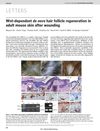
May 2007 in “Nature”
829 citations
,
May 2007 in “Nature” Hair follicles can regrow in wounded adult mouse skin using a process like embryo development.
January 2010 in “Chinese journal of clinical anatomy” Hair follicles in C57BL/6 mice develop rapidly from late embryonic stages to shortly after birth, with key growth and regeneration phases identified.
 May 2024 in “Scientific reports”
 Twist2 is essential for scarless skin healing and hair growth in mouse fetuses.
 March 2024 in “Research Square (Research Square)”
 Twist2 is essential for proper skin healing and hair growth in developing mice.
Retinoic acid can change skin development, like turning scales into feathers or forming glands.
 January 2024 in “ACS Biomaterials Science & Engineering”
 A new method using a microfluidic device can prepare hair follicle germs efficiently for potential use in hair loss treatments.
 April 2018 in “Journal of Investigative Dermatology”
 Fetuin A may increase collagen production and promote scarring.
April 2016 in “The journal of investigative dermatology/Journal of investigative dermatology” Activating Sonic Hedgehog signaling in cancer stroma may help treat basal cell carcinoma.
 July 2023 in “Journal of bioscience and bioengineering”
 DMSO and microfinger devices show promise for preserving hair grafts for hair loss treatments.
 August 2012 in “Nature Cell Biology”
 A pathway helps maintain long telomeres in both stem and cancer cells.
 24 citations
,
May 2019 in “PLOS ONE”
24 citations
,
May 2019 in “PLOS ONE” The African spiny mouse can fully regenerate its muscle without scarring, unlike the common house mouse.
 August 2023 in “Micromachines”
 The new method can create hair follicle-like structures but not complete hair with roots and shafts, needing more improvement.