Search
for
Sort by
Research
270-300 / 1000+ resultsresearch Erthwellness Discount Code "AVA25" Get 25% Off On All Products!
research LB793 A phase 1, open-Label, single ascending dose study in healthy subjects of the safety, tolerability and pharmacokinetics of ASLAN004, a novel IgG anti-IL-13 receptor alpha 1 Inhibitor
ASLAN004 was safe and well-tolerated, supporting further development for treating certain diseases.
research Finasteride < Rec INN; BAN; USAN >
research A(1-7) reduces pathologies associated with SLE in MRL-lpr mice
A(1-7) treatment reduces symptoms of lupus in mice.

research WNT10A , dermatology and dentistry
Mutations in the WNT10A gene can cause skin, hair, teeth, and other disorders, and may also affect other areas like kidney and cancer, with potential for targeted treatments.
research Integrin β1 Establishes Liver Microstructure and Modulates Transforming Growth Factor β during Liver Development and Regeneration
Integrin β1 is crucial for liver structure and function, preventing fibrosis.
research Expression of ΔNLef1 in mouse epidermis results in differentiation of hair follicles into squamous epidermal cysts and formation of skin tumours
Overexpression of ΔNLef1 in mouse skin leads to hair loss, cysts, and skin tumors.
research ACE2 Inhibits Dermal Regeneration Through Ang II in Tissue Expansion
Inhibiting ACE2 improves skin regeneration during tissue expansion.
research Enzalutamide/finasteride/goserelin/zoledronic-acid
research Over-, ectopic-expression of FoxN1 at early life adversely influences lymphopoiesis (HEM3P.280)
Early over-expression of FoxN1 harms immune and skin development.
research The selective androgen receptor modulator GTx‐024 (enobosarm) improves lean body mass and physical function in healthy elderly men and postmenopausal women: results of a double‐blind, placebo‐controlled phase II trial
Enobosarm significantly increased muscle mass and improved physical function in elderly men and postmenopausal women without serious side effects.
research Roles of MED1 in Quiescence of Hair Follicle Stem Cells and Maintenance of Normal Hair Cycling
MED1 is essential for normal hair growth and maintaining hair follicle stem cells.
research The Nude Mutant Gene Foxn1 Is a HOXC13 Regulatory Target during Hair Follicle and Nail Differentiation
HOXC13 is essential for hair and nail development by regulating Foxn1.
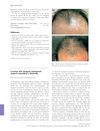
research A woman with iatrogenic androgenetic alopecia responding to finasteride
EF and PXE not closely related.

research Angiopoietin-1 induces survival and proliferation of hair follicle dermal papilla cells through integrin α5β1 signaling
Angiopoietin-1 helps hair cells survive and grow, making it a potential treatment for hair loss.
research VEPA and ML-Y1 Regimen for Elderly Non-Hodgkin's Lymphoma.
Both VEPA and ML-Y1 treatments are not effective enough for elderly non-Hodgkin's lymphoma patients.

research 877 Loss of UBE2N in keratinocytes leads to skin inflammation and immune infiltration through IRAK1/4-mediated processes
Removing UBE2N from skin cells causes inflammation and immune response, which can be lessened with specific inhibitors.

research Transcriptional regulation of the thymus master regulator Foxn1
Foxn1 gene regulation is crucial for thymus development but not for hair growth.
research POLYCOMB REPRESSIVE COMPLEX 1 IS REQUIRED TO MAINTAIN STEM CELL IDENTITY AND TO PRESERVE ADULT TISSUE HOMEOSTASIS.
Polycomb Repressive Complex 1 is crucial for keeping stem cells stable and maintaining healthy adult tissues.
research Msx2 Prevents Stratified Squamous Epithelium Formation in the Enamel Organ
Msx2 is essential for proper enamel formation by preventing abnormal cell transformation.
research finasteride, n.
research Compound Heterozygous Mutations in Forkhead Box N1 (FOXN1) Lead to a Severe Immunodeficiency but Normal Hair and Nail Development in Patients
Mutations in the FOXN1 gene cause severe immune issues but don't affect hair and nails.
research Wnt1/βcatenin injury response activates the epicardium and cardiac fibroblasts to promote cardiac repair: Wnt1/βcatenin injury response regulates cardiac repair
The Wnt1/βcatenin pathway is crucial for heart repair after injury.

research The SH-1 Molecule By Dr. Melvin Sewell
SH-1 effectively treats hair loss without side effects.
research A propòsit de la possible intervenció de Reinard des Fonoll en la construcció de l'església arxiprestal de Morella
Planarians regenerate using conserved gene expression mechanisms, with runt-1 crucial for cell type specification.
research Foxn1 promotes keratinocyte differentiation by regulating the activity of protein kinase C
Foxn1 helps skin cells mature by controlling a specific protein's activity.

research Barcelona 1997 — Hello and Olé
The document's conclusion cannot be provided because the content is not available for analysis.