 7 citations
,
September 2019 in “Journal of Cellular Physiology”
7 citations
,
September 2019 in “Journal of Cellular Physiology” Akt2 protein is essential for normal cell division in early mouse embryos.
 April 2019 in “Journal of Investigative Dermatology”
 Skin grafts from related donors significantly healed chronic wounds in patients with a severe skin condition over a year.
 98 citations
,
June 2008 in “Human mutation”
98 citations
,
June 2008 in “Human mutation” A genetic change in the EDAR gene causes the unique hair traits found in East Asians.
6 citations
,
December 2022 in “International Journal of Molecular Sciences” EZH2 is crucial for uterine gland development and female fertility.
 July 2022 in “Research Square (Research Square)”
 A new gel helps grow mature eggs in a lab that can be fertilized and develop further.
18 citations
,
May 2023 in “Science Advances” Activating the sonic hedgehog pathway in chicken embryos can permanently change scales to feathers.
39 citations
,
September 2018 in “American Journal of Medical Genetics Part A” A new genetic mutation in the ODC1 gene causes developmental delay and other symptoms in a young girl.
March 2006 in “Chinese journal of plastic surgery” Microencapsulated human hair cells can regenerate hair follicles in mice ears.
 April 2019 in “Journal of Investigative Dermatology”
 Non-coding RNA boosts retinoic acid production and signaling, aiding regeneration.
9 citations
,
September 2024 in “Frontiers in Endocrinology” Platelet-rich plasma infusion improved pregnancy outcomes for women with thin endometrium.
 7 citations
,
July 2014 in “Reproductive Biomedicine Online”
7 citations
,
July 2014 in “Reproductive Biomedicine Online” The length of CAG repeats in the androgen receptor gene is linked to ovarian reserve but does not affect how the ovaries respond to stimulation.
Low IRES/Cap translation is linked to higher stem cell potential.
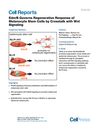 59 citations
,
April 2016 in “Cell Reports”
59 citations
,
April 2016 in “Cell Reports” EdnrB signaling helps melanocyte stem cells regenerate and could be targeted to treat pigmentation issues.
 1 citations
,
March 2022 in “Journal of Dermatological Science”
1 citations
,
March 2022 in “Journal of Dermatological Science” Adding TERT and BMI1 to certain skin cells can improve their ability to create hair follicles in mice.
 16 citations
,
January 2018 in “Biochemical and Biophysical Research Communications”
16 citations
,
January 2018 in “Biochemical and Biophysical Research Communications” Researchers created five new human scalp cell lines that could be useful for hair growth and loss research.
58 citations
,
April 2009 in “Current stem cell research & therapy” Adult stem cells can become many different cell types, offering wide possibilities for repairing damaged tissues.
 April 2023 in “The journal of investigative dermatology/Journal of investigative dermatology”
 Deleting the Hoxc13 gene in frogs shows its crucial role in developing skin structures similar to hair.
 12 citations
,
January 2016 in “Journal of Orofacial Orthopedics / Fortschritte der Kieferorthopädie”
12 citations
,
January 2016 in “Journal of Orofacial Orthopedics / Fortschritte der Kieferorthopädie” Researchers found a new mutation in the EDA gene that likely causes missing teeth and mild skin symptoms in one family.
 October 2022 in “Portuguese journal of dermatology and venereology”
 Dupilumab led to complete hair regrowth and improved skin condition in a young man with severe eczema and hair loss.
January 2026 in “SSRN Electronic Journal” 
New peptides can delay aging and improve cell function.
January 2009 in “China Practical Medicine” Certain genes help dermal papillae cells in hair follicles grow and group together.
October 2005 in “Faculty Opinions – Post-Publication Peer Review of the Biomedical Literature” Activating telomerase can boost hair follicle stem cell growth and hair production.
 February 2023 in “Acta Scientific Women s Health”
 New treatments like PBMC, G-CSF, and PRP show promise for helping with repeated implantation failure.
 January 2008 in “Yearbook of Dermatology and Dermatologic Surgery”
 Scientists can make stem cells that can turn into any cell type.
 January 2024 in “Wiadomości Lekarskie”
 VSELs may hold the key to longer life through regenerative therapies.
1 citations
,
May 2022 in “International journal of molecular sciences” Faulty LEF1 activation causes faster skin cell differentiation in premature aging syndrome.
11 citations
,
June 2010 in “Medical Molecular Morphology” 2 citations
,
August 2023 in “Experimental Dermatology” HEY2+ cells help regenerate skin during wound healing.
 March 2023 in “bioRxiv (Cold Spring Harbor Laboratory)”
 Scientists can now create skin with hair by reprogramming cells in wounds.