19 citations
,
January 2023 in “ACS Omega” SEF cryogels effectively kill bacteria, stop bleeding, and speed up wound healing.
2 citations
,
April 2022 in “Biomedicines” Low-frequency electromagnetic fields may help hair growth by affecting certain growth-related molecules.
Red light exposure slows aging in mice by improving fat metabolism.
 15 citations
,
March 2012 in “International journal of nanomedicine”
15 citations
,
March 2012 in “International journal of nanomedicine” Local injections of nanosized rhEPO can speed up skin healing and improve quality after deep second-degree burns.
 11 citations
,
August 2016 in “Journal of dermatological treatment”
11 citations
,
August 2016 in “Journal of dermatological treatment” Tip cryotherapy effectively treats idiopathic guttate hypomelanosis with minimal side effects.
 27 citations
,
October 1945 in “Endocrinology”
27 citations
,
October 1945 in “Endocrinology” Synthetic hormone treatment reduces melanin and hair growth in rats.
 1 citations
,
January 2023 in “Burns & Trauma”
1 citations
,
January 2023 in “Burns & Trauma” Wnt4 protein makes the outer skin layer thicker in burn wounds by turning on a specific healing pathway and loosening the connections between skin cells.
January 2024 in “International Journal of Physics and Applications” Low-level laser therapy can boost cell activity and energy production.
13 citations
,
June 2014 in “Experimental Mechanics”  3 citations
,
July 2018 in “International Journal of Research -GRANTHAALAYAH”
3 citations
,
July 2018 in “International Journal of Research -GRANTHAALAYAH” Human hair and mouse whiskers emit similar biomagnetic fields.
1 citations
,
January 2010 in “Han-guk hyeonmigyeong hakoeji/Applied microscopy” Straight permed hair loses weight faster than virgin hair when heated, but ends up heavier after burning.
3 citations
,
August 2023 in “Biophysical Journal” Mitochondrial activity varies in cells before they stop growing, affecting their growth potential.
105 citations
,
February 2010 in “Endocrinology” The skin produces and responds to thyroid-stimulating hormone, which is controlled by other thyroid-related hormones.
September 2016 in “한국임상약학회지” Ibuprofen, menthol, and cetirizine may help prevent or slow hair loss.
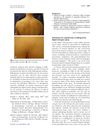 15 citations
,
October 2006 in “Journal of the American Academy of Dermatology”
15 citations
,
October 2006 in “Journal of the American Academy of Dermatology” Liquid nitrogen spray caused a temporary, harmless swelling under the skin in an elderly woman.
 April 2018 in “Journal of Investigative Dermatology”
 Fat under the skin can help hair grow longer, darker, and increase cell growth.
 January 2021 in “Mastology”
 Scalp cooling therapy helped over 80% of women keep at least half their hair during chemotherapy.
222 citations
,
August 2014 in “Cell Metabolism” Mitochondrial Complex I reduces inflammation and increases bone breakdown by affecting certain immune cells.
June 2023 in “International journal of molecular sciences” Heat stress changes goats' skin and hair at the microscopic level and affects their genes and skin bacteria.
87 citations
,
March 2007 in “Biological Chemistry” Deleting the scd1 gene in mice prevents obesity by disrupting skin lipids and improving heat regulation.
May 2005 in “Cancer Research” Melanoma cells lose their ability to form tumors when placed in a zebrafish embryo environment.
 49 citations
,
December 2009 in “Journal of Investigative Dermatology”
49 citations
,
December 2009 in “Journal of Investigative Dermatology” Thyroid function affects skin health, with a complex interaction between the two.
April 2022 in “Book Publisher International (a part of SCIENCEDOMAIN International)” Catalase in processed meats may emit electromagnetic fields that increase cancer risk.
 January 2018 in “Clinical dermatology open access journal”
 The Biofield Energy Treated herbal mixture increased hair growth in mice compared to the untreated mixture.
The gene Endothelin 3 makes mice's fur darker by increasing pigment cells and pigment levels.
1 citations
,
December 2023 in “Frontiers in Behavioral Neuroscience” UVB exposure increases appetite by activating p53 in skin cells.
49 citations
,
June 2004 in “Philosophical Transactions of the Royal Society A Mathematical Physical and Engineering Sciences” Human hair becomes weaker and stretches more easily at higher temperatures.

Biofield Energy Healing Treatment significantly boosts human hair follicle cell growth, potentially aiding in hair growth and skin injury recovery.
 November 2024 in “Journal of the European Academy of Dermatology and Venereology”
 Cryotherapy with precise temperature control is a promising treatment for alopecia areata.
 May 1999 in “Dermatologic Surgery”
 Using an ultrasonic liposuction machine with different cannula sizes and power settings does not change water temperature.