16 citations
,
February 2005 in “British journal of dermatology/British journal of dermatology, Supplement” Lack of Vitamin D receptor changes skin structure and increases certain immune cells in the skin.
 6 citations
,
September 2010 in “Archives of Dermatology”
6 citations
,
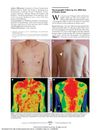
September 2010 in “Archives of Dermatology” Thermography matched the patient's pain levels in a shingles case and might help diagnose shingles without a rash.
50 citations
,
December 2000 in “Journal of Pharmaceutical Sciences” Hair follicles significantly enhance electroosmotic transport during iontophoresis.
20 citations
,
January 2014 in “Tissue and Cell” MEBO ointment helps activate and grow skin stem cells for burn healing.
 65 citations
,
January 2018 in “Nature Reviews Endocrinology”
65 citations
,
January 2018 in “Nature Reviews Endocrinology” Skin fat has important roles in hair growth, skin repair, immune defense, and aging, and could be targeted for skin and hair treatments.
56 citations
,
March 2003 in “Journal of Investigative Dermatology” 17β-estradiol can reduce inflammation in the skin.
 54 citations
,
January 2013 in “BMC Complementary and Alternative Medicine”
54 citations
,
January 2013 in “BMC Complementary and Alternative Medicine” Thuja orientalis hot water extract may help hair grow by starting the growth phase and improving hair follicle development.
January 2011 in “Junshi yixue” Longer exposure to high-power millimeter wave radiation causes more severe skin damage in mice.
 November 2018 in “Journal of investigative dermatology, venereology and cosmetology”
 Biofield Energy Treatment, specifically The Trivedi Effect®, can potentially enhance hair growth by increasing the growth activity of human dermal papilla cells.
25 citations
,
November 2012 in “Thermochimica Acta” Internal lipids in keratin fibers, like wool and hair, reduce water absorption and release.
5 citations
,
June 1995 in “Comparative biochemistry and physiology. Part C. Comparative pharmacology and toxicology/Comparative biochemistry and physiology. C. Comparative pharmacology and toxicology” Removing mink's adrenal glands causes their summer fur to grow earlier.
 7 citations
,
November 2018 in “International Journal of Research -GRANTHAALAYAH”
7 citations
,
November 2018 in “International Journal of Research -GRANTHAALAYAH” Human hair's biomagnetic fields can affect blood cell clumping and coagulation.
9 citations
,
June 2020 in “European Radiology Experimental” 15-Gy x-ray irradiation temporarily alters rat calvaria skin without causing significant inflammation or fibrosis.
DHEA inhibits growth in both mouse and human melanoma cells but works differently in each.
 June 2020 in “bioRxiv (Cold Spring Harbor Laboratory)”
 17α-estradiol extends lifespan and improves metabolism in male mice through the estrogen receptor α.
September 2008 in “Kitasato medical journal” April 2021 in “Institutional Repositories DataBase (IRDB)” High-intensity red LED light boosts bone cell growth and mineralization.
 11 citations
,
August 2018 in “Asian-Australasian journal of animal sciences”
11 citations
,
August 2018 in “Asian-Australasian journal of animal sciences” Short daily photoperiods improve cashmere production in Inner Mongolia white cashmere goats.
61 citations
,
April 2023 in “Advanced Materials” The new electrode improves long-term monitoring on hairy skin by reducing motion issues and is easy to use.
36 citations
,
June 1988 in “Australian Journal of Biological Sciences” Mouse epidermal growth factor injections in sheep affected wool growth and skin, but saline did not.
13 citations
,
February 2016 in “Journal of steroid biochemistry and molecular biology/The Journal of steroid biochemistry and molecular biology” Mice without active or present vitamin D receptors maintain normal blood sugar control and islet gene expression when calcium levels are normal.
 2 citations
,
February 2022 in “Biology”
2 citations
,
February 2022 in “Biology” Blue laser light reduces energy in mouse skin cells and creates harmful oxygen compounds, possibly harming the cells.
 February 2024 in “Journal of Modern Oncology”
 Scalp cooling effectively prevents hair loss during chemotherapy in most cases.
January 2025 in “Animal Science Journal” Golden takin's hair structure is adapted to maintain body temperature in harsh winters.
 7 citations
,
January 2020 in “International Journal of Molecular Sciences”
7 citations
,
January 2020 in “International Journal of Molecular Sciences” Low-frequency electromagnetic fields can boost molecules related to hair growth in human skin cells.
31 citations
,
November 1965 in “Journal of Mammalogy” The pituitary gland is crucial for normal mink fur cycles.
 March 2025 in “FEBS Journal”
 Epiprofin suppresses parathyroid hormone gene activity, helping regulate calcium levels and could be a treatment target for hyperparathyroidism.
 August 1994 in “Molecular Endocrinology”
 Changing protein kinase levels in pituitary cells affects calcium flow and beta-endorphin release.
December 2019 in “theses.fr (ABES)” Lower TGFß1 levels help stem cells become beige fat cells.
July 2025 in “Microscopy and Microanalysis” Intermittent compression therapy is safe and doesn't harm tissue.