
Search
for
Sort by
Research
180-210 / 1000+ results 
research Improved forensic hair evidence for drugs of abuse by mass spectrometry
Forensic hair analysis for drugs is now more reliable and accurate.
research Hair loss at 20 associated with prostate cancer risk later in life
Men who start losing hair at 20 may have a higher chance of getting prostate cancer later.
research 14. Wound Healing; Cutaneous Therapy; Hair
A device was made in 2008 to measure hair loss severity. Other findings include: frizzy mutation in mice isn't related to Fgfr2, C/EBPx marks preadipocytes, Cyclosporin A speeds up hair growth in mice, blocking plasmin and metalloproteinases hinders healing, hyperbaric oxygen helps ischemic wound healing, amniotic membranes heal wounds better than polyurethane foam, rhVEGF165 from a fibrin matrix improves tissue flap viability and induces VEGF-R2 expression, and bFGF enhances wound healing and reduces scarring in rabbits.

research A comprehensive review of the medical complications associated with restrictive eating behaviors in anorexia nervosa
Anorexia nervosa causes serious health issues, best treated with a team approach focusing on nutrition.
research Photosensory Function, Reception and Response in Human Skin
Human skin responds to light with protective mechanisms, but more research is needed to understand these processes and their implications for health and therapy.

research A guide for building biological pathways along with two case studies: hair and breast development
The document explains how to create detailed biological pathways using genomic data and tools, with examples of hair and breast development.
research CATALASE INTRINSIC EMISSIONS OF ELECTROMAGNETIC FIELDS AS PROBABLE CAUSE IN CANCEROGENESIS FROM CONSUMPTION OF RED AND PROCESSED MEAT
Catalase in processed meats may cause cancer by emitting electromagnetic fields.
research The Nuts and Bolts of Low-level Laser (Light) Therapy
Low-level Laser Therapy may help reduce inflammation, pain, and aid healing, but more research is needed to confirm its effectiveness and establish standard treatment guidelines.

research Mechanisms and applications of the anti-inflammatory effects of photobiomodulation
Photobiomodulation therapy using red and near-infrared light can reduce inflammation and aid in healing various conditions.

research Surface modification and endothelialization of biomaterials as potential scaffolds for vascular tissue engineering applications
Improving artificial vascular grafts requires better materials and surface designs to reduce blood clotting and support blood vessel cell growth.
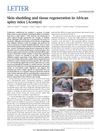
research Skin shedding and tissue regeneration in African spiny mice (Acomys)
African spiny mice can regenerate skin, hair, and cartilage, but not muscle, and their unique abilities could be useful for regenerative medicine.

research Corticosteroids for the treatment of Duchenne muscular dystrophy
Corticosteroids, especially prednisone, improve short-term muscle strength in Duchenne muscular dystrophy but have manageable side effects.

research The Rotterdam Study: 2018 update on objectives, design and main results
The Rotterdam Study updated findings on elderly health, focusing on heart disease, genetics, lifestyle effects, and disease understanding.

research The Rotterdam Study: 2016 objectives and design update
The Rotterdam Study found risk factors for elderly diseases, links between lifestyle and genetics with health conditions, and aimed to explore new areas like DNA methylation and sensory input effects on brain function.

research The Dynamics of the Skin’s Immune System
The skin has a complex immune system that is essential for protection and healing, requiring more research for better wound treatment.

research The Rotterdam Study: 2014 objectives and design update
The Rotterdam Study aims to understand disease causes in the elderly and has found new risk factors and genetic influences on various conditions.

research Polymeric nanoparticles‐based topical delivery systems for the treatment of dermatological diseases
Polymeric nanoparticles show promise for treating skin diseases.

research The North American Menopause Society Recommendations for Clinical Care of Midlife Women
The NAMS 2014 recommendations guide healthcare providers on treating health issues in midlife women, emphasizing individualized care and informed decision-making.

research Interrelation of immunity and tissue repair or regeneration
The immune system plays a key role in tissue repair, affecting both healing quality and regenerative ability.

research Transforming growth factor-β in stem cells and tissue homeostasis
TGF-β is crucial for tissue repair and can cause diseases if not properly regulated.

research The Rotterdam Study: 2010 objectives and design update
The Rotterdam Study aims to understand various diseases in older adults.
research Photobiomodulation or low‐level laser therapy
Low-level laser therapy, now called photobiomodulation, is recognized for its broad medical applications and scientific backing.

research Theoretical considerations in laser hair removal
Laser hair removal effectiveness depends on targeting hair structures without harming the skin, and improvements require more research and expert collaboration.

research Epithelial‐to‐mesenchymal transition in cutaneous wound healing: Where we are and where we are heading
The document concludes that a better understanding of cell changes during wound healing could improve treatments for chronic wounds and other conditions.

research Protoporphyrin IX: the Good, the Bad, and the Ugly
Protoporphyrin IX is useful in cancer treatment but can cause health problems if not properly regulated.

research Electrolysis: Observations from 13 years and 140,000 hours of experience
Electrolysis is effective for permanent hair removal, but technique is key to avoid scarring, and sometimes hormonal treatment is needed for women with hirsutism.

research Hormesis and medicine
Low doses of some substances can be beneficial, while high doses can be harmful or toxic.

research K channel therapeutics at the bedside
Potassium channel openers are effective in treating heart conditions, high blood pressure, pulmonary diseases, bladder issues, and hair loss, but more selective drugs are needed.

research Physicochemical properties of pH-sensitive hydrogels based on hydroxyethyl cellulose–hyaluronic acid and for applications as transdermal delivery systems for skin lesions
The hydrogel with a 1:3 ratio of hydroxyethyl cellulose to hyaluronic acid is effective for delivering drugs through the skin to treat acne.