 134 citations
,
September 2008 in “Lasers in surgery and medicine”
134 citations
,
September 2008 in “Lasers in surgery and medicine” Low fluence photoepilation temporarily removes hair by targeting the hair follicle's pigmented area without severe damage.
40 citations
,
May 2010 in “American Journal of Clinical Dermatology” AKN might be a skin marker for metabolic syndrome.
47 citations
,
November 1966 in “Archives of Dermatology” Trichorrhexis nodosa is mainly caused by hair trauma, not a metabolic defect.
 January 2022 in “Autopsy and Case Reports”
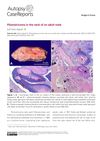
 A man had a non-cancerous neck tumor related to hair follicles removed with no return of the tumor.
 January 2024 in “JAAD case reports”
 Netherton syndrome can cause severe and chronic vulvovaginal symptoms that may improve with continuous oral contraceptives.
 April 2024 in “Histochemistry and cell biology”
 N-acetylcysteine may prevent hair loss caused by chemotherapy.
2 citations
,
February 2024 in “STAR Protocols” The document provides a method to prepare human scalp tissue for studying hair follicles at the single-cell level.
 1 citations
,
November 2020 in “Journal of Cosmetic Dermatology”
1 citations
,
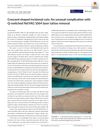
November 2020 in “Journal of Cosmetic Dermatology” A man got unusual crescent-shaped cuts from a laser tattoo removal due to a laser technical issue, but healed without scars.
 41 citations
,
August 2013 in “Facial Plastic Surgery Clinics of North America”
41 citations
,
August 2013 in “Facial Plastic Surgery Clinics of North America” FUE provides minimal scarring and quick recovery in hair transplantation, and surgeons not using it may lag in technology.
 9 citations
,
March 2020 in “Dermatologic Surgery”
9 citations
,
March 2020 in “Dermatologic Surgery” Both Follicular Unit Transplantation (FUT) and Follicular Unit Excision (FUE) are effective hair transplant methods; the best choice depends on the patient's needs and the surgeon's preference.
 23 citations
,
May 2013 in “Virology”
23 citations
,
May 2013 in “Virology” HPV16 oncogenes disrupt the normal activity of hair follicle stem cells.
41 citations
,
October 2001 in “Experimental Dermatology” The nude gene is important for skin and hair development.
 1 citations
,
November 2009 in “Cambridge University Press eBooks”
1 citations
,
November 2009 in “Cambridge University Press eBooks” FUE is a less invasive hair restoration method with potential to become standard, offering benefits like reduced scarring and pain, but requires experience to minimize risks.
 2 citations
,
November 2018 in “Cell Stem Cell”
2 citations
,
November 2018 in “Cell Stem Cell” The research found a new way to heal chronic skin ulcers by turning certain cells into skin tissue using specific factors.
 19 citations
,
November 2018 in “Nutrients”
19 citations
,
November 2018 in “Nutrients” Annurca apple extract may protect mouse hair from damage by chemotherapy and could help treat hair loss without promoting cancer growth.
53 citations
,
October 2003 in “Genetics” The mK6irs1/Krt2-6g gene likely causes wavy hair in mice.
January 1990 in “대한피부과학회지” Peanut agglutinin staining helps differentiate malignant melanoma from nevocellular nevus.
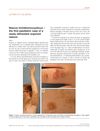 8 citations
,
April 2010 in “JEADV. Journal of the European Academy of Dermatology and Venereology/Journal of the European Academy of Dermatology and Venereology”
8 citations
,
April 2010 in “JEADV. Journal of the European Academy of Dermatology and Venereology/Journal of the European Academy of Dermatology and Venereology” The first pediatric case of naevus trichilemmocysticus was documented.
April 2023 in “Journal of Investigative Dermatology” CD8+ T cells attack hair follicle stem cells, causing scarring and hair loss.
September 1989 in “PubMed” The method allows detailed observation of hair tissue structures.
6 citations
,
January 2022 in “BIO-PROTOCOL” The protocol allows easy imaging of dividing cells in C. elegans and can be used for other organisms.
September 2016 in “Journal of Dermatological Science” Polarizing light microscopy can easily and reliably diagnose congenital keratinizing disorders like Netherton syndrome.
1 citations
,
April 2024 in “The Journal of Dermatology” Untreated epidermolysis bullosa acquisita can cause total hair and nail loss.
January 2008 in “Medical Entomology and Zoology”  April 2018 in “Journal of Investigative Dermatology”
 The new protocol using Cellutome™ and RCM safely assesses wound healing in detail.
 8 citations
,
March 1994 in “The American Journal of Cosmetic Surgery”
8 citations
,
March 1994 in “The American Journal of Cosmetic Surgery” The Total Excision Techniques improve hair transplant results by increasing grafts by at least 50% and reducing scarring.
 3 citations
,
February 2021 in “Journal of Cosmetic Dermatology”
3 citations
,
February 2021 in “Journal of Cosmetic Dermatology” Long hair FUE, a hair transplant without shaving, is becoming more popular and surgeons should learn it.
5 citations
,
July 1999 in “Journal of Anatomy” Methylene blue staining effectively highlights detailed nerve structures in rat fur.
March 2026 in “The Journal of Dermatology” Hair transplantation in nevus sebaceus maintains hair cycling but doesn't prevent tumor growth; complete excision is recommended.
2 citations
,
September 2020 in “International Journal of Molecular Sciences” Removing certain hair follicle stem cells worsens skin reactions to allergens.