9 citations
,
November 2013 in “Journal of Investigative Dermatology” Overexpressing CtBP1 in skin cells causes skin and hair problems.
1 citations
,
June 2023 in “Acta veterinaria” Maternal hypothyroidism harms skin development in rat offspring.
March 2023 in “Nigerian Journal of Clinical Practice” The main difference in hair loss for lupus patients is smaller and fewer sebaceous glands.
November 2025 in “The Journal of Immunology” Different γδ T cell types have unique roles in causing alopecia areata.
Non-immune dermal cells dominate, epidermal cells increase after day 9, and certain immune cells persist beyond inflammation in wound-induced hair follicle regeneration.
 May 2002 in “British Journal of Dermatology”
 A pregnant woman's skin condition improved after giving birth, possibly due to high estrogen levels during pregnancy.
22 citations
,
September 2008 in “International Journal of Dermatology” The case suggests a possible autoimmune link between lichen sclerosus and vitiligo.
 24 citations
,
July 2011 in “PubMed”
24 citations
,
July 2011 in “PubMed” Thyroid hormones affect skin texture, hair and nail growth, and can cause skin diseases related to thyroid problems.
2 citations
,
February 2021 in “Journal of comparative pathology” Sheep with chronic Sarcoptes scabiei dermatitis have altered keratin expression in their skin.
 1 citations
,
February 2017 in “The American journal of dermatopathology/American journal of dermatopathology”
1 citations
,
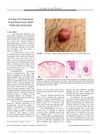
February 2017 in “The American journal of dermatopathology/American journal of dermatopathology” A man with a skin nodule was diagnosed with a rare skin condition called cutaneous focal mucinosis, which can be confused with other skin cancers.
1 citations
,
June 2016 in “FEBS open bio” Fish oil increased cell growth and macrophages in the skin but didn't affect COX-2 expression.
 2 citations
,
January 2000 in “Journal of Toxicologic Pathology”
2 citations
,
January 2000 in “Journal of Toxicologic Pathology” A single recessive gene causes sparse hair in certain Japanese White rabbits.
February 2019 in “American Journal of Dermatopathology” A rare case showed basal cell carcinoma and leiomyosarcoma coexisting, needing careful diagnosis and treatment.
 132 citations
,
January 2017 in “International Journal of Molecular Sciences”
132 citations
,
January 2017 in “International Journal of Molecular Sciences” Fat-derived stem cells show promise for skin repair and reducing aging signs but need more research for consistent results.
 41 citations
,
May 2018 in “Nutrition and healthy aging”
41 citations
,
May 2018 in “Nutrition and healthy aging” Skin aging is largely due to differences in stiffness and elasticity between skin layers, leading to wrinkles.
 29 citations
,
September 2017 in “Oncology and therapy”
29 citations
,
September 2017 in “Oncology and therapy” The document provides advice on how to recognize and treat skin-related side effects of cancer drugs known as EGFR inhibitors.
 7 citations
,
April 2014 in “Cell biology international”
7 citations
,
April 2014 in “Cell biology international” Melatonin treatment helps improve skin health in postmenopausal rats.
 1 citations
,
December 2015 in “The Egyptian Journal of Histology”
1 citations
,
December 2015 in “The Egyptian Journal of Histology” Hypothyroidism harms rat skin, but topical triiodothyronine may help improve it.
July 2025 in “Microscopy and Microanalysis” Intermittent compression therapy is safe and doesn't harm tissue.
 June 2024 in “Georgetown Scientific Research Journal”
 Bleomycin injections in mice cause skin thickening and hair loss.
 May 2017 in “Journal of The American Academy of Dermatology”
 The new baby shampoo and wash with stearic acid is safe and potentially effective for nourishing babies' skin.
1235 citations
,
December 2013 in “Nature” Two fibroblast types shape skin structure and repair differently.
 426 citations
,
August 2014 in “Nature Medicine”
426 citations
,
August 2014 in “Nature Medicine” Skin stem cells interacting with their environment is crucial for maintaining and regenerating skin and hair, and understanding this can help develop new treatments for skin and hair disorders.
173 citations
,
July 2012 in “British Journal of Dermatology” Dabrafenib can cause skin growths and sometimes low-grade skin cancer.
147 citations
,
April 1997 in “Oncogene” Overexpressing IGF-1 in mice leads to skin abnormalities and tumors.
135 citations
,
December 2006 in “PLoS Medicine” Hyaluronate fragments can help reverse skin thinning by working with the CD44 receptor.
118 citations
,
June 1993 in “Journal of Biological Chemistry” Human and mouse TGase3 enzymes are similar but differ near the activation site, crucial for their function in skin and hair development.
91 citations
,
April 2006 in “PubMed” EGFR-targeting cancer drugs can cause skin rashes and other side effects.
79 citations
,
August 1998 in “The Journal of Cell Biology” Keratin 16 delays skin maturation and affects skin and hair development in mice.
 74 citations
,
June 2018 in “Cell death and disease”
74 citations
,
June 2018 in “Cell death and disease” Restoring mitochondrial function in mice reversed their skin wrinkling and hair loss.