 September 2021 in “Research Square (Research Square)”
 Not having enough or having too much of the protein Grainyhead-like 3 leads to various developmental problems.
May 2020 in “International Journal of Dermatology and Venereology” Calcified epidermal cysts are rare, hard skin nodules that are best treated with surgical removal.
 April 2019 in “The journal of investigative dermatology/Journal of investigative dermatology”
 Scientists discovered a new way UVB light increases skin pigmentation through the ATP-P2X7 pathway.
 April 2018 in “Journal of Investigative Dermatology”
 Activating Nrf2 helps wounds heal faster by increasing hair follicle stem cells.

Low-level laser therapy may help stem cells grow and function better, aiding in healing and tissue repair.
 January 2015 in “Journal of Nutrition and Health”
 Fish oil improves hair growth in diabetic and high-cholesterol rats.

Skin changes throughout life, from development before birth to aging effects like wrinkles, influenced by both genetics and environment.
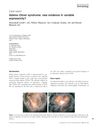 December 2013 in “International Journal of Dermatology”
 The clinical signs of Adams-Oliver syndrome can vary greatly, even among family members.
 December 2012 in “Journal of dermatological science”
 Langerhans cells and melanocytes migrate to the skin and hair follicles during early human development.
 September 2016 in “Journal of Dermatological Science”
 The protein aPKCλ is crucial for keeping hair follicle stem cells inactive and for hair growth and regeneration.
 82 citations
,
June 2020 in “Inflammation Research”
82 citations
,
June 2020 in “Inflammation Research” Skin problems in COVID-19 patients are rare and may be due to the body's complex immune response or blood clotting issues.
69 citations
,
May 2002 in “Journal of Investigative Dermatology” Congenital atrichia with papular lesions is often misdiagnosed, and new diagnostic criteria can improve accuracy.
 50 citations
,
November 2010 in “Otolaryngologic Clinics of North America”
50 citations
,
November 2010 in “Otolaryngologic Clinics of North America” Recognizing oral symptoms can help diagnose and treat blood and nutritional diseases early.
 45 citations
,
January 1998 in “Dermatology”
45 citations
,
January 1998 in “Dermatology” Some skin conditions look like acne but are caused by drugs, and they usually get better when the drug is stopped.
 42 citations
,
July 2010 in “International Journal of Dermatology”
42 citations
,
July 2010 in “International Journal of Dermatology” Dermatoscopy and videodermatoscopy are useful and reliable for tracking treatment progress in various skin conditions.
 27 citations
,
October 2017 in “British Journal of Dermatology”
27 citations
,
October 2017 in “British Journal of Dermatology” Patients with GATA2 deficiency show early skin symptoms that help diagnose the condition.
 26 citations
,
August 2020 in “Dermatology Research and Practice”
26 citations
,
August 2020 in “Dermatology Research and Practice” COVID-19 can cause various skin problems, including reactions to protective gear and medication, with different rates reported worldwide, and more research is needed to fully understand these skin issues.
 21 citations
,
September 2008 in “Magnetic Resonance Imaging”
21 citations
,
September 2008 in “Magnetic Resonance Imaging” MRI can effectively image skin structures noninvasively.
 16 citations
,
February 2010 in “Journal of the European Academy of Dermatology and Venereology”
16 citations
,
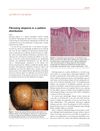
February 2010 in “Journal of the European Academy of Dermatology and Venereology” Fibrosing alopecia in a pattern distribution is a unique hair loss condition that may respond to antiandrogen therapy.
 16 citations
,
July 2002 in “Australasian Journal of Dermatology”
16 citations
,
July 2002 in “Australasian Journal of Dermatology” A woman with lupus experienced skin death due to a blood clotting disorder after stopping a blood thinner, which healed with treatment.
 12 citations
,
January 2005 in “Pediatric Dermatology”
12 citations
,
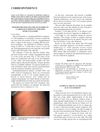
January 2005 in “Pediatric Dermatology” Fox Fordyce disease might be more common in prepubertal girls than thought and can be managed with treatment.
12 citations
,
February 1986 in “PubMed” Injecting newborn mice with a niacin blocker caused skin, gut, and brain damage similar to human pellagra.
 12 citations
,
January 1984 in “Clinics in Dermatology”
12 citations
,
January 1984 in “Clinics in Dermatology” The document concludes that syphilis has varied symptoms that are often missed, making clinical awareness crucial for diagnosis.
 11 citations
,
October 2015 in “Journal der Deutschen Dermatologischen Gesellschaft”
11 citations
,
October 2015 in “Journal der Deutschen Dermatologischen Gesellschaft” Women who had bariatric surgery risk nutritional deficiencies causing skin issues during pregnancy and breastfeeding.
 11 citations
,
May 1998 in “Child's nervous system”
11 citations
,
May 1998 in “Child's nervous system” A baby had a rare condition with abnormal blood vessels in the brain and unusual skin and hair growth, possibly a new syndrome.
 10 citations
,
February 2019 in “BMC pediatrics”
10 citations
,
February 2019 in “BMC pediatrics” An infant with scalp fungus was cured after extended treatment with antifungal medication.
 9 citations
,
January 2011 in “EXPERIMENTAL ANIMALS”
9 citations
,
January 2011 in “EXPERIMENTAL ANIMALS” A new rat strain with a specific gene mutation causes hair loss and kidney issues.
 7 citations
,
April 2021 in “Dermatology and Therapy”
7 citations
,
April 2021 in “Dermatology and Therapy” H-1 antihistamines may help with various skin conditions, but more research is needed to confirm their effectiveness.
 2 citations
,
January 2022 in “Boletín médico del Hospital infantil de México/Boletín médico del Hospital Infantil de México”
2 citations
,
January 2022 in “Boletín médico del Hospital infantil de México/Boletín médico del Hospital Infantil de México” Some immunosuppressed patients can get unusual skin infections from Malassezia, which can be treated with antifungal medication.
 2 citations
,
June 2018 in “Clinical and Experimental Dermatology”
2 citations
,
June 2018 in “Clinical and Experimental Dermatology” Permanent hair loss after a stem cell transplant can be a sign of chronic immune system attack on the scalp.