 66 citations
,
December 2014 in “Nature Communications”
66 citations
,
December 2014 in “Nature Communications” Fibroblasts can be turned into melanocytes for potential skin treatments.
 February 2011 in “Journal of Investigative Dermatology”
 New findings suggest targeting IL-23 could treat psoriasis, skin cells can adapt to new roles, direct conversion of skin cells to blood cells may aid cell therapy, removing certain tumor cells could boost cancer immunotherapy, and melanoma may have many tumorigenic cells, not just cancer stem cells.
 43 citations
,
February 2008 in “Journal of cutaneous pathology”
43 citations
,
February 2008 in “Journal of cutaneous pathology” Melanocyte precursors in human fetal skin follow a specific migration pattern and some remain in the skin's deeper layers.
46 citations
,
April 2005 in “Melanoma Research” 27 citations
,
August 2016 Understanding skin structure and function is key to managing skin diseases and improving quality of life.
10 citations
,
November 2017 in “Skin Appendage Disorders” Erosive pustular dermatosis in elderly people may be linked to aging immune systems and skin damage.
February 2019 in “American Journal of Dermatopathology” A rare case showed basal cell carcinoma and leiomyosarcoma coexisting, needing careful diagnosis and treatment.
 88 citations
,
July 2014 in “Journal of the American Academy of Dermatology”
88 citations
,
July 2014 in “Journal of the American Academy of Dermatology” Targeted cancer therapies often cause skin reactions, so dermatologists must manage these effects.
 86 citations
,
October 2017 in “Clinics in Dermatology”
86 citations
,
October 2017 in “Clinics in Dermatology” Older adults have a high rate of skin cancers like basal cell carcinoma and melanoma, mainly due to UV exposure and age.
 June 2010 in “Expert Review of Dermatology”
 Scientists found key proteins and genes that affect skin and hair health, and identified potential new treatments for hair loss, skin disorders, and wound healing.
January 2008 in “Projeto: revista mensal de arquitetura” Targeted cancer drugs can cause skin reactions, so dermatologists must manage these effects.
January 2009 in “The Chinese Journal of Dermatovenereology” Higher doses of Tribulus terrestris extract increase MC-1R expression in mouse hair follicles.

Modern skin cancer treatments can cause skin side effects and hair loss, affecting patients' quality of life.
 24 citations
,
March 2018 in “Pigment Cell & Melanoma Research”
24 citations
,
March 2018 in “Pigment Cell & Melanoma Research” The environment around melanocyte stem cells is key for hair regeneration and color, with certain injuries affecting hair color and potential treatments for pigmentation disorders.
1 citations
,
August 2022 in “Pigment Cell & Melanoma Research” New mouse models help study melanocytic cells for melanoma research.
 1 citations
,
January 2016 in “Elsevier eBooks”
1 citations
,
January 2016 in “Elsevier eBooks” The document concludes that identifying the specific cells where skin cancers begin is important for creating better prevention, detection, and treatment methods.
 January 2016 in “Experimental Dermatology”
 New findings suggest potential treatments for melanoma, hyperpigmentation, hair defects, and multiple sclerosis, and show skin microbiome changes don't cause atopic dermatitis.
 2 citations
,
January 1998 in “Dermatology”
2 citations
,
January 1998 in “Dermatology” Stopping forehead irritation and using hydrocortisone helped a man's skin, Martinique has lower melanoma rates, a man had an allergy to a specific antifungal, another had unexplained cysts, certain drugs can cause skin reactions without always being interrelated, a link between Fanconi anemia and a skin condition was suggested, high levels of a certain protein may play a role in a type of psoriasis, and there's a need to study the connection between scalp pain and hair loss.
 1 citations
,
January 2013 in “Journal of Investigative Dermatology”
1 citations
,
January 2013 in “Journal of Investigative Dermatology” The document concludes that stem cells and their environments are crucial for skin and hair health and have potential for medical treatments.
October 1998 in “Data Archiving and Networked Services (DANS)” Basal cell carcinoma cases are rising globally.
October 1998 in “RePub (Erasmus University, Rotterdam)” Basal cell carcinoma cases are rising globally.
 July 2016 in “Australasian Journal of Dermatology”
 The journal covered various dermatology topics, including treatments, disease management, and research findings.
7 citations
,
June 1994 in “International journal of biochemistry/International Journal of Biochemistry” The document discusses various skin disorders and new therapeutic approaches.
 13 citations
,
July 2012 in “Pigment Cell & Melanoma Research”
13 citations
,
July 2012 in “Pigment Cell & Melanoma Research” A mutation in the Adam10 gene causes freckle-like spots on Hairless mice.
 April 2018 in “The journal of investigative dermatology/Journal of investigative dermatology”
 The model can effectively test gene functions and drug responses in human skin.
 56 citations
,
March 2015 in “Cell death and differentiation”
56 citations
,
March 2015 in “Cell death and differentiation” Older skin has higher cancer risk due to inflammation and stem cell issues.
 April 2017 in “Journal of Dermatological Science”
 B cells can both help and hinder the body's defense against melanoma.
 1 citations
,
May 2018 in “International Journal of Molecular Biology Open Access”
1 citations
,
May 2018 in “International Journal of Molecular Biology Open Access” Hydrogen peroxide is a major risk factor for melanoma in swimmers, more than UV light.
 1 citations
,
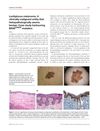
March 2015 in “Journal of the European Academy of Dermatology and Venereology”
1 citations
,
March 2015 in “Journal of the European Academy of Dermatology and Venereology” A clinically suspected melanoma appeared benign under the microscope but was confirmed by specific tests and a rare mutation.
 9 citations
,
May 2012 in “PLOS ONE”
9 citations
,
May 2012 in “PLOS ONE” ILK is essential for skin development, pigmentation, and healing.