 65 citations
,
September 2004 in “The American journal of pathology”
65 citations
,
September 2004 in “The American journal of pathology” Blocking BMP signaling causes hair loss and disrupts hair growth cycles.
 55 citations
,
March 2015 in “Carcinogenesis”
55 citations
,
March 2015 in “Carcinogenesis” WNT10A helps esophageal cancer cells spread and keep renewing themselves.
 43 citations
,
December 2013 in “Seminars in Cell & Developmental Biology”
43 citations
,
December 2013 in “Seminars in Cell & Developmental Biology” Genetic mutations can cause hair growth disorders by affecting key genes and signaling pathways.
 25 citations
,
April 2008 in “Archives of Dermatological Research”
25 citations
,
April 2008 in “Archives of Dermatological Research” Encapsulated human hair cells can substitute for natural hair cells to grow hair.
 16 citations
,
February 2019 in “Gene”
16 citations
,
February 2019 in “Gene” Researchers found a good way to isolate hair follicle stem cells from newborn goats for further study.
 9 citations
,
August 2013 in “Journal of Tissue Engineering and Regenerative Medicine”
9 citations
,
August 2013 in “Journal of Tissue Engineering and Regenerative Medicine” Transplanted baby mouse skin cells grew normal hair using a new, efficient method.
 4 citations
,
August 2005 in “Archives of Dermatological Research”
4 citations
,
August 2005 in “Archives of Dermatological Research” Higher p63 and CD34 levels found in specific scalp areas may affect hair loss progression.
 2 citations
,
December 2022 in “Scientific Data”
2 citations
,
December 2022 in “Scientific Data” The study maps how genes are regulated during mouse hair growth.
 1 citations
,
October 2013
1 citations
,
October 2013 Different ectodermal organs like hair and feathers regenerate differently, with specific stem cells and signals involved in their growth and response to the environment.
 1 citations
,
February 2013 in “InTech eBooks”
1 citations
,
February 2013 in “InTech eBooks” Genetic mutations cause various hair diseases, and whole genome sequencing may reveal more about these conditions.
 July 2010 in “Journal of Investigative Dermatology”
 Scientists found gene mutations that affect hair loss, skin stem cells, and skin disorders, and identified drugs that may help treat blood vessel and skin conditions.
 300 citations
,
August 2012 in “Seminars in Cell & Developmental Biology”
300 citations
,
August 2012 in “Seminars in Cell & Developmental Biology” The conclusion is that certain cell interactions and signals are crucial for hair growth and regeneration.
 260 citations
,
December 2012 in “Cold Spring Harbor Perspectives in Biology”
260 citations
,
December 2012 in “Cold Spring Harbor Perspectives in Biology” Wnt signaling is crucial for skin development and health, and its disruption can cause skin diseases.
 70 citations
,
February 2015 in “Expert Opinion on Drug Discovery”
70 citations
,
February 2015 in “Expert Opinion on Drug Discovery” Topical drugs and near-infrared light therapy show potential for treating alopecia.
 22 citations
,
May 2021 in “Nature Communications”
22 citations
,
May 2021 in “Nature Communications” Tissue stiffness affects hair follicle regeneration, and Twist1 is a key regulator.
 13 citations
,
May 2005 in “Seminars in Plastic Surgery”
13 citations
,
May 2005 in “Seminars in Plastic Surgery” Follicular Cell Implantation might become a new treatment for hair loss and could lead to advances in organ regeneration.
 1 citations
,
July 2016 in “Elsevier eBooks”
1 citations
,
July 2016 in “Elsevier eBooks” Understanding skin structure and development helps diagnose and treat skin disorders.
 December 2025 in “Italian Journal of Anatomy and Embryology”
 Understanding embryologic layers improves skin disorder diagnosis and supports developing targeted therapies.
 June 2018 in “Advances in Cosmetic Surgery”
 Hair loss caused by genetics and hormones; more research needed for treatments.
 8 citations
,
May 2021 in “Bioengineering & translational medicine”
8 citations
,
May 2021 in “Bioengineering & translational medicine” Hair growth environment recreated with challenges; stem cells make successful skin organoids.
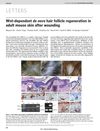 829 citations
,
May 2007 in “Nature”
829 citations
,
May 2007 in “Nature” Hair follicles can regrow in wounded adult mouse skin using a process like embryo development.
 508 citations
,
February 2007 in “Cell”
508 citations
,
February 2007 in “Cell” Epithelial stem cells are crucial for tissue renewal and repair, and understanding them could improve treatments for damage and cancer.
 223 citations
,
January 2014 in “International Journal of Molecular Sciences”
223 citations
,
January 2014 in “International Journal of Molecular Sciences” The conclusion is that proper signaling is crucial for hair growth and development, and errors can lead to cancer or hair loss.
 194 citations
,
May 2000 in “Journal of Investigative Dermatology”
194 citations
,
May 2000 in “Journal of Investigative Dermatology” The hedgehog signaling pathway is crucial for hair growth but not for the initial creation of hair follicles.
 158 citations
,
August 2011 in “Reviews in endocrine and metabolic disorders”
158 citations
,
August 2011 in “Reviews in endocrine and metabolic disorders” Vitamin D and its receptor regulate skin functions like cell growth, immunity, hair cycle, and tumor prevention.
 138 citations
,
June 2012 in “Genes & Development”
138 citations
,
June 2012 in “Genes & Development” Sonic hedgehog signaling is crucial for hair growth and maintaining hair follicle identity.
 131 citations
,
March 2004 in “The American journal of pathology”
131 citations
,
March 2004 in “The American journal of pathology” Modulating BMP activity changes the number, size, shape, and type of ectodermal organs.
 118 citations
,
August 2010 in “Developmental Cell”
118 citations
,
August 2010 in “Developmental Cell” MIM is crucial for hair follicle formation and regeneration by controlling cilia formation and hedgehog signaling through its interaction with Cortactin and Src.
 103 citations
,
November 2014 in “Journal of Cell Biology”
103 citations
,
November 2014 in “Journal of Cell Biology” MicroRNA-214 is important for skin and hair growth because it affects the Wnt pathway.
 102 citations
,
August 2008 in “Genes & Development”
102 citations
,
August 2008 in “Genes & Development” Laminin-511 is crucial for early hair growth and maintaining important hair development signals.