April 2021 in “The journal of investigative dermatology/Journal of investigative dermatology” MPZL3 protein is important for controlling hair growth cycles.
 April 2018 in “Journal of Investigative Dermatology”
 Macrophages are more involved in Lichen planopilaris than in Frontal fibrosing alopecia.
 April 2018 in “Journal of Investigative Dermatology”
 Activating Nrf2 helps wounds heal faster by increasing hair follicle stem cells.
 April 2018 in “Journal of Investigative Dermatology”
 Different types of stem cells in the skin contribute to the variety of melanoma forms.
 April 2017 in “Journal of Investigative Dermatology”
 Certain microRNAs may protect against hair loss in alopecia areata and could be potential treatment targets.
New bio-ink can print complex tissues and organs.
 March 2014 in “Journal of The American Academy of Dermatology”
 Reflectance confocal microscopy can noninvasively diagnose onychomatricoma by showing unique features different from healthy nails or nail fungus.
Fumai Paste helps heal skin damage from chemotherapy better than magnesium sulfate.
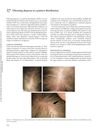 April 2012 in “Informa Healthcare eBooks”
 Fibrosing alopecia in a pattern distribution is a unique hair loss condition with inflammation and scarring, resembling but distinct from common balding.
April 2012 in “Cancer Research” Bone marrow-derived cells can lead to skin inflammation and tumors in mice.
January 2011 in “Xibei nongye xuebao” The K14 promoter is more active in skin cells than the K5 promoter.
Epidermal stem cells help renew skin and heal wounds, influenced by specific proteins and markers.
Thymosin β4 helps heal corneal wounds.
December 2009 in “Journal of Veterinary Clinics” The dog's back mass was a keratoacanthoma with inflammation, successfully removed without recurrence.
 January 2008 in “Journal of Clinical Dermatology”
 Integrin alpha-6 and p63 proteins may play a role in hair loss and are important for hair growth and maintenance.
January 2006 in “Elsevier eBooks” Most vertebrates can regenerate skin, nails, and corneas, but only some can regenerate teeth and lenses.
January 2006 in “Chinese Journal of Dermatology” Mesenchymal cells are essential for hair follicle stem cell growth.
January 2002 in “Linchuang pifuke zazhi” A young woman had a rare scalp tumor usually found in older women.
January 2002 in “Dialnet (Universidad de la Rioja)” Finasteride treatment makes the prostate look more like a healthy one.
December 2001 in “中華皮膚科醫學雜誌” An 18-year-old boy had a harmless skin nodule near his nose with hair and oil glands inside.
 November 1998 in “Journal of The European Academy of Dermatology and Venereology”
 A man's skin cancer improved and some of his hair grew back after treatment with a special light therapy and a medication.
 January 1995 in “Equilibrium Research”
 Birds can regenerate inner ear hair cells from supporting cells, and mammals show potential for similar regeneration.
 February 1956 in “Bulletin of Experimental Biology and Medicine”
 Glycogen levels in mouse skin drop after injury but increase during healing, returning to normal within a month.
 January 2018 in “Repositorio de Tesis - UNMSM”
 Physalis peruviana extract is more effective in treating benign prostatic hyperplasia in rats than finasteride and terazosine.
17 citations
,
January 1993 in “Dermatology” Arsenic poisoning can be caused by both criminal acts and certain medical treatments.
13 citations
,
April 1982 in “The Journal of Dermatology” Poly(ADP-ribose) synthesis is linked to skin cell differentiation.
 1 citations
,
November 1953 in “Archives of Dermatology”
1 citations
,
November 1953 in “Archives of Dermatology” The document discusses various challenging skin conditions and their treatments.
 November 1966 in “British Journal of Dermatology”
 The meeting discussed various skin conditions, treatments, and unusual cases, highlighting the effectiveness of tetracycline in treating rosacea.
482 citations
,
June 1979 in “Proceedings of the National Academy of Sciences” Keratins provide structural strength in epithelial cells and help identify cell origins.
414 citations
,
August 2005 in “Nature” Activating TERT in mice skin boosts hair growth by waking up hair follicle stem cells.