 1 citations
,
December 2022 in “The journal of investigative dermatology/Journal of investigative dermatology”
1 citations
,
December 2022 in “The journal of investigative dermatology/Journal of investigative dermatology” Choosing the right method to separate skin layers is key for good skin cell research.
3 citations
,
October 2018 in “Journal of Mind and Medical Sciences” Biological therapy boosts the immune system to effectively fight melanoma.
 39 citations
,
May 2010 in “Stem Cells”
39 citations
,
May 2010 in “Stem Cells” Ephrins slow down skin and hair follicle cell growth.
Different connective tissue disorders have unique symptoms and treatments, with varying outcomes and often require ongoing care from a specialist.
 3 citations
,
July 2008 in “British journal of dermatology/British journal of dermatology, Supplement”
3 citations
,
July 2008 in “British journal of dermatology/British journal of dermatology, Supplement” Terbinafine can cause hair loss.
 July 2008 in “British Journal of Dermatology”
 Cyclosporin doesn't stop hair loss.
 14 citations
,
July 2021 in “Reviews in endocrine and metabolic disorders”
14 citations
,
July 2021 in “Reviews in endocrine and metabolic disorders” SARS-CoV-2, the virus causing COVID-19, can affect all endocrine organs and systems, altering their function and potentially leading to disorders. Factors like diabetes and obesity increase infection risk and severity. Understanding these effects is key for effective treatment.
 June 2020 in “Journal of Investigative Dermatology”
 Leukocyte-rich platelet-rich plasma is safe and can potentially help treat scarring hair loss.
 438 citations
,
October 2010 in “Oncogene”
438 citations
,
October 2010 in “Oncogene” Keratins help protect cells, aid in cancer diagnosis, and influence cancer behavior and treatment.
 3 citations
,
July 2018 in “European Journal of Dermatology”
3 citations
,
July 2018 in “European Journal of Dermatology” An elderly man's hair grew back after treatment with secukinumab, possibly due to reduced scalp inflammation or the medication's direct effects.
 December 2013 in “Research Portal (King's College London)”
 Hair loss in Lichen Planopilaris is caused by immune system issues damaging hair follicles and stem cells.
 411 citations
,
April 2010 in “Gastroenterology”
411 citations
,
April 2010 in “Gastroenterology” Targeting colon cancer stem cells might lead to better treatment results.
 58 citations
,
February 2016 in “Scientific reports”
58 citations
,
February 2016 in “Scientific reports” Blocking BACE1 and BACE2 enzymes causes hair color loss in mice.
 37 citations
,
November 2003 in “Veterinary pathology”
37 citations
,
November 2003 in “Veterinary pathology” Hair loss in mice starts with immune cells damaging hair roots before it becomes visible.
 13 citations
,
December 2014 in “Stem Cells”
13 citations
,
December 2014 in “Stem Cells” Hair and skin can regenerate without bulge stem cells due to other compensating cells.
 4 citations
,
March 2017 in “Development”
4 citations
,
March 2017 in “Development” Estrogen is important for keeping adult mouse nipple skin healthy by controlling certain cell signals.
 1 citations
,
November 2015 in “Indian Journal of Clinical Biochemistry”
1 citations
,
November 2015 in “Indian Journal of Clinical Biochemistry” The conference presented findings on how vitamin D levels, genetic factors, and lifestyle choices like smoking and yoga affect various health conditions and diseases.
 January 2012 in “heiDOK (Heidelberg University)”
 Dormant melanoma cells in mice interact minimally with memory T cells due to a suppressive tumor environment.
 192 citations
,
March 2017 in “Cell host & microbe”
192 citations
,
March 2017 in “Cell host & microbe” Hair follicle development and microbes help regulatory T cells gather in newborn skin.
 111 citations
,
June 2002 in “The EMBO Journal”
111 citations
,
June 2002 in “The EMBO Journal” Too much Smad7 can cause serious changes in skin tissues, including problems with hair growth, thymus shrinkage, and eye development issues.
 42 citations
,
July 2007 in “Journal of Biological Chemistry”
42 citations
,
July 2007 in “Journal of Biological Chemistry” Most Hairless gene mutations reduce its ability to work with the Vitamin D Receptor, which might explain a certain type of hair loss.
 68 citations
,
March 2008 in “Experimental dermatology”
68 citations
,
March 2008 in “Experimental dermatology” The new assay can track and measure melanosome transfer between skin cells, confirming filopodia's role in this process.
 27 citations
,
April 2011 in “Folia Histochemica et Cytobiologica”
27 citations
,
April 2011 in “Folia Histochemica et Cytobiologica” DHT deficiency can disrupt cell connections in rat testes, possibly affecting fertility.
 6 citations
,
April 1996 in “Journal of histochemistry and cytochemistry/The journal of histochemistry and cytochemistry”
6 citations
,
April 1996 in “Journal of histochemistry and cytochemistry/The journal of histochemistry and cytochemistry” TGF-alpha is present in sheep and ferret skin and may affect hair growth without directly stimulating cell proliferation.
 100 citations
,
September 1999 in “British Journal of Dermatology”
100 citations
,
September 1999 in “British Journal of Dermatology” The study found that two enzymes linked to hair loss are located in different parts of the scalp, supporting a common treatment's effectiveness.
 58 citations
,
December 2020 in “Mayo Clinic Proceedings”
58 citations
,
December 2020 in “Mayo Clinic Proceedings” The conclusion is that individual differences in COVID-19 severity are influenced by factors like age, sex, race, and genetics, which are important for personalized medicine.
 7 citations
,
July 2008 in “Experimental Dermatology”
7 citations
,
July 2008 in “Experimental Dermatology” The study concluded that a protein important for hair strength is regulated by certain molecular processes and is affected by growth phases.
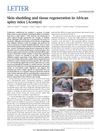 418 citations
,
September 2012 in “Nature”
418 citations
,
September 2012 in “Nature” African spiny mice can regenerate skin, hair, and cartilage, but not muscle, and their unique abilities could be useful for regenerative medicine.
 349 citations
,
January 2005 in “The FASEB journal”
349 citations
,
January 2005 in “The FASEB journal” Human skin can make serotonin and melatonin, which help protect and maintain it.
 155 citations
,
May 2016 in “Nature communications”
155 citations
,
May 2016 in “Nature communications” Memory T cells in the skin balance staying put and moving into the blood, clustering around hair follicles, and increasing in number after infection.