November 2023 in “Plants” Compounds from Jatropha cordata bark have significant anti-inflammatory effects and could help with hair loss.
 August 2023 in “Medicina-lithuania”
 Abusing steroids can damage your heart, muscles, reproductive system, liver, skin, and brain, and may increase the risk of Alzheimer's disease.
 July 2023 in “International Journal of Cosmetic Science”
 Biopolymers are increasingly used in cosmetics for their non-toxicity and skin benefits, with future biotech advancements likely to expand their applications.
 July 2023 in “Bioengineering & translational medicine”
 Mesenchymal stem cell proteins in a special gel improved healing of severe burns.
 June 2023 in “Journal of biological chemistry/The Journal of biological chemistry”
 Sdr16c5 and Sdr16c6 genes regulate a key point in lipid production that affects eye and skin gland function.
May 2023 in “International journal of molecular sciences” The ABCA4 gene protects hair follicle stem cells from toxic vitamin A byproducts.
 February 2023 in “IntechOpen eBooks”
 Testosterone replacement therapy helps manage deficiency and has various methods, but requires careful monitoring to avoid side effects.
 January 2023 in “Theranostics”
 Mechanical force is important for the first contact between skin cells and hair growth in mini-organs.
January 2023 in “Applied sciences” Equisetum debile extracts may help with skin whitening, anti-wrinkle, and anti-hair loss treatments.
43 citations
,
July 2017 in “International journal of pharmaceutics” Using β-cyclodextrin derivatives improves the solubility and bioavailability of steroidal drugs.
 2 citations
,
December 2021 in “ScienceRise”
2 citations
,
December 2021 in “ScienceRise” The best way to extract oil from Urtica dioica roots is by using corn oil, a 1:5 ratio of raw material to extract, extracting for 6 hours, and using the maceration method.
 1 citations
,
April 2023 in “International Journal of Molecular Sciences”
1 citations
,
April 2023 in “International Journal of Molecular Sciences” Botryococcus terribilis Ethanol Extract may reduce inflammation by changing gene expression in cells.
November 2025 in “Frontiers in Pharmacology” Fermented rice bran extract helps delay skin aging by boosting collagen and elastin.
 August 2016 in “Organic Process Research & Development”
 Authors retracted paper due to errors in data and mislabeling.
 6 citations
,
April 2004 in “Journal of Enzyme Inhibition and Medicinal Chemistry”
6 citations
,
April 2004 in “Journal of Enzyme Inhibition and Medicinal Chemistry” New progesterone-based compounds can block male hormones.
 37 citations
,
September 2003 in “Journal of Medicinal Chemistry”
37 citations
,
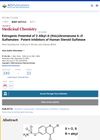
September 2003 in “Journal of Medicinal Chemistry” A substance called Compound 2g can strongly block STS (a hormone-related enzyme) without affecting estrogen levels, making it potentially good for treating breast cancer.
January 2006 in “Analytical chemistry, an Indian journal” Two accurate methods were developed to measure finasteride in tablets.
44 citations
,
December 2005 in “The Journal of Steroid Biochemistry and Molecular Biology” Combining 5α-reductase and aromatase inhibitors may better reduce estrogen levels.
25 citations
,
May 2008 in “Journal of cosmetic dermatology” Conditioning agents, especially jojoba oil and lauryl PEG/PPG-18/18 methicone, protect and strengthen chemically straightened Afro-ethnic hair.
18 citations
,
April 2009 in “Journal of Chromatography A” Detecting steroid esters in cattle hair is inconsistent and influenced by sampling factors.
4 citations
,
March 2023 in “IP International Journal of Comprehensive and Advanced Pharmacology” The new drug delivery system improves exemestane's absorption and effectiveness.
 January 2025 in “International Journal of Drug Delivery Technology”
 A reliable method was developed to measure Finasteride and Tadalafil together, showing they degrade under certain conditions.
28 citations
,
January 2016 in “RSC Advances” A non-toxic formula using polycarboxylic acids strengthens and improves hair.
 January 2000 in “Time to knit”
 SFE is a better extraction method, and the HPTLC method is effective for analyzing wedelolactone in E. alba.
 9 citations
,
January 2017 in “Organic Process Research & Development”
9 citations
,
January 2017 in “Organic Process Research & Development” In 2017, a new method was created to efficiently produce a topical antiandrogen, a compound used to treat excess sebum and acne, with a high yield and purity.
October 2012 in “한국미용학회지” For best curls and hair health, use keratin and ceramide after rinsing, or skip rinsing for stable curls.
September 2002 in “Research Repository (Kingston University London)” Mimicking the steroid A-ring may help create effective enzyme inhibitors for prostate disease treatment.
 2 citations
,
January 2015 in “Sen'i Gakkaishi”
2 citations
,
January 2015 in “Sen'i Gakkaishi” Washing permed hair after using thioglycolic acid helps reform strong bonds, making hair stronger.
15 citations
,
July 2009 in “Biomedical Chromatography” A reliable method was developed to measure aristolochic acid-I in rat blood.

The document's conclusion cannot be provided because the document is not available or cannot be read.