12 citations
,
October 1947 in “Journal of the Society of Dyers and Colourists” Mercuric acetate makes wool unshrinkable by changing its elastic properties.
February 2026 in “International Journal of Biological Macromolecules” Keratin from waste hair and feathers can be sustainably used to create stable emulsions for industrial applications.
 8 citations
,
January 2016 in “Journal of fiber science and technology”
8 citations
,
January 2016 in “Journal of fiber science and technology” Bleaching hair increases cysteic acid levels in a predictable way.
December 2012 in “Shodhganga” 7 citations
,
October 2019 in “Brazilian Journal of Petroleum and Gas” The microemulsion-based fluid effectively removes mud cake during well cementation.
Chemical treatments weaken hair's thermal stability and structure.
1 citations
,
August 2012 in “Research in Pharmaceutical Sciences”  December 2023 in “Journal of biobased materials and bioenergy”
 The algae grew better and fixed nitrogen more efficiently when they worked together, using nitrogen and iron.
 10 citations
,
October 2018 in “Plant Biotechnology”
10 citations
,
October 2018 in “Plant Biotechnology” Researchers found two enzymes in Avicennia marina that help produce maslinic acid and corosolic acid, which have medicinal benefits.
12 citations
,
February 1975 in “Journal of Steroid Biochemistry” 2 citations
,
November 2009 in “DSpace (Federal University of Santa Catarina)” Brunfelsia uniflora has good antioxidant properties and moderate antibacterial activity.
 8 citations
,
April 1965 in “Archives of biochemistry and biophysics”
8 citations
,
April 1965 in “Archives of biochemistry and biophysics” Sheep wool follicles can metabolize both glucose and acetate using different pathways important for wool growth.

The research created new azasteroids and pseudoazulenyl nitrones, which could be useful in medicine.
 50 citations
,
May 2019 in “BioFactors”
50 citations
,
May 2019 in “BioFactors” Pollution increases a compound in the skin that can lead to faster aging and more inflammation.
3 citations
,
May 2007 in “Journal of Heterocyclic Chemistry” A new method to make finasteride for hair loss treatment was developed.
 1 citations
,
January 2009 in “Journal of S C C J”
1 citations
,
January 2009 in “Journal of S C C J” Changing disulfide bonds in human hair affects its melting behavior and thermal stability.
3 citations
,
January 1982 in “Australian journal of biological sciences” Ethionine significantly inhibits wool growth in sheep but not hair growth in mice or rats.
 1 citations
,
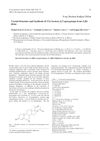
January 2009 in “X-ray Structure Analysis Online”
1 citations
,
January 2009 in “X-ray Structure Analysis Online” A new compound was made that might help treat diseases related to male hormones.
March 2010 in “The Journal of Urology” Methylation of the 5-AR2 gene may cause resistance to Finasteride in BPH patients.
 2 citations
,
May 2021 in “bioRxiv (Cold Spring Harbor Laboratory)”
2 citations
,
May 2021 in “bioRxiv (Cold Spring Harbor Laboratory)” A special foam called EG7 PTK-UR helps heal skin wounds better than other similar materials, working as well as a top-rated product and better than a polyester foam.
1 citations
,
January 2010 in “Han-guk hyeonmigyeong hakoeji/Applied microscopy” Straight permed hair loses weight faster than virgin hair when heated, but ends up heavier after burning.
Defective protein folding due to a mutation is key in ANE syndrome.
Glycogen helps E. coli cells divide unevenly and organize their contents.
12 citations
,
July 2017 in “International Journal of Cosmetic Science” N‐AOHPA is a promising alternative to traditional surfactants for better hair conditioning.
2 citations
,
March 2025 in “Industrial Crops and Products” Supercritical fluid extraction of peach kernel oil is efficient and produces oil with high antioxidant properties.
1 citations
,
May 2020 in “bioRxiv (Cold Spring Harbor Laboratory)” The fer-ts mutation in plants prevents root hair growth at high temperatures.
4 citations
,
July 2020 in “Research Square (Research Square)” The research helps understand how finasteride works and aids drug development.
30 citations
,
January 2009 in “The scientific world journal/TheScientificWorldjournal” Hair is hard to dissolve because of its complex proteins, but certain solvents that break specific bonds and hydrate can do it.
 June 2025 in “Pharmaceutics”
 Ethosomes with 30% ethanol effectively deliver dutasteride to hair follicles for treating hair loss.
 1 citations
,
April 2018 in “Journal of Investigative Dermatology”
1 citations
,
April 2018 in “Journal of Investigative Dermatology” Oleoylethanolamide (OEA) safely boosts fat production in skin cells and may help treat dry skin and reduce inflammation.