12 citations
,
June 2011 in “Journal of applied polymer science” L-phenylalanine and hydrolyzed eggwhite protein deeply penetrate human hair.
 February 2024 in “Current Drug Delivery”
 The new minoxidil emulgel with marine-based polymers shows effective controlled drug release for hair growth treatment.
Menthol boosts the hair growth and thickness effects of P. niruri extract gel.
Aloe vera hair tonic with 10% and 15% concentrations effectively promoted hair growth in male rats.
2 citations
,
December 2017 in “Korean Journal of Medicinal Crop Science” Houttuynia cordata extract promotes hair growth and could be useful in hair care products.
January 2021 in “Indonesian Journal on Medical Science” The hair tonic with aloe vera and celery was successfully made, with the first formula being the most stable.
 2 citations
,
August 2019 in “BMC Complementary and Alternative Medicine”
2 citations
,
August 2019 in “BMC Complementary and Alternative Medicine” Asiasari radix extract may be a potential treatment for melanoma because it selectively triggers cell death in melanoma cells by affecting p53 regulation.
 7 citations
,
January 1998 in “EXPERIMENTAL ANIMALS”
7 citations
,
January 1998 in “EXPERIMENTAL ANIMALS” The skin of both rat strains showed similar lectin binding patterns.
 January 2022 in “Current Enzyme Inhibition”
 New nonsteroidal molecules can potentially increase dihydrotestosterone in neurons by blocking certain enzymes, without affecting prostate and seminal vesicle weight.
July 2007 in “International Journal of Cosmetic Science” The new polymer improves dyed hair's color, moisture, shine, and smoothness.
 20 citations
,
June 2022 in “Molecules”
20 citations
,
June 2022 in “Molecules” Thiazole, a sulfur and nitrogen chemical, is useful in creating potential drugs for conditions like seizures, cancer, bacterial infections, tuberculosis, inflammation, malaria, viruses, Alzheimer's, diabetes, and A1-receptor issues.
54 citations
,
March 1991 in “Proceedings of the National Academy of Sciences” This model can replace animal testing for quick, cost-effective skin toxicity tests.
 2 citations
,
April 2024 in “Science & Technology Indonesia”
2 citations
,
April 2024 in “Science & Technology Indonesia” Albizia saponaria bark extract, especially the ethyl acetate fraction, is a strong antioxidant source.
8 citations
,
February 2013 in “Neuroscience Letters” Allopregnanolone may help prevent nicotine withdrawal symptoms.
 4 citations
,
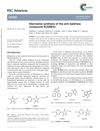
January 2014 in “RSC Advances”
4 citations
,
January 2014 in “RSC Advances” A new, less toxic and more efficient method to create the anti-baldness compound RU58841 was developed in 2014.
46 citations
,
July 2010 in “Advances in Therapy” SPET-085 effectively inhibits an enzyme linked to prostate issues, similar to finasteride.
 October 2025 in “Advanced Healthcare Materials”
 The hydrogels improve wound healing and tissue regeneration better than traditional treatments.
 3 citations
,
October 2014 in “Pharmaceutical Development and Technology”
3 citations
,
October 2014 in “Pharmaceutical Development and Technology” The study found a way to improve a skin-applied minoxidil formula using a specific design method.
March 2015 in “Daehan boncho haghoeji/Daehan bonchohak hoeji” Haeae-tang helps hair grow in mice.
 February 2024 in “Jurnal Kesehatan Yamasi Makassar”
 Pondoh salak fruit peel extract is effective in shampoo and has strong antimicrobial properties.
44 citations
,
March 1947 in “Endocrinology” Thiourea compounds affect hair growth and pigmentation in black rats.
January 2023 in “International Journal of Trichology” Alcohol-free minoxidil is better for treating hair loss in Indian men.
1 citations
,
October 2020 Hair can reliably measure average estradiol levels over months in humans and monkeys.
1 citations
,
August 2016 in “Hanbang an'i'bi'in'hu pibu'gwa haghoeji” YangHyulEum Gami-Bang extract may help treat hair loss.
 September 2019 in “Journal of Investigative Dermatology”
 Researchers developed a new method to deliver molecules to hair follicles to manage hair growth without damaging surrounding skin.
August 2017 in “Journal of the Dermatology Nurses' Association” Latisse (bimatoprost 0.03%) is widely used in dermatology but the document doesn't give detailed evidence or numbers.
September 2010 in “대한화장품학회지(J. Soc. Cosmet. Scientists Korea)” The study developed a reliable method to measure active ingredients in hair nourisher products using HPLC.
Epimorphin helps shape and develop epithelial cells, like those in hair follicles.
December 2025 in “JOPS (Journal Of Pharmacy and Science)” Celery extract in microemulsions boosts hair growth.
25 citations
,
May 2008 in “Journal of cosmetic dermatology” Conditioning agents, especially jojoba oil and lauryl PEG/PPG-18/18 methicone, protect and strengthen chemically straightened Afro-ethnic hair.