4 citations
,
March 2024 in “Developmental Dynamics” ALX4 is crucial for normal craniofacial and hair development, with specific roles in different cell types.
 July 2023 in “Journal of allergy and clinical Immunology. Global”
 A 10-month-old boy with a rare combination of genetic conditions has severe immune deficiency and treatment challenges.
 2 citations
,
January 2023 in “Annals of Dermatology”
2 citations
,
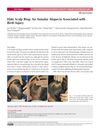
January 2023 in “Annals of Dermatology” A hairless patch on a boy's scalp from birth injury improved with minoxidil treatment.
1 citations
,
March 2024 in “Pediatric Dermatology” Neonatal nasal injuries can heal with basic care but often leave scars.
July 2017 in “ORTHOPAEDICS TRAUMATOLOGY and PROSTHETICS” Managing rare genetic diseases like osteogenesis imperfecta and Escobar syndrome is complex and requires both medical and surgical treatments.
5 citations
,
January 2011 in “Archives de Pédiatrie” A severe form of Netherton syndrome caused by a specific gene mutation led to neonatal deaths in a family.
17 citations
,
September 2000 in “Journal of dermatology” A baby with a rare metabolic disorder developed a rash not cured by zinc alone, likely due to both zinc and amino acid deficiencies.
7 citations
,
April 2004 in “International Journal of Dermatology” The newborn's skin blistering is due to a genetic condition called epidermolytic hyperkeratosis.
October 2019 in “European Journal of Dermatology” The boy's hair and skin color differences are due to a pigmentation disorder.
June 2023 in “Journal of Paediatrics and Child Health” Early treatment of a rare scalp infection led to full recovery and hair regrowth.
12 citations
,
November 2011 in “Pediatric dermatology” A 16-year-old boy had a rare case of Becker's nevus on his face and mouth.
21 citations
,
April 2004 in “Australasian Journal of Dermatology” A 3-year-old girl has a rare condition causing sparse hair and nail issues, with minimal improvement from treatment.
 August 2018 in “Pediatric Dermatology”
 A baby had a unique skin condition with a pale patch and surrounding dark hairs, not linked to other health issues.
 21 citations
,
August 1960 in “British journal of dermatology/British journal of dermatology, Supplement”
21 citations
,
August 1960 in “British journal of dermatology/British journal of dermatology, Supplement” Endoxan often causes hair loss, which usually starts in the third week of treatment.
125 citations
,
August 2003 in “Development” Mice with human-like EGFR had growth issues, skin defects, heart problems, and unusual bone development.
7 citations
,
January 2013 in “Indian dermatology online journal” A rare skin condition with dark, thick, warty patches and some hair loss was found in a newborn boy.
 August 2019 in “Journal of Investigative Dermatology”
 Frog skin cells need the protein desmoplakin for proper development and cell layer formation.
8 citations
,
June 2020 in “The journal of investigative dermatology/Journal of investigative dermatology” A boy's skin fragility and sparse hair were caused by a genetic mutation affecting skin cell adhesion.
 25 citations
,
March 2008 in “Surgical Neurology”
25 citations
,
March 2008 in “Surgical Neurology” New techniques for treating scalp blood vessel malformations are effective and can have good cosmetic results.
7 citations
,
July 2006 in “Journal of cutaneous pathology” A 21-year-old had a rare developmental anomaly with a misplaced sebaceous gland in a hair follicle.
1 citations
,
May 2019 in “The Journal of Pediatrics” The baby's hair loss was due to congenital syphilis, which was treated with penicillin.
20 citations
,
January 2017 in “Epilepsia” Blocking neurosteroid production can lead to more seizures and faster epilepsy onset in rats.
 March 2010 in “Hair transplant forum international”
 Forehead taping can sometimes lead to unexpected problems.
March 2003 in “中華皮膚科醫學雜誌” Trichothiodystrophy causes unusual hair and developmental issues.
 September 2016 in “Journal of Dermatological Science”
 Björnstad syndrome causes twisted hair from birth.
6 citations
,
February 2020 in “Journal of Cutaneous Pathology” Nevus psiloliparus lacks mature hair follicles but keeps other skin structures intact.
 35 citations
,
April 2014 in “American Journal of Medical Genetics”
35 citations
,
April 2014 in “American Journal of Medical Genetics” Boys with less severe EDA mutations in XLHED have milder symptoms and better sweat and hair production.
March 2018 in “New scientist”  12 citations
,
December 2020 in “Archives animal breeding/Archiv für Tierzucht”
12 citations
,
December 2020 in “Archives animal breeding/Archiv für Tierzucht” EDA and EDAR are important for hair follicle development in cashmere goats and affect other related genes.
 April 2018 in “The journal of investigative dermatology/Journal of investigative dermatology”
 Electrical epilation damages hair follicles and surrounding skin, likely preventing hair regrowth.