44 citations
,
December 2005 in “Journal of Investigative Dermatology” Certain genetic markers, especially the MICA gene, are linked to alopecia areata.
 18 citations
,
January 2020 in “Acta dermato-venereologica”
18 citations
,
January 2020 in “Acta dermato-venereologica” Over 67 genes linked to ichthyosis help improve diagnosis and treatment.
7 citations
,
October 2022 in “Development” Overactive Wnt5a disrupts hair follicle orientation in mice.
 1 citations
,
June 2023 in “Genes”
1 citations
,
June 2023 in “Genes” Hair loss from Alopecia Areata is caused by both genes and environment, with several treatments available but challenges in cost and relapse remain.
February 2015 in “American journal of medical and biological research” Balding hair follicles have less growth-promoting factors and more inhibitory factors, leading to hair loss.
 2 citations
,
May 2023 in “Cancer medicine”
2 citations
,
May 2023 in “Cancer medicine” KRT80 may worsen cancer by increasing growth and spread, but its full effects on treatment and outcomes need more research.
 May 2022 in “Frontiers in Cell and Developmental Biology”
 miR-29a-5p prevents the formation of early hair structures by targeting a gene important for hair growth and is regulated by a complex network involving lncRNA627.1.
 2 citations
,
January 2021 in “Case reports in endocrinology”
2 citations
,
January 2021 in “Case reports in endocrinology” The girl's condition improved with treatment, showing no new autoimmune diseases and hair regrowth.
 6 citations
,
May 2012 in “Archives of Dermatological Research”
6 citations
,
May 2012 in “Archives of Dermatological Research” A new mutation in the HR gene is linked to a rare form of hair loss with limb deformities.
 September 2022 in “Curēus”
 The removed ovarian tumor was a rare type of blood vessel tumor that improved the patient's symptoms and hormone levels after surgery.
 3 citations
,
February 2020 in “The journal of gene medicine”
3 citations
,
February 2020 in “The journal of gene medicine” A mutation in the HR gene causes a rare form of irreversible hair loss in two Kashmiri families. Whole exome sequencing is effective for finding such mutations.
 August 2025 in “Endokrynologia Polska”
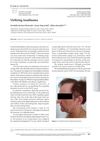
 A rare pancreatic tumor caused a woman's male-like features, treated successfully with surgery and medication.
 91 citations
,
May 2005 in “The Journal of Clinical Endocrinology & Metabolism”
91 citations
,
May 2005 in “The Journal of Clinical Endocrinology & Metabolism” A new mutation in the human glucocorticoid receptor reduces its function and causes resistance to glucocorticoids.
 7 citations
,
March 2015 in “British Journal of Dermatology”
7 citations
,
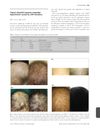
March 2015 in “British Journal of Dermatology” Applying minoxidil can help improve hair growth in people with hair loss caused by LIPH gene mutations.
 29 citations
,
May 2018 in “Clinical Endocrinology”
29 citations
,
May 2018 in “Clinical Endocrinology” Recent genetic insights show that low-renin hypertension includes a range from essential hypertension to secondary or familial forms, affecting diagnosis and treatment.
 10 citations
,
March 2019 in “Human Genetics”
10 citations
,
March 2019 in “Human Genetics” A genetic mutation in the SGK3 gene causes hairlessness in Scottish Deerhounds and may relate to human hair loss.
 1 citations
,
March 2023 in “PloS one”
1 citations
,
March 2023 in “PloS one” Different amounts of daylight affect cashmere growth in goats by changing the activity of certain genes and molecules.
 December 2023 in “Frontiers in endocrinology”
 Excess androgens may cause PCOS, not just be a symptom.
 April 2017 in “The journal of investigative dermatology/Journal of investigative dermatology”
 Astrotactin2 affects hair follicle orientation and skin cell polarity.
 103 citations
,
January 2011 in “Blood”
103 citations
,
January 2011 in “Blood” Thymus transplantation successfully restored immune function in infants with FOXN1 deficiency.
 31 citations
,
May 2021 in “Journal of endocrinological investigation”
31 citations
,
May 2021 in “Journal of endocrinological investigation” APS-1 in Italy shows diverse AIRE mutations and various autoimmune issues.
 7 citations
,
October 2019 in “Clinical, Cosmetic and Investigational Dermatology”
7 citations
,
October 2019 in “Clinical, Cosmetic and Investigational Dermatology” Certain gene variations in the Vitamin D receptor may increase the risk of chronic hair loss.
 51 citations
,
November 2011 in “British Journal of Dermatology”
51 citations
,
November 2011 in “British Journal of Dermatology” A gene called HDAC9 might be a new factor in male-pattern baldness.
 42 citations
,
August 1999 in “The American journal of pathology”
42 citations
,
August 1999 in “The American journal of pathology” Basal cell carcinomas have much higher levels of Vitamin D3 receptors compared to healthy skin.
 17 citations
,
June 2019 in “The journal of immunology/The Journal of immunology”
17 citations
,
June 2019 in “The journal of immunology/The Journal of immunology” A specific DNA region is crucial for Foxn1 gene expression in thymus cells but not in hair follicles.
 14 citations
,
September 2018 in “Asian-Australasian Journal of Animal Sciences”
14 citations
,
September 2018 in “Asian-Australasian Journal of Animal Sciences” Rex rabbits' hair follicles develop dynamically in the first 8 weeks, with key genes and proteins changing over time.
 13 citations
,
March 2020 in “Genes”
13 citations
,
March 2020 in “Genes” Disrupting the FGF5 gene in rabbits leads to longer hair by extending the hair growth phase.
 4 citations
,
January 2019 in “International journal of molecular sciences”
4 citations
,
January 2019 in “International journal of molecular sciences” Genetically modified sheep with more β-catenin grew more wool without changing the wool's length or thickness.
 3 citations
,
September 2019 in “PLOS ONE”
3 citations
,
September 2019 in “PLOS ONE” Genetic variations affect dutasteride treatment response for male pattern hair loss.
2 citations
,
January 2024 in “Revista Paulista de Pediatria” A rare genetic mutation caused severe symptoms in a 6-year-old girl with mandibuloacral dysplasia type A.