Accurate prediction of eye, hair, and skin color in Latin American populations requires region-specific models and ethical guidelines.
January 2024 in “International Journal of Sciences” The face of French knight Bayard was recreated using DNA and portrait analysis.
May 2023 in “Zenodo (CERN European Organization for Nuclear Research)” Forensic DNA phenotyping can predict physical traits from DNA but faces challenges in knowledge and ethics.
 May 2023 in “GSC biological and pharmaceutical sciences”
 Forensic DNA phenotyping is becoming useful for predicting physical traits in criminal investigations but is limited by ethical concerns and incomplete genetic understanding.
Machine learning improves DNA predictions for eye and hair color, but challenges remain for skin tone and facial features.
 39 citations
,
April 2001 in “Journal of The American Academy of Dermatology”
39 citations
,
April 2001 in “Journal of The American Academy of Dermatology” Latanoprost, a glaucoma medication, caused excessive eyelid hair growth in many patients.
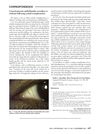 December 2012 in “Canadian journal of ophthalmology”
 Eyelash transplantation can cause eye damage and pain if not done carefully.
 18 citations
,
July 2001 in “Australian veterinary journal”
18 citations
,
July 2001 in “Australian veterinary journal” A cat with skin bumps and itching had high blood fats and skin infections, which improved with diet and medication changes.
 5 citations
,
September 2016 in “Security science and technology”
5 citations
,
September 2016 in “Security science and technology” DNA can predict physical traits like eye and hair color accurately, especially in Europeans, but predicting other traits and in diverse populations needs more research.
 October 1890 in “Science”
 Pilocarpin can cause hair regrowth and color change in some cases but not in others, and it may have side effects in animals.
 11 citations
,
February 2019 in “Research and reports in forensic medical science”
11 citations
,
February 2019 in “Research and reports in forensic medical science” DNA phenotyping helps predict physical traits from DNA with varying accuracy and requires careful ethical and legal handling.
5 citations
,
November 2020 in “Forensic Science International Genetics” Using trait prevalence priors in genetic prediction models for appearance traits is currently impractical due to limited knowledge and potential accuracy issues.
June 2025 in “Albus Scientia” MC1R gene variations affect skin, hair color, UV sensitivity, and melanoma risk.
 November 2022 in “Van Sağlık Bilimleri Dergisi”
 Turkish Van cats' genotypes don't affect traits like eye color or hair length.
 2 citations
,
September 2016 in “Springer eBooks”
2 citations
,
September 2016 in “Springer eBooks” Humans can accurately guess age from faces, with women being slightly better at it, and age perception is linked to evolutionary factors.
 July 2022 in “Postepy biochemii”
 DNA markers can predict physical traits for forensic use, but there are ethical and technical challenges.
December 2023 in “Archaeopress Publishing Ltd eBooks” Past societies used natural ingredients for health and beauty.
 25 citations
,
March 2009 in “Dermatologic Surgery”
25 citations
,
March 2009 in “Dermatologic Surgery” Eyebrow transplantation can be successful for Asians with the right technique and care, but regular maintenance is necessary.
 January 2012 in “Human health handbooks”
 Low-level light therapy is FDA-approved for male pattern hair loss, increases hair count and strength, and is considered safe for use.
 July 2025 in “Indian Journal of Forensic Medicine & Toxicology”
 DNA phenotyping can predict physical traits like eye, hair, and skin color, improving forensic investigations.
7 citations
,
January 2008 in “Indian Journal of Dermatology” Pigmentary mosaicism causes skin color changes and can affect multiple body systems, but has no cure.
20 citations
,
February 1994 in “American Journal of Ophthalmology” Thallium poisoning can cause serious eye problems and other severe health issues.
 December 2022 in “IntechOpen eBooks”
 Forensic DNA Phenotyping accurately predicts physical traits and is used in investigations, but needs more diverse population data for confirmation.
89 citations
,
April 2023 in “Forensic Science International Genetics” Forensic DNA Phenotyping can now better predict appearance, ancestry, and age from DNA, but more research is needed for precise police use.
 March 2026 in “Egyptian Journal of Forensic Sciences”
 Unified regulations and ethical guidelines are needed for fair use of forensic DNA phenotyping.
10 citations
,
May 2023 in “Journal of Investigative Dermatology” Actinic keratosis is more common in older men with certain genetic traits, but smoking seems to reduce its odds.
4 citations
,
July 2025 in “Annals of the New York Academy of Sciences” Combining skeletal and molecular anthropology improves identifying human remains.
4 citations
,
March 2024 in “Forensic Sciences Research” Forensic DNA phenotyping faces challenges like inconsistent terms and limited genetic knowledge.
 7 citations
,
July 2011 in “Survey of Ophthalmology”
7 citations
,
July 2011 in “Survey of Ophthalmology” The document concludes that periocular hair disorders have various causes and treatments, and proper evaluation by specialists is important for management and prognosis.
 4 citations
,
October 2012 in “Expert Review of Dermatology”
4 citations
,
October 2012 in “Expert Review of Dermatology” Dermoscopy greatly improves melanoma diagnosis and reduces unneeded surgeries.