 October 2023 in “Biomedical science and engineering”
 Innovative methods are reducing animal testing and improving biomedical research.
 October 2023 in “Cognizance journal”
 The document suggests using natural remedies like bloodletting and honey for various health issues but lacks scientific evidence for their effectiveness.
 September 2023 in “bioRxiv (Cold Spring Harbor Laboratory)”
 The mTurq2-Col4a1 mouse model shows that cells can divide while attached to stable basement membranes during development.
 September 2023 in “Dermatology and therapy”
 Ritlecitinib effectively improves hair growth in alopecia areata patients, regardless of hair loss pattern.
 September 2023 in “International journal of medicine”
 AI is revolutionizing healthcare by improving diagnosis, treatment, and monitoring, but still needs close supervision.
 September 2023 in “Frontiers in bioengineering and biotechnology”
 JAGGED1 could help regenerate tissues for bone loss and heart damage if delivered correctly.
 August 2023 in “JOJ dermatology & cosmetics”
 Antibiotics often cause skin reactions, making them a major health concern.
 August 2023 in “Natural Resources for Human Health”
 Vegetarians should take B vitamin supplements to avoid health issues.
 July 2023 in “Journal of ayurveda and integrated medical sciences”
 Ayurvedic treatment can help manage PCOS symptoms.
Female rats showed more panic-related behavior than males, influenced by hormonal cycles and certain drugs.
 June 2023 in “International journal of pharmaceutical quality assurance”
 Videodermoscopy is effective for diagnosing different types of non-scarring hair loss.
Non-invasive methods can effectively diagnose and manage alopecia areata.

More research is needed to confirm the potential of various treatments, including Helichrysum plicatum, vitamins, bromelain, personalized medications, hydrogels, and bacteriophage therapy.
 March 2023 in “Seminars in reproductive medicine”
 PCOS often leads to sleep problems, especially obstructive sleep apnea, affecting overall health.
 February 2023 in “International Journal of Advanced Research in Science, Communication and Technology”
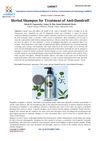
 Herbal shampoos with Neem and Tulsi might be safer and more effective for controlling dandruff.
 January 2023 in “Pakistan Armed Forces Medical Journal”
  January 2023 in “Research Square (Research Square)”
 Hair cortisol may be a good indicator of recent mood in people with bipolar disorder.
 January 2023 in “Wiadomości Lekarskie”
 Local antibiotic therapy can effectively treat root canal infections.
 January 2023 in “International journal of homoeopathic sciences”
 The document says homoeopathic treatments are good for hair regrowth in alopecia areata but doesn't give proof.
There is no cure for myotonic dystrophy type 1, so treatment focuses on managing symptoms and complications.
 January 2023 in “Frontiers research topics”
 Skin conditions can cause significant psychological distress, so addressing mental health is crucial for improving quality of life.
 August 2022 in “International journal of research in pharmacy and chemistry”
 Teak is a durable, termite-resistant wood with medicinal benefits.

Vitamin D is crucial for skin health and managing skin diseases.

No single biomarker is reliable enough for diagnosing and assessing SLE.
 February 2022 in “International Journal of Complementary & Alternative Medicine”
 Good hair and scalp health indicate good overall health.
 January 2022 in “bioRxiv (Cold Spring Harbor Laboratory)”
 Skin lesions in Carney complex are likely caused by a specific group of skin cells that promote pigment production due to a genetic mutation.
 January 2022 in “Acta dermatovenerologica Alpina, Pannonica et Adriatica (Tiskana izd.)”
 Uncombable hair syndrome causes frizzy hair and can affect the nervous system, eyes, and ears, often co-occurring with other hair, skin, nail, and teeth conditions, and is linked to three specific gene mutations.
 January 2022 in “International journal of zoological investigations”
 Polycystic Ovarian Syndrome is common in overweight urban college girls and may increase the risk of heart and metabolic problems.
 January 2022 in “Dermatology Review”
 Higher IL-31 levels are linked to worse itching in chronic kidney disease patients.

Researchers found a genetic link for hereditary hair loss but need more analysis to identify the exact gene.