 110 citations
,
August 2016 in “Drugs”
110 citations
,
August 2016 in “Drugs” Minoxidil is the only FDA-approved topical drug for treating male or female pattern hair loss, and other medications like finasteride and dutasteride can also increase hair growth.
 12 citations
,
January 2012 in “Current Dermatology Reports”
12 citations
,
January 2012 in “Current Dermatology Reports” Cosmetic procedures are growing rapidly, with safety and proper techniques being crucial.
2 citations
,
July 2014 in “Journal of pharmacology and pharmacotherapeutics” A woman got unwanted hair growth on her face from using bimatoprost eyedrops for glaucoma.
 1 citations
,
March 2023 in “Frontiers in Medicine”
1 citations
,
March 2023 in “Frontiers in Medicine” Topical prostaglandin analogs may help with hair growth but more research is needed.
 July 2023 in “Developmental medicine and child neurology/Developmental medicine & child neurology”
 DFMO treatment improves hair growth, muscle tone, and development in Bachmann-Bupp syndrome patients.
12 citations
,
September 1981 in “Acta Dermato Venereologica” Zinc supplements improved the girl's hair growth and thickness.
 January 2023 in “Applied sciences”
 Gefitinib and Sasam-Kyeongokgo together significantly reduce cancer growth and improve immune response in mice.
5 citations
,
February 2017 in “Cochrane library” There is not enough evidence to know if different ways of putting in eye drops for glaucoma work better than others.
 March 2024 in “International journal of pharmaceutics. X”
 Spanlastic-laden nanogel could be a better way to deliver hair growth medication through the skin for treating hair loss.
January 2026 in “National Journal of Maxillofacial Surgery” Using hibiscus oil with Gua-sha improves eyebrow hair growth more than hibiscus oil alone.
March 2025 in “Journal of Clinical Medicine” Iron chelators can effectively reduce hair loss and improve hair growth in autoimmune alopecia.
December 2025 in “Cosmetics” New treatments for alopecia show promise in restoring hair growth by targeting immune and hormonal factors.
 9 citations
,
February 2022 in “European Journal of Pharmaceutics and Biopharmaceutics”
9 citations
,
February 2022 in “European Journal of Pharmaceutics and Biopharmaceutics” A new treatment for hair loss uses tiny lipid carriers to deliver a mix of minoxidil and latanoprost directly to hair follicles, promoting hair growth and being well tolerated by the skin.
May 2013 in “Optometry and vision science” The document discusses challenges in eye care, including treating melanoma before macular hole repair, bloody tears resolved by blood pressure control, eyelash regrowth in hair-pulling disorder with medication, a non-invasive method to detect eyelash mites, and the psychological factors affecting contact lens comfort.
 31 citations
,
January 2015 in “Journal of The American Academy of Dermatology”
31 citations
,
January 2015 in “Journal of The American Academy of Dermatology” Prostaglandin F2α analogs show promise for treating certain types of hair loss but need more research for other skin conditions.
 23 citations
,
December 2013 in “Regenerative Medicine”
23 citations
,
December 2013 in “Regenerative Medicine” Hair follicle culture helps develop new treatments for hair loss.
 10 citations
,
August 2012 in “Current Problems in Pediatric and Adolescent Health Care”
10 citations
,
August 2012 in “Current Problems in Pediatric and Adolescent Health Care” Hair changes can indicate systemic diseases or medication effects.
 5 citations
,
January 2015 in “Global Dermatology”
5 citations
,
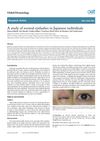
January 2015 in “Global Dermatology” Japanese females generally have longer, denser, and curlier eyelashes than males.
 1 citations
,
October 2018 in “InTech eBooks”
1 citations
,
October 2018 in “InTech eBooks” Only minoxidil and finasteride are FDA-approved for hair loss, with other treatments available but less effective or with side effects.
 January 2017 in “Journal of Investigative Dermatology Symposium Proceedings”
 The 2015 Hair Research Congress concluded that stem cells, maraviroc, and simvastatin could potentially treat Alopecia Areata, topical minoxidil, finasteride, and steroids could treat Frontal Fibrosing Alopecia, and PTGDR2 antagonists could also treat alopecia. They also found that low-level light therapy could help with hair loss, a robotic device could assist in hair extraction, and nutrition could aid hair growth. They suggested that Alopecia Areata is an inflammatory disorder, not a single disease, indicating a need for personalized treatments.
 8 citations
,
September 2010 in “Journal of Men's Health”
8 citations
,
September 2010 in “Journal of Men's Health” Androgenic Alopecia, a common hair loss condition, can be effectively treated with finasteride and other treatments.
 1 citations
,
January 2018 in “Springer eBooks”
1 citations
,
January 2018 in “Springer eBooks” The document concludes that scalp cooling and treatments like minoxidil can help manage hair loss from cancer therapy.
 July 2025 in “International Journal of Dermatology Venereology and Leprosy Sciences”
 Microneedling can effectively promote hair regrowth in alopecia areata.
 January 2019 in “Springer eBooks”
 Some chemicals and drugs can cause hair loss, which usually grows back after stopping the treatment.
 October 2018 in “InTech eBooks”
 The most effective treatments for hair loss are minoxidil, finasteride, PRP, and hair transplants, with steroids and immunosuppressants for autoimmune types.
 5 citations
,
June 2012 in “QJM: An International Journal of Medicine”
5 citations
,
June 2012 in “QJM: An International Journal of Medicine” The lecture concluded that drugs for human enhancement are here to stay and called for their responsible development and fair access.
 9 citations
,
January 1987 in “Journal of The American Academy of Dermatology”
9 citations
,
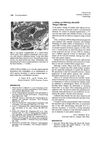
January 1987 in “Journal of The American Academy of Dermatology” A man lost a lot of scalp hair quickly after stopping minoxidil, but it grew back with mild male pattern baldness.
 1 citations
,
January 1987 in “Journal of The American Academy of Dermatology”
1 citations
,
January 1987 in “Journal of The American Academy of Dermatology” The patient's hair loss was likely not caused by beta blockers but possibly by stress or other factors.
 164 citations
,
April 2008 in “Cochrane library”
164 citations
,
April 2008 in “Cochrane library” Current treatments for alopecia show no significant long-term benefits.
 72 citations
,
July 2014 in “American journal of clinical dermatology”
72 citations
,
July 2014 in “American journal of clinical dermatology” Some treatments, like corticosteroids and sensitizing agents, can help with alopecia areata, but more high-quality research is needed.