 76 citations
,
June 2018 in “EMBO Reports”
76 citations
,
June 2018 in “EMBO Reports” YAP and TAZ proteins are necessary for the development of two types of skin cancer.

A genetic mutation in the EDA gene causes hypohidrotic ectodermal dysplasia in cats.
2 citations
,
January 2023 in “Uro” UHP-sCESr is as effective as HESr for treating BPH symptoms.
October 2025 in “Journal of the Endocrine Society” The patient was satisfied with hormone therapy, and her epilepsy remained stable.
 43 citations
,
February 2013 in “Developmental dynamics”
43 citations
,
February 2013 in “Developmental dynamics” Foxi3 expression in developing teeth and hair is controlled by the ectodysplasin pathway.
10 citations
,
October 2000 in “PubMed” E6/E7 oncogenes in hair follicles cause continuous hair growth by skipping the resting phase.
5 citations
,
January 2023 in “IDCases” Albendazole and praziquantel can cause severe side effects, especially with prolonged use or liver issues.
 4 citations
,
May 2021 in “The journal of investigative dermatology/Journal of investigative dermatology”
4 citations
,
May 2021 in “The journal of investigative dermatology/Journal of investigative dermatology” ELL is crucial for gene transcription related to skin cell growth.
 September 2016 in “Journal of Dermatological Science”
 A gene mutation worsens skin irritation in mice due to a lack of certain fats.
9 citations
,
August 2021 in “Biomedicines” 17β-estradiol boosts APE1/Ref-1 secretion in cells and mice via a calcium-dependent pathway.

A rigid compound with a common structural motif was successfully synthesized.
 57 citations
,
March 2024 in “Nano-Micro Letters”
57 citations
,
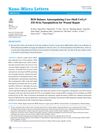
March 2024 in “Nano-Micro Letters” The nanoplatform helps heal wounds by balancing bacteria-killing and inflammation-reducing functions.
 10 citations
,
May 2012 in “Cell Adhesion & Migration”
10 citations
,
May 2012 in “Cell Adhesion & Migration” ILK and ELMO2 help cells move and stick together, important for wound healing and hair growth.
 25 citations
,
January 2019 in “British Journal of Dermatology”
25 citations
,
January 2019 in “British Journal of Dermatology” Low oxygen levels can make hair-growing cells better at growing hair through a process involving reactive oxygen species.
 2 citations
,
October 2015 in “Human Gene Therapy”
2 citations
,
October 2015 in “Human Gene Therapy” The congress highlighted new gene therapy techniques and cell transplantation methods for treating diseases.
Researchers made new compounds that could potentially be developed into anticancer drugs.
44 citations
,
January 2017 in “Journal of Investigative Dermatology” Mutations in the KLHL24 gene cause skin blistering in epidermolysis bullosa simplex.
8 citations
,
July 2023 in “Inflammation and Regeneration” ALKBH5 helps wounds heal faster by stabilizing PELI2 mRNA.
64 citations
,
January 1985 in “Clinical endocrinology” A combination of desogestrel and ethinyl oestradiol effectively reduces hair growth in hirsute women.
32 citations
,
October 2015 in “Frontiers in Cellular Neuroscience” DHT is needed for long-term depression, while E2 is needed for full long-term potentiation in male rat brains.
46 citations
,
June 2013 in “Journal of structural biology” High glycine–tyrosine keratin-associated proteins help make hair strong and maintain its shape.
 14 citations
,
May 2013 in “American Journal of Physiology-endocrinology and Metabolism”
14 citations
,
May 2013 in “American Journal of Physiology-endocrinology and Metabolism” Removing myelin protein zero-like 3 in mice leads to better metabolism and resistance to obesity.
1 citations
,
May 2022 in “International journal of molecular sciences” Faulty LEF1 activation causes faster skin cell differentiation in premature aging syndrome.
December 2025 in “Pharmaceutics” EV-based drug delivery shows promise but faces challenges in standardization and scalability.
 109 citations
,
October 2007 in “American Journal of Human Genetics”
109 citations
,
October 2007 in “American Journal of Human Genetics” Giving a special protein to dogs with a certain genetic disease improved their symptoms but didn't help with hair growth.
 December 2022 in “Archives of Clinical Trials”
 Treating PCOS patients with HP HMG significantly raises the risk of ovarian hyperstimulation syndrome, needing careful dose management.
 25 citations
,
June 2014 in “Journal of Endocrinology/Journal of endocrinology”
25 citations
,
June 2014 in “Journal of Endocrinology/Journal of endocrinology” Human sebaceous glands contain enzymes that affect androgen production and may influence sebum production and acne.
 26 citations
,
January 2016 in “Annals of Dermatology”
26 citations
,
January 2016 in “Annals of Dermatology” Ecklonia cava polyphenols help increase human hair growth and reduce hair loss.
125 citations
,
February 1971 in “Biochemistry” Specific cross-linkages help make hair proteins stable and strong.
13 citations
,
September 2016 in “Journal of Cellular Biochemistry” Low oxygen levels help hair follicle stem cells turn into heart muscle cells faster.