11 citations
,
October 2007 in “Journal of Investigative Dermatology” Mutations in the Sgk3 gene cause fuzzy hair in mice.
11 citations
,
February 1982 in “Mutation Research/Fundamental and Molecular Mechanisms of Mutagenesis” A new method can detect mutations in mice by observing changes in hair follicle cells.
Deleting the MAD2L1 gene in mice led to rapid tumor growth despite chromosomal instability.
 June 2023 in “British journal of dermatology/British journal of dermatology, Supplement”
 A girl with Becker naevus syndrome has a genetic variant in the ACTB gene related to her symptoms.
 40 citations
,
January 2017 in “Intestinal Research”
40 citations
,
January 2017 in “Intestinal Research” Genotyping for NUDT15 p.Arg139Cys can help predict thiopurine side effects in Japanese IBD patients.
578 citations
,
April 1993 in “Cell” TGFα gene mutation in mice causes abnormal skin, wavy hair, curly whiskers, and sometimes eye inflammation.
 July 2022 in “The journal of investigative dermatology/Journal of investigative dermatology”
 A patient with a PLEC mutation has epidermolysis bullosa, muscular dystrophy, and myasthenia gravis, which improved with steroid treatment.
 119 citations
,
November 2014 in “Trends in Cell Biology”
119 citations
,
November 2014 in “Trends in Cell Biology” Fibroblast growth factor receptor signaling controls cell development and repair, and its malfunction can cause disorders and cancer, but it also offers potential for targeted therapies.
 7 citations
,
December 2015 in “International Journal of Dermatology”
7 citations
,
December 2015 in “International Journal of Dermatology” New and known mutations in the hairless gene cause a hair loss condition called Atrichia with papular lesions.
The naked mutation in mice causes hair loss and helps identify keratin genes.
27 citations
,
July 1997 in “PubMed” The harlequin ichthyosis mouse mutation causes thick skin and early death, resembling a human skin disorder.
175 citations
,
August 1997 in “Nature Genetics” 1 citations
,
October 2025 in “International Journal of Molecular Sciences” Mutating the gmds gene in zebrafish increases hair cell numbers and regeneration.
 13 citations
,
March 2020 in “Genes”
13 citations
,
March 2020 in “Genes” Disrupting the FGF5 gene in rabbits leads to longer hair by extending the hair growth phase.
10 citations
,
October 2018 in “Journal of molecular and cellular cardiology/Journal of Molecular and Cellular Cardiology” The gene NM_026333 slows down aging by affecting the NCX1 pathway and could be targeted for anti-aging treatments.
210 citations
,
February 2008 in “Nature genetics” Mutations in the P2RY5 gene cause autosomal recessive woolly hair.
 November 2022 in “Journal of Investigative Dermatology”
 Some people with schwannomatosis have a new type of mutation in the LZTR1 gene.
21 citations
,
March 2003 in “Clinical and Experimental Dermatology” Mutations in the hHb6 gene cause the hair disorder monilethrix.
4 citations
,
July 2022 in “The Journal of Clinical Endocrinology & Metabolism” A specific genetic mutation causes POMC deficiency, leading to symptoms like weight gain and red hair.
38 citations
,
September 1997 in “The journal of investigative dermatology/Journal of investigative dermatology” A mutation in mice causes hair loss and skin issues due to a defect in a gene affecting cell adhesion.
 July 2023 in “Developmental medicine and child neurology/Developmental medicine & child neurology”
 DFMO treatment improves hair growth, muscle tone, and development in Bachmann-Bupp syndrome patients.
 29 citations
,
January 2010 in “Methods in Enzymology”
29 citations
,
January 2010 in “Methods in Enzymology” The document concludes that careful design of genetic fate mapping experiments is crucial for accurate cell lineage tracing in mice.
 73 citations
,
June 2010 in “PLoS Genetics”
73 citations
,
June 2010 in “PLoS Genetics” A gene mutation in mice causes hair loss, weak bones, and protein buildup, showing how protein processing issues can lead to diseases.
 30 citations
,
October 2014 in “PLOS ONE”
30 citations
,
October 2014 in “PLOS ONE” BAF200 is essential for proper heart and coronary artery formation.
97 citations
,
March 2010 in “The American Journal of Human Genetics” A mutation in the KRT74 gene causes tightly curled hair.
 2 citations
,
October 1990 in “The Lancet”
2 citations
,
October 1990 in “The Lancet” Some people have a genetic variation that makes them less effective at breaking down drugs.
2 citations
,
February 2022 in “bioRxiv (Cold Spring Harbor Laboratory)” Impaired LEF1 activation speeds up skin cell development in Hutchinson-Gilford Progeria Syndrome.
 24 citations
,
July 2017 in “Structure”
24 citations
,
July 2017 in “Structure” FGF9 controls which receptors it binds to through a process where two FGF9 molecules join, and changes in FGF9 can lead to incorrect receptor activation.
 5 citations
,
September 2015 in “BMC Medical Genetics”
5 citations
,
September 2015 in “BMC Medical Genetics” The EDAR gene mutation leads to thinner and more deformed hair shafts.
 3 citations
,
January 2019 in “Journal of Dermatology”
3 citations
,
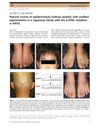
January 2019 in “Journal of Dermatology” The p.P25L mutation in the KRT5 gene causes a rare skin condition that worsens over time and may lead to hair loss starting in young adulthood.