3 citations
,
January 2020 in “Indian Journal of Dermatology” Certain gene variations in the Vitamin D Receptor are linked to higher risk of female hair loss.
 1 citations
,
August 2022 in “International Journal of Molecular Sciences”
1 citations
,
August 2022 in “International Journal of Molecular Sciences” FGF12 is important for hair growth and could be targeted for hair loss treatment.
 5 citations
,
April 2018 in “Journal of Dermatological Science”
5 citations
,
April 2018 in “Journal of Dermatological Science” Adjusting estradiol-ANGPT2 levels can promote hair growth in female pattern hair loss.
71 citations
,
January 2011 in “Orphanet Journal of Rare Diseases” IFAP syndrome is a rare genetic disorder causing skin, hair, and eye issues, with limited treatment options.
22 citations
,
September 2011 in “Journal of Investigative Dermatology” TCF/Lef1 is essential for skin barrier function by regulating lipid metabolism.
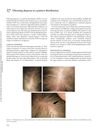 April 2012 in “Informa Healthcare eBooks”
 Fibrosing alopecia in a pattern distribution is a unique hair loss condition with inflammation and scarring, resembling but distinct from common balding.
 6 citations
,
January 2015 in “Biochemical Society Transactions”
6 citations
,
January 2015 in “Biochemical Society Transactions” The Ysc84/SH3yl1 protein family is important for cell movement and the process of taking in materials by interacting with actin and cell membranes.
 12 citations
,
December 2020 in “Archives animal breeding/Archiv für Tierzucht”
12 citations
,
December 2020 in “Archives animal breeding/Archiv für Tierzucht” EDA and EDAR are important for hair follicle development in cashmere goats and affect other related genes.
158 citations
,
February 2012 in “Journal of Investigative Dermatology” FGF18 helps keep hair in its resting phase, affecting hair growth cycles.
1 citations
,
March 2022 in “Journal of biological chemistry/The Journal of biological chemistry” Removing a specific gene in certain skin cells causes hair loss in mice by disrupting hair follicle development.
 7 citations
,
January 2015 in “Dermatology”
7 citations
,
January 2015 in “Dermatology” Two gene variations, rs6493497 and rs7176005, may be linked to female hair loss in Chinese people.
8 citations
,
June 2020 in “The journal of investigative dermatology/Journal of investigative dermatology” A boy's skin fragility and sparse hair were caused by a genetic mutation affecting skin cell adhesion.
January 2023 in “Zenodo (CERN European Organization for Nuclear Research)”  1 citations
,
April 2025 in “Pediatria i Medycyna Rodzinna”
1 citations
,
April 2025 in “Pediatria i Medycyna Rodzinna” Restoring EDA and WNT pathways early may help improve skin, hair, and teeth issues in hypohidrotic ectodermal dysplasia.
rhKGF2 significantly promotes hair growth and follicle development.
4 citations
,
September 2015 in “JAAD case reports” Substance P may play a role in the inflammation seen in keratosis follicularis spinulosa decalvans.
September 2023 in “World Rabbit Science” The FRZB gene slows hair growth in rabbits.
27 citations
,
September 2013 in “The FASEB Journal” Losing Memo protein shortens lifespan and affects health.
22 citations
,
March 2019 in “The Journal of Cell Biology” The Wave complex controls skin growth by suppressing certain signals.
 December 2023 in “Clinical Cosmetic and Investigational Dermatology”
 An 8-year-old Saudi boy was diagnosed with a rare genetic disorder causing hair loss, skin issues, and light sensitivity.
4 citations
,
May 2024 in “Cytotechnology” 19 citations
,
November 2017 in “General and comparative endocrinology” BMP2 and BMPR-IA may stop hair growth while Noggin may encourage it in yak skin.
 2 citations
,
August 2023 in “Development”
2 citations
,
August 2023 in “Development” Hair follicles in the back of the rosette fancy mouse have reversed orientations due to a gene mutation.
39 citations
,
September 2018 in “American Journal of Medical Genetics Part A” A new genetic mutation in the ODC1 gene causes developmental delay and other symptoms in a young girl.
7 citations
,
September 2013 in “Familial cancer” Birt–Hogg–Dubé syndrome is a rare genetic condition causing skin lesions, lung cysts, and a higher chance of kidney cancer.
14 citations
,
April 2008 in “PROTEOMICS” Increased 14-3-3 proteins may block hair cycle regression, causing hair loss.
1 citations
,
December 2012 in “Journal of Dermatological Science” FGF18 controls hair growth rest phase.

Fad diets and supplements from social media can cause skin and hair problems.
58 citations
,
April 1993 in “Developmental Biology” bFGF delays hair growth in mice.
 115 citations
,
March 2019 in “Nature Communications”
115 citations
,
March 2019 in “Nature Communications” Frontal fibrosing alopecia is linked to four genetic areas, especially the HLA-B*07:02 allele.