1 citations
,
January 2004 in “Medicina de Familia SEMERGEN” Finasteride may help prevent prostate cancer.
 October 2025 in “Actualización en Medicina de Familia”
 New drugs face challenges due to limited evidence, and safety updates are advised for some existing medications.
7 citations
,
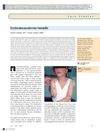
April 2004 in “International Journal of Dermatology” The newborn's skin blistering is due to a genetic condition called epidermolytic hyperkeratosis.
8 citations
,
June 2016 in “Journal of Investigative Dermatology” A rare genetic deletion in the KRT1 gene causes unique skin symptoms in a family.
 3 citations
,
July 2004 in “SKINmed/Skinmed”
3 citations
,
July 2004 in “SKINmed/Skinmed” A 4-year-old girl was diagnosed with erythrokeratodermia variabilis after other treatments failed.
14 citations
,
June 1989 in “Journal of dermatology” Three siblings had both Vohwinkel's disease and congenital alopecia, with no effective treatment.
April 1977 in “Pediatric Research” 32 citations
,
May 1986 in “Archives of Dermatology” The condition is likely inherited in an autosomal-dominant pattern.
41 citations
,
January 1992 in “Journal of medical genetics” The study found that males with KFSD had severe skin and eye symptoms, while female carriers had milder symptoms.
 June 2024 in “British Journal of Dermatology”
 KRT14 gene variants cause dermatopathia pigmentosa reticularis, affecting nails, teeth, and hair.
12 citations
,
January 2013 in “Indian dermatology online journal” Dermatopathia pigmentosa reticularis causes skin discoloration, hair loss, and nail problems.
5 citations
,
June 2008 in “British Journal of Dermatology”  3 citations
,
September 2021 in “Experimental and Therapeutic Medicine”
3 citations
,
September 2021 in “Experimental and Therapeutic Medicine” Early diagnosis of Keratosis pilaris atrophicans faciei can lead to better, personalized treatments.
 September 2022 in “JAAD case reports”
 The man has a genetic skin condition called pachyonychia congenita.
 March 2023 in “JAAD case reports”
 A new genetic change in the keratin 10 gene caused a skin condition called ichthyosis hystrix in a father and his daughter.
1 citations
,
January 2015 in “Journal of clinical case reports” KFSD causes scarring hair loss and skin roughness, mainly in males.
January 2022 in “Clinical dermatology review” A girl with a rare skin condition called Keratosis Follicularis Spinulosa Decalvans showed no significant improvement with treatment.
13 citations
,
July 2016 in “Indian Journal of Dermatology” DPR can show different hair characteristics, as seen in two brothers with normal hair.
 1 citations
,
January 2012 in “Juntendō Igaku/Juntendo igaku”
1 citations
,
January 2012 in “Juntendō Igaku/Juntendo igaku” A simple classification based on symptoms helps diagnose and treat inherited skin disorders in Japan.
10 citations
,
April 2013 in “Journal of Investigative Dermatology” Epidermolytic ichthyosis can be inherited in a semidominant way with mild symptoms in carriers.
3 citations
,
April 2011 in “Journal of the American Academy of Dermatology” A 19-year-old man had a rare skin condition on one side of his face that looked like another skin disease.
 April 1906 in “The American Journal of the Medical Sciences”
 Keratosis Pilaris Atrophicans causes skin scarring and might be treated with a new synthetic retinoid.
February 2022 in “Authorea (Authorea)” PAON shows skin patterns due to genetic mosaicism.
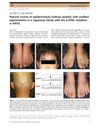 3 citations
,
January 2019 in “Journal of Dermatology”
3 citations
,
January 2019 in “Journal of Dermatology” The p.P25L mutation in the KRT5 gene causes a rare skin condition that worsens over time and may lead to hair loss starting in young adulthood.
March 2009 in “Encyclopedia of Life Sciences” Mutations in keratin genes cause skin disorders, but new treatments show promise.
4 citations
,
April 2019 in “JAAD Case Reports” DPR can cause skin, hair, and nail issues, sometimes appearing later in life.
61 citations
,
September 1994 in “Journal of Medical Genetics” Pachyonychia congenita is linked to a keratin gene on chromosome 17.
40 citations
,
December 2010 in “Human Genetics” September 2016 in “European Journal of Pediatric Dermatology/PD. European journal of pediatric dermatology” Ulerythema ophryogenes causes hair thinning and inflammation, with limited treatment options.
6 citations
,
January 2015 in “Indian Dermatology Online Journal” PEODDN is a rare skin disorder with limited treatment options, best treated with laser therapy.