 January 2025 in “Dialnet (Universidad de la Rioja)”
 ADSC-enriched fat grafting is the best and safest aesthetic treatment, combining effectiveness and ethical confidence.
June 2025 in “La Prensa Medica” Advancements in cosmetology and plastic surgery have improved personal transformation with better results and high patient satisfaction.
 April 2023 in “Journal of Investigative Dermatology”
 Radiation treatment causes skin fibrosis by increasing certain fibroblast subpopulations, but using a c-Jun inhibitor or fat grafting can reduce this effect.
August 2021 in “Journal of cosmetic dermatology” The editorial stresses the importance of COVID-19 vaccination and ongoing contributions to the journal.

Children with Parry Romberg Syndrome had successful facial fat-grafting surgeries after disease stabilization with no complications.
 January 2014 in “Plastic and Aesthetic Research”
 Plastic surgery has constantly evolved, improving patient care and expanding techniques, especially after the World Wars.
January 2011 in “Junshi yixue” A mouse model for studying scleroderma in chronic graft-versus-host disease was successfully created.
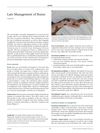 June 2002 in “Surgery (oxford)”
 The document says that treating burns late focuses on improving function, appearance, and helping patients return to normal life, using both non-surgical and surgical methods.
December 2017 in “Facial plastic surgery” Hair transplants can effectively treat facial hair loss from trauma.
 25 citations
,
September 2019 in “PubMed”
25 citations
,
September 2019 in “PubMed” Platelet-Rich Plasma (PRP) is helpful for skin and hair treatments and works better when combined with other procedures.
 January 2025 in “Journal of Dermatological Treatment”
 Early treatment can help reverse hair loss caused by cosmetic fillers.
 11 citations
,
March 2021 in “Journal of Bioscience and Bioengineering”
11 citations
,
March 2021 in “Journal of Bioscience and Bioengineering” Adding human fat-derived stem cells to hair follicle grafts greatly increases hair growth.
3 citations
,
December 2013 in “Annals of plastic surgery” The new hair transplant method improves results and reduces surgery time.
July 2017 in “DOAJ (DOAJ: Directory of Open Access Journals)” SVF-enhanced fat injections may effectively treat baldness by promoting hair growth.
 150 citations
,
August 1992 in “Genes & Development”
150 citations
,
August 1992 in “Genes & Development” TNF alpha in skin cells causes weight loss, hair and fat issues, and skin inflammation in mice.
2 citations
,
July 2022 in “The Kaohsiung Journal of Medical Sciences” FTY720 helps transplanted fat survive better by reducing immune rejection and improving blood vessel growth.
 January 2023 in “Postępy Dermatologii i Alergologii”
 Stem cells can improve wound healing, reduce scars, promote hair growth, rejuvenate skin, and enhance fat grafts in plastic surgery, but there are still some concerns.
 November 2023 in “Journal of cosmetic dermatology”
 Fat transplants using a patient's own fat can rejuvenate and repair tissues effectively.
 22 citations
,
October 2011 in “Bone”
22 citations
,
October 2011 in “Bone” Androgens affect bone and fat cell development differently based on the cells' embryonic origin.
 June 2022 in “Al-Azhar International Medical Journal /Al-Azhar International Medical Journal”
 Adding nano fat to hair transplants improves results for scar-related hair loss.
 September 2018 in “Plastic and Reconstructive Surgery – Global Open”
 Ultrasound helps in safe fat transfer for buttock augmentation, but it's costly and time-consuming; the fat transfer technique is effective with high patient satisfaction.
6 citations
,
July 2018 in “Plastic & Reconstructive Surgery” Following recommended practices can make gluteal fat transplantation safer.
 88 citations
,
July 2019 in “International Journal of Molecular Sciences”
88 citations
,
July 2019 in “International Journal of Molecular Sciences” Using human fat tissue derived stem cells in micrografts can safely and effectively increase hair density in people with hair loss.
41 citations
,
January 2015 in “Burns & Trauma” Tissue engineering improves burn scar reconstruction by using skin substitutes and replacing damaged tissues.
44 citations
,
January 2013 in “BMC Dermatology” TGFβ signaling prevents sebaceous gland cells from producing fats.
January 2005 in “Chinese Journal of Medical Aesthetics and Cosmetology” The technique improves hair transplant density and is safe and effective.
 18 citations
,
November 2013 in “Molecules and Cells”
18 citations
,
November 2013 in “Molecules and Cells” New culture method keeps human skin stem cells more stem-like.
 January 2016 in “Georg Thieme Verlag eBooks”
 The document recommends personalized, culturally sensitive treatments to rejuvenate the aging Asian face, focusing on natural results and specific techniques for skin, hair, and facial features.
 49 citations
,
March 2019 in “Journal of Investigative Dermatology”
49 citations
,
March 2019 in “Journal of Investigative Dermatology” Skin fat plays a key role in immune defense and healing beyond just storing energy.
29 citations
,
July 2013 in “Journal of Investigative Dermatology” UV radiation causes skin cancer, but sunscreens and certain drugs can help prevent it.