August 2019 in “Journal of the American Academy of Dermatology” Frontal fibrosing alopecia may be caused by an autoimmune reaction and hormonal imbalance.
 155 citations
,
September 2008 in “British journal of dermatology/British journal of dermatology, Supplement”
155 citations
,
September 2008 in “British journal of dermatology/British journal of dermatology, Supplement” FFA is more common in postmenopausal women, can affect younger women, and may stabilize over time.
5 citations
,
April 2019 in “DOAJ (DOAJ: Directory of Open Access Journals)” Stopping shaving or removing hair follicles usually resolves Pseudofolliculitis barbae.
 1 citations
,
April 2017 in “Journal of Investigative Dermatology”
1 citations
,
April 2017 in “Journal of Investigative Dermatology” D-OCT shows increased blood vessel growth in response to tissue damage in Frontal Fibrosing Alopecia and is useful for diagnosis and monitoring.
14 citations
,
January 2014 in “Indian Journal of Dermatology Venereology and Leprology” Frontal fibrosing alopecia can affect men's beards and leads to permanent hair loss.
 May 2026 in “International Journal of Drug Delivery Technology”
 Accurate diagnosis of EFFC is crucial for effective counseling and cosmetic care.
 May 2024 in “International Seven Journal of Multidisciplinary”
 More research is needed to better understand and treat Fibrosing Frontal Alopecia.
October 2024 in “Skin Appendage Disorders” Higher FABP4 levels may indicate more severe alopecia areata.
 1 citations
,
September 2021 in “CRC Press eBooks”
1 citations
,
September 2021 in “CRC Press eBooks” Frontal Fibrosing Alopecia is a hair loss condition mainly affecting postmenopausal women, with unclear causes and various clinical patterns.
 February 2024 in “Skin research and technology”
 The research suggests that immune cells and a specific type of cell death called ferroptosis are involved in Frontal fibrosis alopecia.
 August 2015 in “Dermatología Argentina”
 Frontal fibrosing alopecia causes hairline recession and eyebrow loss in postmenopausal women.
 2 citations
,
July 2022 in “Frontiers in Medicine”
2 citations
,
July 2022 in “Frontiers in Medicine” The cause of Frontal fibrosing alopecia, a type of hair loss, is complex, likely involving immune responses and genetics, but is not fully understood.
 8 citations
,
November 2018 in “Australasian Journal of Dermatology”
8 citations
,
November 2018 in “Australasian Journal of Dermatology” Frontal fibrosing alopecia in families shows similar signs to individual cases and may have a genetic link.
 July 2018 in “Elsevier eBooks”
 Frontal Fibrosing Alopecia is a type of hair loss affecting mostly older women, with no agreed best treatment.
2 citations
,
June 2021 in “Sultan Qaboos University medical journal” Familial frontal fibrosing alopecia is rare, mostly affects women, and often occurs between sisters or mother-daughter pairs.
60 citations
,
July 2014 in “Autophagy” The protein FLCN is involved in cellular cleanup and is regulated by ULK1.
 21 citations
,
April 2019 in “Clinical, cosmetic and investigational dermatology”
21 citations
,
April 2019 in “Clinical, cosmetic and investigational dermatology” The document concludes that stopping shaving or removing affected hair can alleviate Pseudofolliculitis barbae (PFB).
 July 2024 in “Iranian journal of pathology”
 Frontal fibrosing alopecia mainly affects women over 50, causing hair loss and specific skin changes.
475 citations
,
October 2006 in “Proceedings of the National Academy of Sciences” Folliculin helps regulate energy and nutrient sensing, impacting Birt–Hogg–Dubé syndrome.
 115 citations
,
March 2019 in “Nature Communications”
115 citations
,
March 2019 in “Nature Communications” Frontal fibrosing alopecia is linked to four genetic areas, especially the HLA-B*07:02 allele.
 6 citations
,
January 2017 in “British Journal of Dermatology”
6 citations
,
January 2017 in “British Journal of Dermatology” Frontal fibrosing alopecia is a scarring hair loss condition mainly affecting older women, with no known cause and treatments that may help stabilize hair loss.
 9 citations
,
January 2020 in “Postepy Dermatologii I Alergologii”
9 citations
,
January 2020 in “Postepy Dermatologii I Alergologii” Frontal fibrosing alopecia is a poorly understood condition with increasing cases and unclear treatment effectiveness.
1 citations
,
August 2018 in “Journal of the American Academy of Dermatology” A young woman developed facial bumps before hair loss, which is unusual for her condition.
January 2024 in “Updates in clinical dermatology” Frontal fibrosing alopecia is a scarring hair loss condition mainly affecting postmenopausal women, with unclear causes.
 23 citations
,
April 2021 in “Journal of Clinical Medicine”
23 citations
,
April 2021 in “Journal of Clinical Medicine” Frontal Fibrosing Alopecia's cause is unclear, affects mainly postmenopausal women, and current treatments focus on stopping hair loss rather than regrowth.
 39 citations
,
July 2015 in “British Journal of Dermatology”
39 citations
,
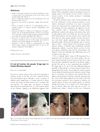
July 2015 in “British Journal of Dermatology” The pseudo 'fringe sign' can also appear in frontal fibrosing alopecia, not just in traction alopecia, showing that this condition may be more common than thought.
 166 citations
,
April 2012 in “Journal of The American Academy of Dermatology”
166 citations
,
April 2012 in “Journal of The American Academy of Dermatology” Mostly postmenopausal Caucasian women get Frontal Fibrosing Alopecia, which often includes eyebrow loss and has limited treatment success.
April 2019 in “Journal of Investigative Dermatology” Targeting immune pathways like JAK/STAT may help treat frontal fibrosing alopecia.
August 2020 in “Benha Journal of Applied Sciences” Higher FABP4 levels may help diagnose androgenetic alopecia early.
 1 citations
,
November 2023 in “Contact dermatitis”
1 citations
,
November 2023 in “Contact dermatitis” Some people with Frontal Fibrosing Alopecia may be allergic to a common sunscreen ingredient.