 21 citations
,
August 2013 in “Journal of Dermatological Treatment”
21 citations
,
August 2013 in “Journal of Dermatological Treatment” Low-level light therapy may help hair regrowth, but more research is needed.
 18 citations
,
December 2010 in “Journal of Trace Elements in Medicine and Biology”
18 citations
,
December 2010 in “Journal of Trace Elements in Medicine and Biology” Women with AGA have more androstenedione and dihydrotestosterone, less copper and zinc; copper imbalance affects AGA; treatment improves hormones and minerals.
 15 citations
,
October 2010 in “International Journal of Dermatology”
15 citations
,
October 2010 in “International Journal of Dermatology” Women with AGA have higher lipid levels, increasing heart disease risk.
 6 citations
,
January 2013 in “Genetics and Molecular Research”
6 citations
,
January 2013 in “Genetics and Molecular Research” Women with hair loss have more androgen receptors in certain hair follicles.
 5 citations
,
February 2017 in “Australasian Journal of Dermatology”
5 citations
,
February 2017 in “Australasian Journal of Dermatology” Scarring hair loss found in female pattern; biopsy needed for diagnosis.
June 2025 in “British Journal of Dermatology” Traction alopecia is common and preventable, especially among Indian women.
 June 2025 in “Fayoum University Medical Journal/Fayoum University Medical Journal ”
 Minoxidil and botulinum toxin are equally effective for treating female hair loss.
 June 2025 in “Microorganisms”
 Microbial imbalances in hair follicles may contribute to hair loss, especially in women.
 August 2023 in “Journal of Cosmetic Dermatology”
 Both minoxidil-spironolactone and minoxidil-finasteride treatments work for hair loss, but minoxidil-spironolactone is slightly more effective, especially in women.
 January 2023 in “Annals of Dermatology”
 Men with a family history of hair loss on their mother's side are more likely to have female pattern hair loss.
 June 1995 in “International Journal of Gynecology & Obstetrics”
 Women with hair loss have higher androgen levels, while men with early balding have altered androgen ratios.
March 2026 in “Ukrains kyi Visnyk Psykhonevrolohii” Women with mixed alopecia have a lower quality of life, linked to mental health issues.
Women with hair loss may benefit from higher iron levels.
December 2021 in “Faculty Opinions – Post-Publication Peer Review of the Biomedical Literature” Topical finasteride is promising for hair loss with minimal side effects but needs more research and approval.
 February 2010 in “Journal of The American Academy of Dermatology”
 Women with androgenetic alopecia may have higher blood pressure levels.

Women with androgenetic alopecia have normal levels of most blood steroids and binding proteins, but higher dehydroepiandrosterone. Some also have low "sex hormone-binding globulin" and "corticosteroide-binding globulin" capacity, and high "free androgen index" and "free cortisol index". Diane treatment can normalize these levels and improve hair conditions.
April 2014 in “The FASEB Journal” Women with androgenetic alopecia often have other symptoms of high androgen levels, requiring further hormone testing.

Women with a certain type of hair loss have more copper in the back of their head than the front, and treatment can normalize hair but not copper levels.
Women with androgenetic alopecia have noticeable changes in their autonomic nervous system.
November 1986 in “PubMed” Women with androgenetic alopecia have lower SHBG levels.
 4 citations
,
May 2021 in “Journal of The European Academy of Dermatology and Venereology”
4 citations
,
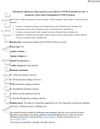
May 2021 in “Journal of The European Academy of Dermatology and Venereology” Hair loss doesn't affect COVID-19 severity.
 1 citations
,
May 2020 in “Reproductive Endocrinology”
1 citations
,
May 2020 in “Reproductive Endocrinology” The document concludes that hair loss and acne in women can be due to both androgen-related and unrelated causes, requiring a collaborative treatment approach.
1 citations
,
January 2000 in “PubMed” The treatment slightly increased hair growth and was safe for most women.
 1 citations
,
December 2017 in “Acta biomedica scientifica”
1 citations
,
December 2017 in “Acta biomedica scientifica” Women of reproductive age with polycystic ovary syndrome often experience hair loss.
 June 2026 in “Zenodo (CERN European Organization for Nuclear Research)”
 Finasteride and dutasteride effectively treat hair loss, with dutasteride showing slightly better results.
 June 2026 in “Zenodo (CERN European Organization for Nuclear Research)”
 Finasteride and dutasteride effectively treat hair loss, with dutasteride showing slightly better results.
 November 2025 in “International Journal of Research in Medical Sciences”
 Diffuse alopecia in females is often linked to certain medications, diseases, and low hemoglobin, while female pattern hair loss is linked to age, duration, and family history.
 November 2023 in “International Journal of Dermatology”
 Most women with long-term, widespread hair loss need a tissue examination for an accurate diagnosis.
 January 1986 in “Journal of Steroid Biochemistry”
 Women with severe acne, hirsutism, and androgenic alopecia often have higher levels of certain androgens, but the specific pattern can't be predicted just by looking at symptoms.

Women with acne and hair loss, even if they have regular periods, often have polycystic ovary syndrome.