 58 citations
,
November 2020 in “International Journal of Dermatology”
58 citations
,
November 2020 in “International Journal of Dermatology” COVID-19 may cause a temporary hair loss condition called telogen effluvium in some patients after recovery.
 2 citations
,
May 2018 in “Journal of The American Academy of Dermatology”
2 citations
,
May 2018 in “Journal of The American Academy of Dermatology” Hypothyroidism patients with hair loss typically have thinning hair, smaller hair follicles, and normal hair shedding.
September 2025 in “Brazilian Journal of Health Review” Early diagnosis and less aggressive hair care improve outcomes for Black women with frontal fibrosing alopecia.
 January 2021 in “Skinmed”
 Platelet-Rich Plasma injections can effectively reduce hair thinning and loss, especially in women.
 February 2026 in “Editora Pasteur eBooks”
 An integrative approach combining medical, nutritional, and lifestyle changes effectively manages female pattern hair loss.
 March 2025 in “Forum Dermatologicum”
 Trichoscopy is crucial for accurately diagnosing fibrosing alopecia in pattern distribution.
July 2022 in “DOAJ (DOAJ: Directory of Open Access Journals)” Early detection and trichoscopy are key for treating hair loss effectively.
Amphetamine use may not cause hair loss, "geezer" traits are normal aging, not all educated older people are stereotypes, and metronidazole can rarely cause lung disease.
 18 citations
,
February 2014 in “PubMed”
18 citations
,
February 2014 in “PubMed” Androgenetic alopecia is a common hair loss condition caused by testosterone effects on hair follicles, leading to thinner, shorter, and less pigmented hair, diagnosed using scalp dermoscopy and treated with topical minoxidil, antiandrogen agents, and 5-alpha reductase inhibitors.
October 2025 in “Journal of the Endocrine Society” Anastrozole can cause increased testosterone, leading to symptoms like hair growth and thinning.
Menopause causes skin issues like dryness and wrinkles, which can be managed with lifestyle changes and treatments.
1 citations
,
December 2017 in “Annals of Dermatological Research” Accurate early diagnosis of Lichen Planopilaris is crucial to prevent permanent hair loss.
 April 2023 in “World Journal Of Advanced Research and Reviews”
 Cosmetic products or emotional factors might contribute to Frontal Fibrosing Alopecia, and trichoscopy is useful for diagnosis.

An integrated approach with accurate diagnosis and targeted treatment improves outcomes for female hair loss.
 1 citations
,
July 2024 in “Skin Research and Technology”
1 citations
,
July 2024 in “Skin Research and Technology” Patients with androgenetic alopecia have thinner subcutaneous fat layers in their frontal scalp compared to healthy individuals.
1 citations
,
August 2021 in “Журнал здорового питания и диетологии” Alopecia causes significant hair loss, especially in men by age 50.
 November 2022 in “Nihon Nyuusankin Gakkaishi/Nihon Nyūsankin Gakkaishi”
 The lotion with N793 strain significantly increased hair density and reduced hair loss safely.
 15 citations
,
March 2015 in “Australasian Journal of Dermatology”
15 citations
,
March 2015 in “Australasian Journal of Dermatology” Seborrhoeic dermatitis may cause a condition called "seborrhoeic folliculitis," leading to chronic scalp inflammation and scarring hair loss.
 34 citations
,
September 2009 in “International Journal of Dermatology”
34 citations
,
September 2009 in “International Journal of Dermatology” Using anabolic-androgenic steroids can cause skin problems like acne and hair loss in athletes.
22 citations
,
November 2018 in “Anti-Inflammatory & Anti-Allergy Agents in Medicinal Chemistry” Most patients with Systemic Lupus Erythematosus experience fatigue, skin issues, and joint pain.
 7 citations
,
May 1978 in “International Journal of Dermatology”
7 citations
,
May 1978 in “International Journal of Dermatology” Recent hair loss research shows some progress, especially in understanding male pattern baldness, but effective treatments for many types of hair loss are still lacking.
 2 citations
,
November 2018 in “Destaques Acadêmicos”
2 citations
,
November 2018 in “Destaques Acadêmicos” Microneedling showed the most significant results for treating hair thinning in Androgenetic Alopecia.
1 citations
,
April 2015 in “Nasza Dermatologia Online” Dermatologists should be involved in the care of hematology patients due to common skin issues.
 April 2012 in “Informa Healthcare eBooks”
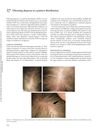
 Fibrosing alopecia in a pattern distribution is a unique hair loss condition with inflammation and scarring, resembling but distinct from common balding.
 February 2013 in “Jurnal Biomedik : JBM”
 The sebaceous gland plays a significant role in hair loss and thinning, and using growth stimulators, DHT inhibitors, anti-inflammatory drugs, anti-androgens, and super oxide dismuse substances can help manage it.
 February 2010 in “Journal of The American Academy of Dermatology”
 Mimicking growth factors in a topical solution can prolong hair growth phase and reduce hair loss without side effects.
February 2006 in “Cambridge University Press eBooks” A 45-year-old woman experienced excessive hair shedding beyond the normal range.
Minoxidil (Rogaine) increased interest in treating male pattern baldness.
April 2022 in “Journal of Investigative Dermatology” Androgenetic alopecia causes hair thinning due to increased androgen activity, treatable with minoxidil and finasteride.

Platelet-rich plasma injections can effectively reduce hair thinning, especially in women.