 October 2022 in “Egyptian Journal of Health Care”
 Female nursing students with iron deficiency anemia have poor knowledge and practices regarding iron intake, needing better health education and physical monitoring.

Encapsulating hair loss drugs in cyclodextrins improves their solubility and reduces scalp irritation.
5 citations
,
January 2015 in “Molecular Genetics and Metabolism”  76 citations
,
May 2011 in “Liver transplantation”
76 citations
,
May 2011 in “Liver transplantation” Liver transplantation is a viable option for children with propionic acidemia, improving quality of life and diet, but does not remove all risks and long-term brain outcomes are uncertain.
26 citations
,
October 2011 in “Biological trace element research” Low copper levels might cause premature graying of hair.
 17 citations
,
December 2004 in “Bioorganic & Medicinal Chemistry Letters”
17 citations
,
December 2004 in “Bioorganic & Medicinal Chemistry Letters” Scientists found new, better-working inhibitors for a hormone-related enzyme.
21 citations
,
September 1966 in “Toxicology and Applied Pharmacology” Caffeine becomes more toxic in rats when food intake is reduced by over 50%.
April 2016 in “Journal of Investigative Dermatology” Iron deficiency causes hair loss by affecting hair differentiation and cycling.
 6 citations
,
January 2013
6 citations
,
January 2013 Hyperadrenocorticism in ferrets is linked to neutering and indoor housing, and is best treated with surgery and a deslorelin implant.
 August 2024 in “IAHS Medical Journal”
 Low vitamin D and ferritin levels are linked to female hair loss.
 October 2023 in “Spectrochimica acta. Part A, Molecular and biomolecular spectroscopy”
 New, eco-friendly methods accurately measure TDF and FNS in a new urologic medication.
November 2025 in “Journal of Diabetes Investigation” Dapagliflozin improved blood sugar control in a man with Werner syndrome without side effects.
 37 citations
,
September 2003 in “Journal of Medicinal Chemistry”
37 citations
,
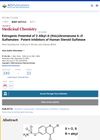
September 2003 in “Journal of Medicinal Chemistry” A substance called Compound 2g can strongly block STS (a hormone-related enzyme) without affecting estrogen levels, making it potentially good for treating breast cancer.
 April 2023 in “Dermatologic surgery”
 The new graft-holding solution is better at preserving hair grafts and reducing hair shedding after transplantation than the standard solution.
January 2026 in “AAPS PharmSciTech” Liposomal formulations with caffeine and cafestol enhance skin penetration effectively.
14 citations
,
February 2014 in “Nutrition in Clinical Practice” Use oral or enteral nutrition when possible and reserve IV trace elements for those who truly need them.
November 2005 in “PubMed”  October 2024 in “Media Farmasi”
 Combining soursop leaf extract with doxorubicin may improve breast cancer treatment and reduce side effects.
May 2026 in “Colloids and Surfaces B Biointerfaces” 1 citations
,
April 2023 in “Preprints.org” SEFFI is a safe and effective anti-aging treatment with few complications.
January 2016 in “Zurich Open Repository and Archive (University of Zurich)” Dietary L-serine supplementation can reduce symptoms of HSAN1 by lowering harmful 1-deoxySL levels.
22 citations
,
November 2002 in “Clinical journal of oncology nursing” Arsenic trioxide effectively treats relapsed acute promyelocytic leukemia with manageable side effects.
35 citations
,
January 2001 in “Journal of Animal Science” High dietary selenium, especially inorganic, causes weight loss and selenosis in pigs, with effects varying by hair color.
4 citations
,
December 2008 in “The Thai Journal of Veterinary Medicine” Zinc methionylglycinate improves dog hair and zinc levels better than zinc sulfate.
 6 citations
,
January 1988 in “Japanese Journal of Medicine”
6 citations
,
January 1988 in “Japanese Journal of Medicine” Hair glycation levels can indicate long-term blood sugar control.
May 2026 in “Free Radical Biology and Medicine”  2 citations
,
January 2025 in “Сибирский научный медицинский журнал”
2 citations
,
January 2025 in “Сибирский научный медицинский журнал” TS-13 effectively stops tumor growth and reduces chemotherapy side effects.
6 citations
,
January 1971 in “Pathology” Children's hair needs only a little iron for normal growth, regardless of their body's iron levels.
 March 2026 in “Frontiers in Pharmacology”
 Exprecell™ is as effective as traditional methods but produces more f-PRF and is simpler to use.
 September 2015 in “Journal of Steroids & Hormonal Science”
 Inositol and folic acid treatment significantly reduced hair loss and other symptoms in patients with androgenetic alopecia, but more research is needed for confirmation.