 March 2023 in “Seminars in reproductive medicine”
 PCOS often leads to sleep problems, especially obstructive sleep apnea, affecting overall health.
 February 2023 in “Acta Scientific Women s Health”
 New treatments like PBMC, G-CSF, and PRP show promise for helping with repeated implantation failure.
 February 2023 in “Global Journal of Reproductive Medicine”
 Medical treatments for benign prostatic hyperplasia mainly relieve symptoms, while surgery is more effective but not always suitable for elderly patients.
 January 2023 in “Annali di stomatologia”
 PRP helps heal and repair tissues in medicine but needs more research for better use.

There is no cure for myotonic dystrophy type 1, so treatment focuses on managing symptoms and complications.
Low-dose glucocorticoid treatment improves pregnancy and birth rates in women with nonclassical 21-hydroxylase deficiency.
 November 2022 in “Research Square (Research Square)”
 Keratin-associated proteins have ancient origins and were used for different purposes before being adapted for hair in mammals.
 October 2022 in “Journal for Research in Applied Sciences and Biotechnology”
 Certain changes in the SHBG gene may increase the risk of PCOS in Iraqi women.
 August 2022 in “Journal of Contemporary medical practice”
 Combining Traditional Chinese Medicine and Western medicine can improve symptoms, hormone levels, and pregnancy outcomes in Polycystic Ovary Syndrome patients, but more research is needed.
 August 2022 in “Frontiers in genetics”
 A new genetic change in the DSC3 gene is linked to a rare condition causing hair loss and skin blisters in a child.
 July 2022 in “International journal of KIU”
 Genetics influence opioid addiction risk, diet affects COVID-19 severity, Aerva lanata may harm kidneys, some plants fight fungi and cancer, and nursing students need better contraceptive knowledge.
 June 2022 in “International Journal of Health Sciences (IJHS)”
 Understanding proteins linked to PCOS symptoms can improve diagnosis and treatment.
 December 2021 in “Jurnal ilmiah Manuntung”
 The best hair growth results were achieved with a hair tonic containing 5% gotu kola extract and 0.04% garlic extract.
 December 2021 in “International Journal of Biomedicine”
 Hyperprolactinemia should be treated before confirming a PCOS diagnosis.
 June 2021 in “bioRxiv (Cold Spring Harbor Laboratory)”
 The gene Tfap2b is essential for creating a type of stem cell in zebrafish that can become different pigment cells.

Placental cell medium boosts blood vessel growth in lab tests.

Vaccination is crucial for public health, but anti-vaccine movements are a concern.
 January 2020 in “International journal of current research and review”
 Exposure to plastics may increase the risk of irregular menstrual cycles and symptoms of hormone imbalance in teenage girls.
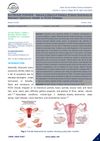 January 2020 in “Asian Journal of Basic Science & Research”
 Nutrease powder, a high-protein, low-carb supplement, can help manage Polycystic Ovary Syndrome symptoms, regulate periods, improve ovulation, and restore fertility.
 January 2020 in “Medical journal of clinical trials & case studies”
 A 37-year-old male with severe skin and internal issues has a rare inherited skin condition called dystrophic epidermolysis bullosa.
 February 2019 in “Institutional Repositories DataBase (IRDB)”
  January 2019 in “ISGE series”
 The document concludes that effectively managing PCOS requires a multifaceted approach.
PCOS is a common hormonal disorder with symptoms like irregular periods and excess hair growth, managed with lifestyle changes and medications.
 December 2018 in “Notulae Botanicae Horti Agrobotanici Cluj-Napoca”
 The journal covers diverse plant science research and is now published online quarterly.

Accurate diagnosis and timely, tailored treatments improve outcomes in obstetrics and gynecology.
 December 2018 in “IntechOpen eBooks”
 Neurohormones help control skin health and could treat skin disorders.
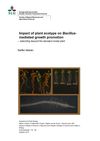 September 2018 in “Epsilon Archive for Student Projects (University of Southampton)”
 Bacillus amyloliquefaciens can boost root hair growth in some Arabidopsis plants, potentially improving agriculture.
 June 2018 in “Journal of evolution of medical and dental sciences”
 Skin problems like excessive hair growth, acne, and dark skin patches can be signs of Polycystic Ovarian Disease, which may also be linked to family history and a risk for diabetes.
 April 2018 in “bioRxiv (Cold Spring Harbor Laboratory)”
 A gene variant causes patched hair loss in mice, similar to alopecia areata in humans.
 December 2017 in “International Journal of Current Research in Biosciences and Plant Biology”
 Nutrients and hormones affect root hair growth, but more research is needed to understand the genetic mechanisms.