22 citations
,
September 1982 in “Journal of ultrastructure research” Wool follicle cells are more complex than previously thought.
 21 citations
,
January 1995 in “Journal of the American Institute for Conservation”
21 citations
,
January 1995 in “Journal of the American Institute for Conservation” A new method extracts red dyes from wool without damaging it, although it slightly weakens the wool.
20 citations
,
January 2017 in “Genetica” The methylation of the HOXC8 gene's exon 1 affects cashmere fiber length in goats.
 20 citations
,
January 1979 in “JAMA”
20 citations
,
January 1979 in “JAMA” Fiber implantation for baldness is not recommended because it causes many problems and doesn't work well.
 20 citations
,
May 2007 in “Asian-Australasian Journal of Animal Sciences”
20 citations
,
May 2007 in “Asian-Australasian Journal of Animal Sciences” KAP8.2 gene variations affect cashmere quality in goats.
 15 citations
,
March 1981 in “Journal of The American Academy of Dermatology”
15 citations
,
March 1981 in “Journal of The American Academy of Dermatology” Fiber implantation for pattern baldness was largely unsuccessful with many complications and is not recommended.
 13 citations
,
January 1995 in “Journal of the American Institute for Conservation”
13 citations
,
January 1995 in “Journal of the American Institute for Conservation” Researchers developed a less damaging way to extract red dyes from wool using EDTA and DMF, preserving the fiber's strength for further analysis.
 12 citations
,
October 1954 in “Textile Research Journal”
12 citations
,
October 1954 in “Textile Research Journal” Hair absorbs alkali bromide salts and water, affecting its structure, with absorption decreasing at higher temperatures.
 9 citations
,
July 2018 in “Journal of Testing and Evaluation”
9 citations
,
July 2018 in “Journal of Testing and Evaluation” Adding human hair to sand improves its strength when dry and maintains strength when wet.
 9 citations
,
January 1989 in “Sen'i Gakkaishi”
9 citations
,
January 1989 in “Sen'i Gakkaishi” Wool and hair fibers absorb moisture similarly due to their keratin structure, with the amount of non-crystalline areas affecting the moisture uptake.
 6 citations
,
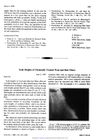
March 1998 in “Textile Research Journal”
6 citations
,
March 1998 in “Textile Research Journal” Chemical treatments can change the scale heights of wool and cashmere fibers, affecting their identification.
 5 citations
,
October 2011 in “Small ruminant research”
5 citations
,
October 2011 in “Small ruminant research” Goat hair growth and follicle activity change with the seasons and differ between males and females.
4 citations
,
June 1983 in “The Journal of dermatologic surgery and oncology” Synthetic fiber hair implants often cause complications and are not very successful.
 3 citations
,
August 2003 in “International Journal of Cosmetic Surgery and Aesthetic Dermatology”
3 citations
,
August 2003 in “International Journal of Cosmetic Surgery and Aesthetic Dermatology” Fiber implants effectively treat permanent hair loss with over 85% success and minimal complications.
 3 citations
,
July 2003 in “PubMed”
3 citations
,
July 2003 in “PubMed” The research found a way to measure hair surface changes by analyzing how light reflects off of it, and determined hair cuticle angles vary by hair length and color.
2 citations
,
August 2022 in “Animals” Different versions of the KRTAP6-2 gene in goats can lead to thinner cashmere fibers.
1 citations
,
May 2025 in “European Polymer Journal” The MeGel-SFSR dressing helps diabetic wounds heal faster and better.
1 citations
,
February 2021 in “Animal biotechnology” Certain changes in the KAP6-1 gene affect the thickness and length of cashmere goat fibers.
 1 citations
,
March 1985 in “Head & neck surgery”
1 citations
,
March 1985 in “Head & neck surgery” Hair-bearing punch grafting effectively repaired damage from artificial hair implants.
September 2025 in “International Journal of Cosmetic Science” Friction causes hair breakage during combing, and fragment count predicts hair strength.
 August 2019 in “Research Square (Research Square)”
 Red LED light improves the quality of Angora rabbit wool by promoting hair growth.
 February 2019 in “PubMed”
 The research found that twisting hair fibers can show changes in stiffness and damage, and help tell apart different hair treatments.
 October 2012 in “Advanced Materials Research”
 Higher temperatures improve rabbit hair strength up to 50°C, but moisture weakens it.
January 2010 in “EPub Bayreuth (University of Bayreuth)” Polyquaternium-87 reduces hair friction the most among tested polymers.
 August 2003 in “International Journal of Cosmetic Surgery and Aesthetic Dermatology”
 Fiber implants effectively treat permanent hair loss with few complications.
36 citations
,
February 1998 in “Journal of Anatomy” Fibre optic confocal imaging can visualize skin layers, blood vessels, and nerves in live mice.
4 citations
,
September 2003 in “Livestock Production Science” Epidermal growth factor reduces hair growth, but cortisol does not.
 169 citations
,
June 2010 in “Molecular & cellular proteomics”
169 citations
,
June 2010 in “Molecular & cellular proteomics” Pectin biosynthesis is essential for the growth of cotton fibers and Arabidopsis root hairs.
 161 citations
,
July 2003 in “ACM Transactions on Graphics”
161 citations
,
July 2003 in “ACM Transactions on Graphics” Researchers developed a new model for more realistic computer graphics rendering of hair by considering how light scatters on hair fibers.
109 citations
,
April 1997 in “Archives of Dermatological Research” Mast cell and nerve fiber interactions in mouse skin change with the hair cycle.