62 citations
,
December 2008 in “Journal of structural biology” Hair curvature in Japanese people is linked to specific cell types and filament arrangements in the hair cortex.
 48 citations
,
December 2004 in “Differentiation”
48 citations
,
December 2004 in “Differentiation” Tooth papilla cells can help regenerate hair follicles and grow hair.
 35 citations
,
April 2014 in “Journal of proteomics”
35 citations
,
April 2014 in “Journal of proteomics” Feed restriction in sheep leads to finer wool fibers but may reduce wool quality.
30 citations
,
January 1994 in “Micron” Mature hair surfaces are formed by keratinized cells with developed layers, not just modified plasma membranes.
22 citations
,
September 1982 in “Journal of ultrastructure research” Wool follicle cells are more complex than previously thought.
 21 citations
,
January 1995 in “Journal of the American Institute for Conservation”
21 citations
,
January 1995 in “Journal of the American Institute for Conservation” A new method extracts red dyes from wool without damaging it, although it slightly weakens the wool.
 20 citations
,
January 1979 in “JAMA”
20 citations
,
January 1979 in “JAMA” Fiber implantation for baldness is not recommended because it causes many problems and doesn't work well.
 15 citations
,
March 1981 in “Journal of The American Academy of Dermatology”
15 citations
,
March 1981 in “Journal of The American Academy of Dermatology” Fiber implantation for pattern baldness was largely unsuccessful with many complications and is not recommended.
13 citations
,
February 2019 in “Zoology” Lustre mutant sheep have normal hair structure and proteins but differ in felting properties.
 13 citations
,
January 1995 in “Journal of the American Institute for Conservation”
13 citations
,
January 1995 in “Journal of the American Institute for Conservation” Researchers developed a less damaging way to extract red dyes from wool using EDTA and DMF, preserving the fiber's strength for further analysis.
 12 citations
,
October 1954 in “Textile Research Journal”
12 citations
,
October 1954 in “Textile Research Journal” Hair absorbs alkali bromide salts and water, affecting its structure, with absorption decreasing at higher temperatures.
 9 citations
,
July 2018 in “Journal of Testing and Evaluation”
9 citations
,
July 2018 in “Journal of Testing and Evaluation” Adding human hair to sand improves its strength when dry and maintains strength when wet.
 9 citations
,
January 1989 in “Sen'i Gakkaishi”
9 citations
,
January 1989 in “Sen'i Gakkaishi” Wool and hair fibers absorb moisture similarly due to their keratin structure, with the amount of non-crystalline areas affecting the moisture uptake.
8 citations
,
July 2019 in “The journal of investigative dermatology/Journal of investigative dermatology” Curly hair is mechanically different from straight hair and may need new testing methods.
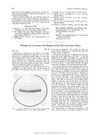 7 citations
,
October 1963 in “Textile Research Journal”
7 citations
,
October 1963 in “Textile Research Journal” Merino wool fibers change shape with moisture, while human hair shape stays the same.
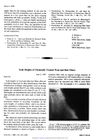 6 citations
,
March 1998 in “Textile Research Journal”
6 citations
,
March 1998 in “Textile Research Journal” Chemical treatments can change the scale heights of wool and cashmere fibers, affecting their identification.
4 citations
,
June 1983 in “The Journal of dermatologic surgery and oncology” Synthetic fiber hair implants often cause complications and are not very successful.
 3 citations
,
March 2019 in “Tekstil Ve Konfeksiyon”
3 citations
,
March 2019 in “Tekstil Ve Konfeksiyon” Anatolian native goat down-hair is similar to cashmere and can be used for high-quality textiles.
 3 citations
,
August 2003 in “International Journal of Cosmetic Surgery and Aesthetic Dermatology”
3 citations
,
August 2003 in “International Journal of Cosmetic Surgery and Aesthetic Dermatology” Fiber implants effectively treat permanent hair loss with over 85% success and minimal complications.
 3 citations
,
July 2003 in “PubMed”
3 citations
,
July 2003 in “PubMed” The research found a way to measure hair surface changes by analyzing how light reflects off of it, and determined hair cuticle angles vary by hair length and color.
2 citations
,
August 2022 in “Animals” Different versions of the KRTAP6-2 gene in goats can lead to thinner cashmere fibers.
1 citations
,
May 2025 in “European Polymer Journal” The MeGel-SFSR dressing helps diabetic wounds heal faster and better.
1 citations
,
February 2021 in “Animal biotechnology” Certain changes in the KAP6-1 gene affect the thickness and length of cashmere goat fibers.
 1 citations
,
March 1985 in “Head & neck surgery”
1 citations
,
March 1985 in “Head & neck surgery” Hair-bearing punch grafting effectively repaired damage from artificial hair implants.
 March 2026 in “Biomolecules”
 MicroRNAs play a key role in controlling hair growth and quality in sheep and goats.
 June 2023 in “Livestock studies”
 The article concludes that understanding the molecular processes in hair follicle development can improve the quality of fibers like Angora and cashmere.
 August 2020 in “Textile research journal”
 The model helps understand how wool fiber structure affects its strength and flexibility.
 February 2019 in “PubMed”
 The research found that twisting hair fibers can show changes in stiffness and damage, and help tell apart different hair treatments.
 October 2012 in “Advanced Materials Research”
 Higher temperatures improve rabbit hair strength up to 50°C, but moisture weakens it.
 August 2003 in “International Journal of Cosmetic Surgery and Aesthetic Dermatology”
 Fiber implants effectively treat permanent hair loss with few complications.