 9 citations
,
January 1989 in “Sen'i Gakkaishi”
9 citations
,
January 1989 in “Sen'i Gakkaishi” Wool and hair fibers absorb moisture similarly due to their keratin structure, with the amount of non-crystalline areas affecting the moisture uptake.
 7 citations
,
October 1963 in “Textile Research Journal”
7 citations
,
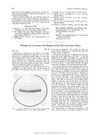
October 1963 in “Textile Research Journal” Merino wool fibers change shape with moisture, while human hair shape stays the same.
 6 citations
,
March 1998 in “Textile Research Journal”
6 citations
,
March 1998 in “Textile Research Journal” Chemical treatments can change the scale heights of wool and cashmere fibers, affecting their identification.
4 citations
,
June 1983 in “The Journal of dermatologic surgery and oncology” Synthetic fiber hair implants often cause complications and are not very successful.
 3 citations
,
July 2003 in “PubMed”
3 citations
,
July 2003 in “PubMed” The research found a way to measure hair surface changes by analyzing how light reflects off of it, and determined hair cuticle angles vary by hair length and color.
1 citations
,
May 2025 in “European Polymer Journal” The MeGel-SFSR dressing helps diabetic wounds heal faster and better.
1 citations
,
February 2021 in “Animal biotechnology” Certain changes in the KAP6-1 gene affect the thickness and length of cashmere goat fibers.
 1 citations
,
March 1985 in “Head & neck surgery”
1 citations
,
March 1985 in “Head & neck surgery” Hair-bearing punch grafting effectively repaired damage from artificial hair implants.
 February 2019 in “PubMed”
 The research found that twisting hair fibers can show changes in stiffness and damage, and help tell apart different hair treatments.
 October 2012 in “Advanced Materials Research”
 Higher temperatures improve rabbit hair strength up to 50°C, but moisture weakens it.
January 2010 in “EPub Bayreuth (University of Bayreuth)” Polyquaternium-87 reduces hair friction the most among tested polymers.
 169 citations
,
June 2010 in “Molecular & cellular proteomics”
169 citations
,
June 2010 in “Molecular & cellular proteomics” Pectin biosynthesis is essential for the growth of cotton fibers and Arabidopsis root hairs.
65 citations
,
May 2006 in “Journal of Structural Biology” Hair curliness is due to uneven distribution of different cortices within the hair fiber.
49 citations
,
April 2010 in “International Journal of Cosmetic Science” Hair ages as the cuticle wears down, especially beyond 1 meter from the root, affecting its strength and shine.
 46 citations
,
January 2009 in “Textile Research Journal”
46 citations
,
January 2009 in “Textile Research Journal” Researchers developed a new method to identify animal hair in textiles, which is effective for various fibers and more reliable than previous methods.
 43 citations
,
September 2001 in “Scanning”
43 citations
,
September 2001 in “Scanning” Hair treatments like bleaching increase friction by exposing tiny pores on the hair surface.
 42 citations
,
January 2009 in “Colloids and Surfaces B: Biointerfaces”
42 citations
,
January 2009 in “Colloids and Surfaces B: Biointerfaces” A certain surfactant sticks to human hair, making it change from water-repelling to water-attracting, which could help in hair conditioning.
 30 citations
,
March 2019 in “Archives animal breeding/Archiv für Tierzucht”
30 citations
,
March 2019 in “Archives animal breeding/Archiv für Tierzucht” The KRTAP15-1 gene affects cashmere fiber thickness in goats.
30 citations
,
August 1993 in “PubMed” IL-1 alpha stops hair follicle growth and hair production.
29 citations
,
July 1991 in “Biochimica et Biophysica Acta (BBA) - General Subjects” Glycoproteins are present in the cell membranes of various keratin fibers.
 28 citations
,
December 2010 in “Langmuir”
28 citations
,
December 2010 in “Langmuir” Hair fibers interact through classical forces, which are influenced by treatments and products, important for hair care and other applications.
27 citations
,
March 2018 in “Journal of Experimental Biology” Wool fibre curvature is due to longer orthocortical cells compared to paracortical cells.
25 citations
,
November 2012 in “Thermochimica Acta” Internal lipids in keratin fibers, like wool and hair, reduce water absorption and release.
18 citations
,
January 1965 in “Stain Technology” 17 citations
,
March 2022 in “BMC Genomics” Cashmere fiber diameter in Tibetan goats is influenced by their stress, oxygen, and metabolic adaptations.
17 citations
,
February 2011 in “International Journal of Cosmetic Science” Grey hair is wilder, drier, and less manageable than pigmented hair.
 14 citations
,
January 2009 in “Experimental Dermatology”
14 citations
,
January 2009 in “Experimental Dermatology” Hair sheds gradually from the follicle, with readiness to shed indicated by less attachment material.
14 citations
,
July 2007 in “International Journal of Cosmetic Science” The new 3D imaging method accurately measures hair surface details quickly.
12 citations
,
January 1994 in “PubMed” Elastic fiber arrangement in mammal skin varies by hair density and body region.
11 citations
,
April 2022 in “Biophysical Journal” Disulfide bonds in keratin fibers break more easily under stress, especially when wet, affecting fiber strength.